If there’s one thing constant about the built environment it’s that it is in flux. Buildings age, cities evolve. Places that once bustled might fall out of favor. Purpose-built architecture may no longer serve its original function. Change, however, is an opportunity for transformation. In the face of urgent market crises or economic pressure, RIOS believes that thoughtful design can reposition urban assets, giving new life to distressed properties or stranded assets.
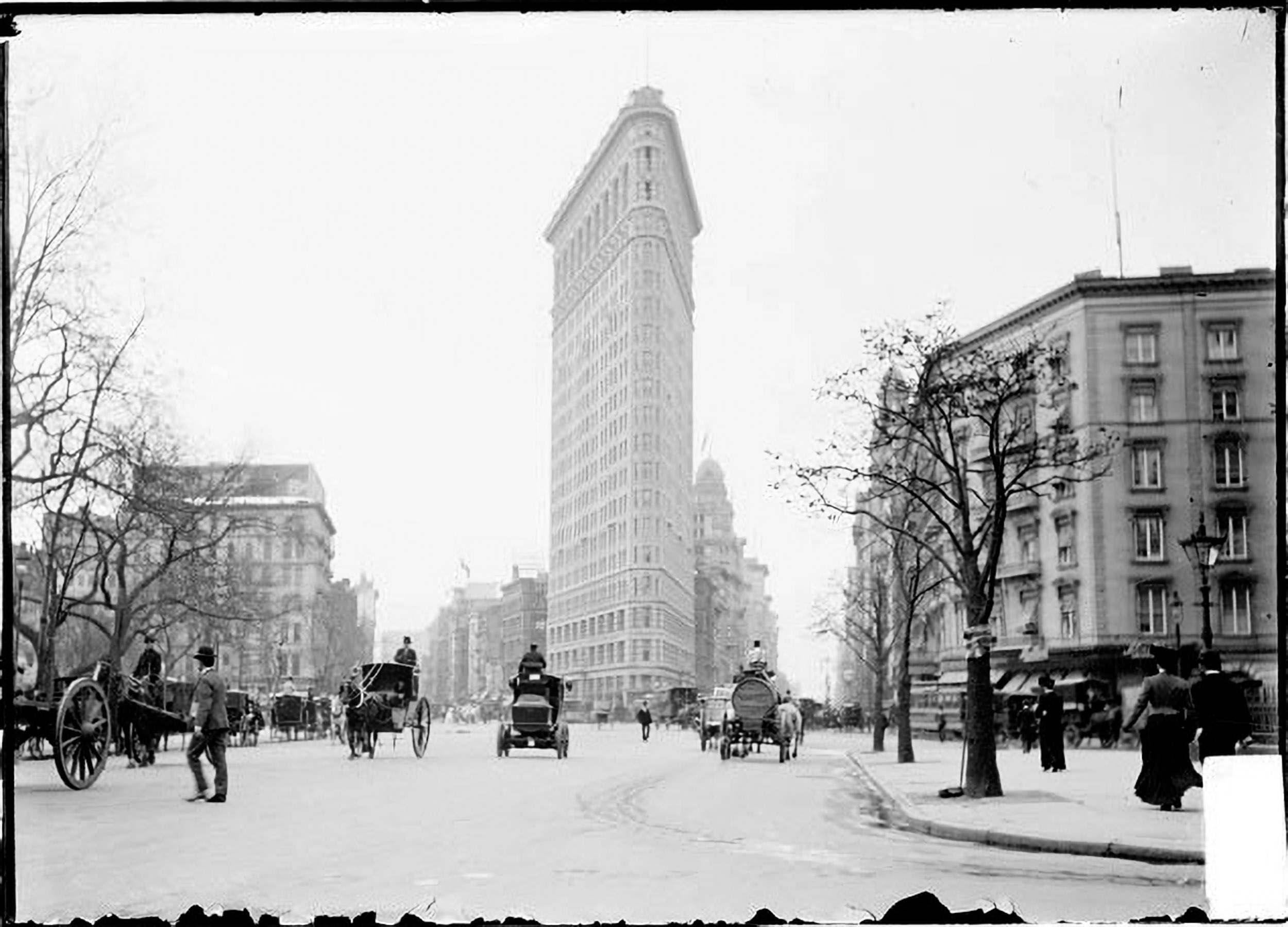
The Flatiron Building represents the constant transformation of urban assets, repositioned several times since 1902. Photo: Library of Congress
Repositioning matters now, especially as developers and cities respond to changing urban needs and climate stewardship. The ways people use buildings have shifted and there is a growing awareness that preserving older architecture and the urban fabric is a savvy strategy. However, repositioning isn’t just about renovating old spaces. It’s about creating value, sustainability, and vitality. Today’s resources and environmental concerns require smarter, more adaptive urban solutions.
To achieve this, RIOS takes a multi-disciplinary, cross-market approach to asset enhancement, drawing on architecture and landscape, urbanism and placemaking to transform forgotten or aging spaces into vibrant urban ecosystems. We make places that people love, which then translates into increased occupancy and measurable returns.
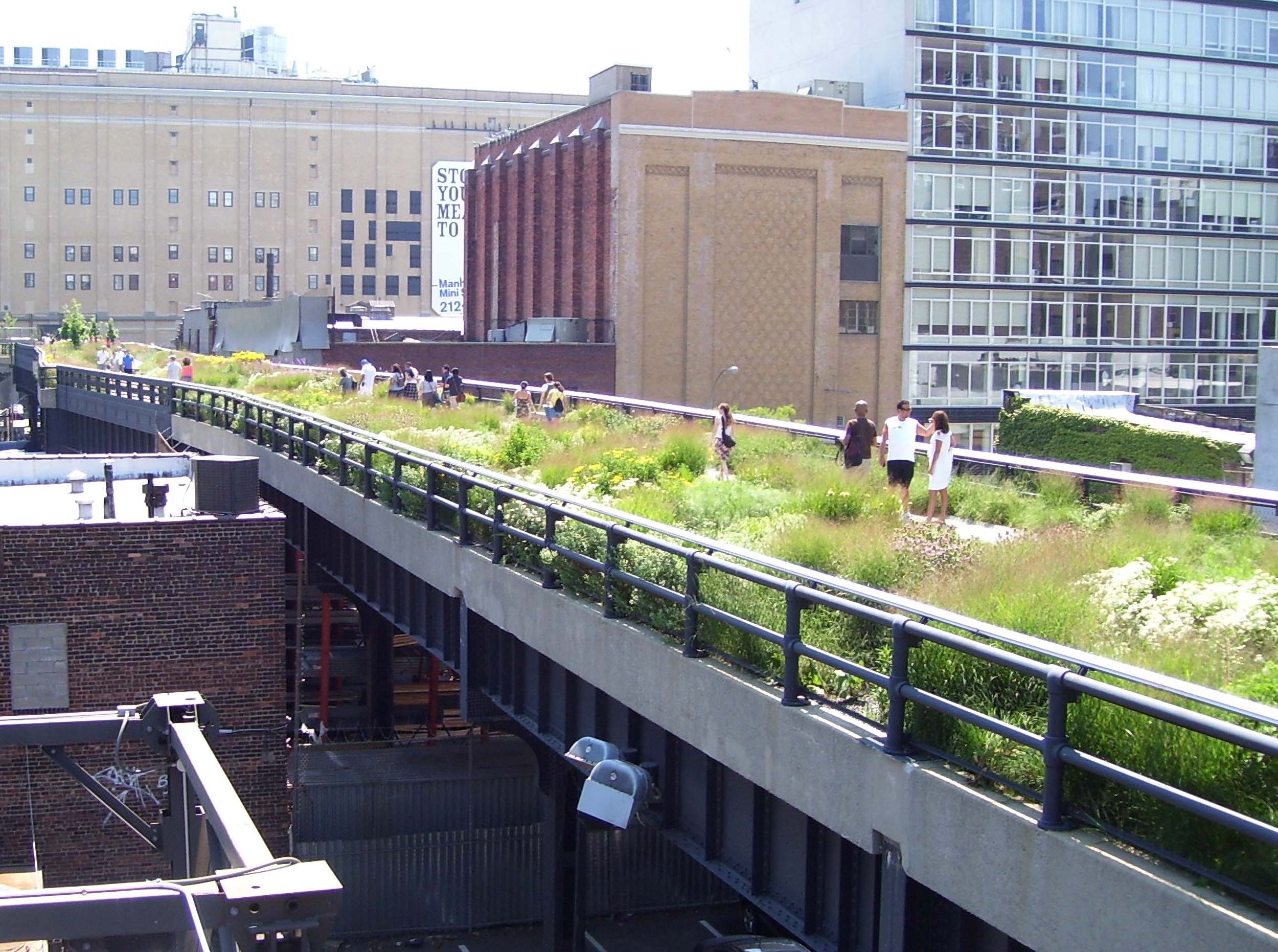
Adaptive reuse projects like the High Line convert forgotten infrastructure into a destination that creates value and vitality. Photo: Rhododendrites
The Changing Landscape of Urban Development
Why reposition? According to a CBRE report, now is a strategic moment. Their analysis suggests that in previous real estate downturns, office acquisitions “delivered average 5-year returns of 82% and 67% respectively.” By investing in office assets at this time, developers can help shape how we work in the years to come. Post-Covid, the future of the workplace looked iffy, as companies embraced work-from-home and hybrid models. Increasingly businesses are returning to the workplace, but it isn’t enough just to provide office space. Tenants prioritize flexibility and a high quality user experience. Today, people are looking for places that can host work, social life, and recreation across hours and functions.
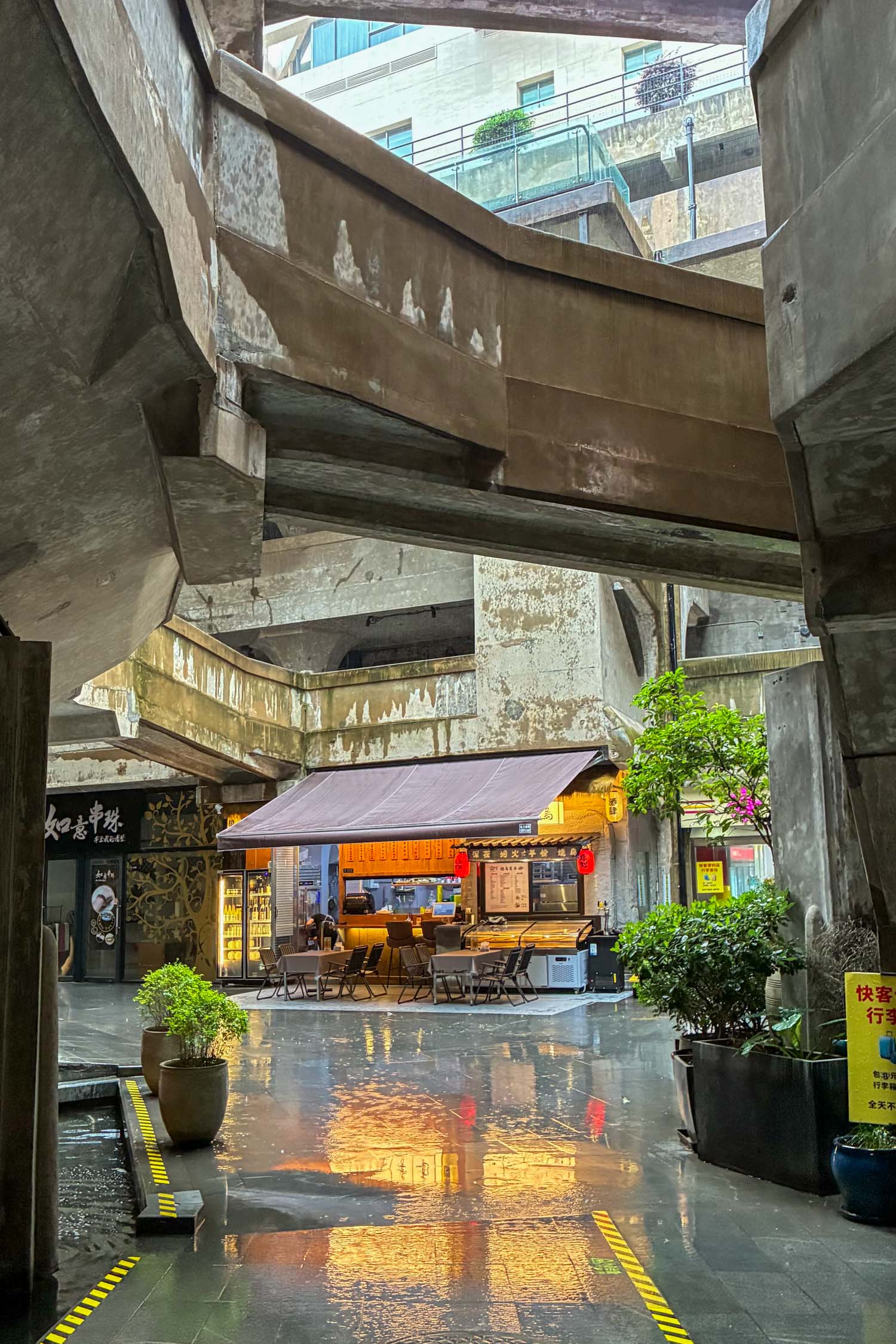
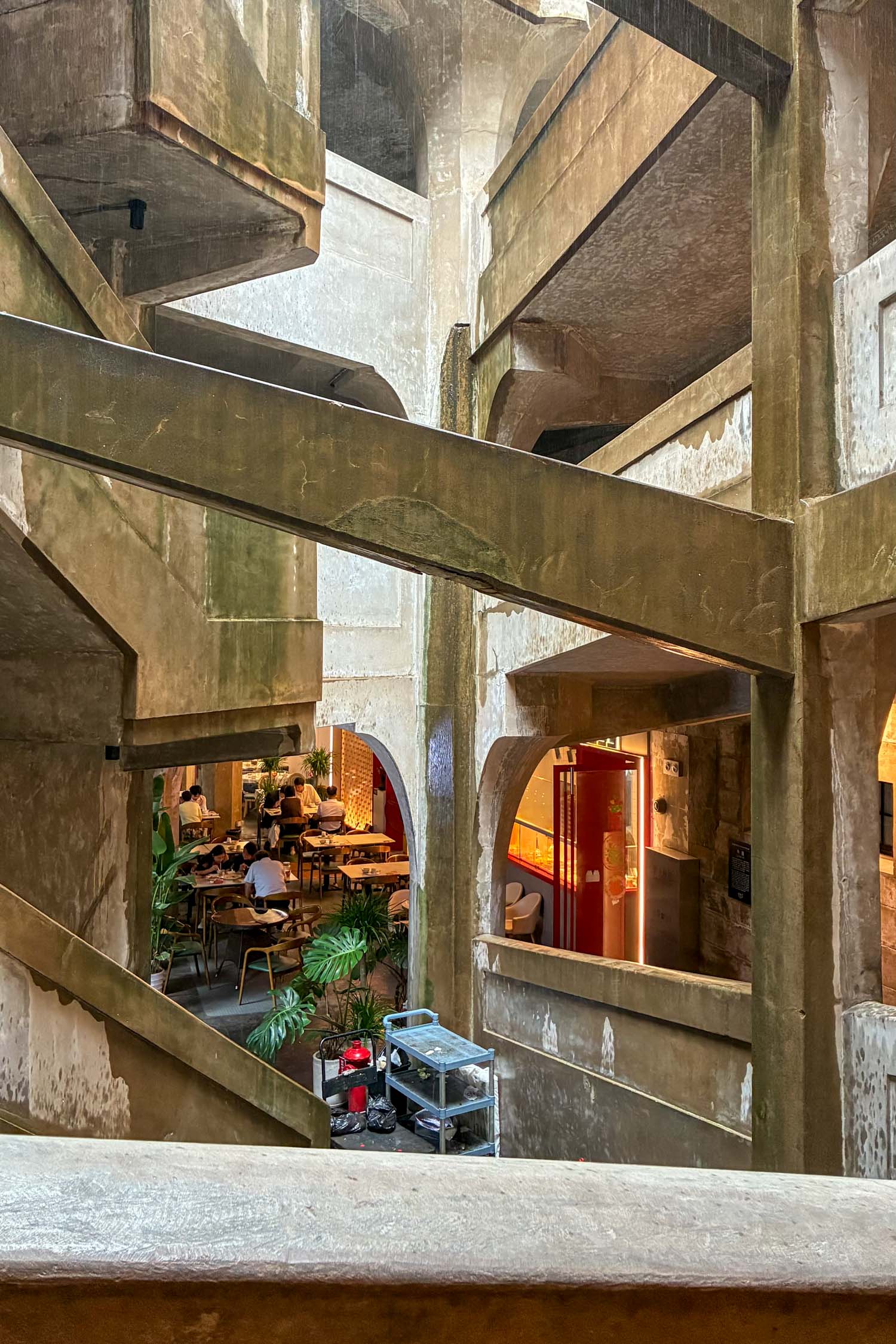
Shanghai's 1933 Old Millfun repositioned a century-old industrial building into a mixed-use retail, office, and cultural space.
Creating Live-Work-Play Districts
“Lifestyle” is a key differential between traditional office and desirable “live-work-play” districts. These properties offer a mix of uses: office, housing, retail, hotels, entertainment, and greenspace. They often lease faster for premium rents. For instance, “as Millennials and Gen Z dominate the workforce, companies are discovering that investing in lifestyle-oriented locations isn’t just about amenities—it’s about talent retention, productivity, and competitive advantage,” notes Jacob Rowden of JLL.
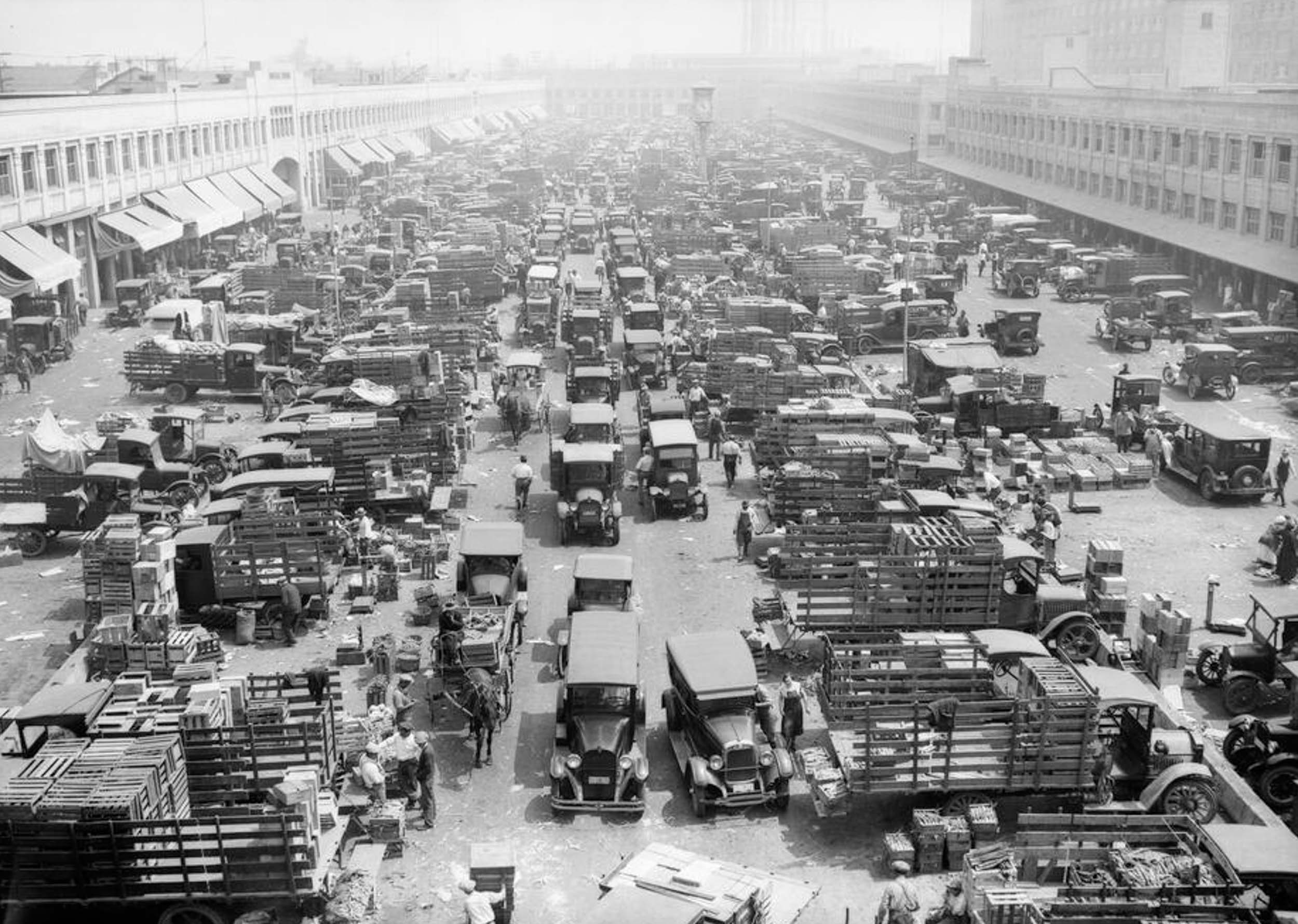
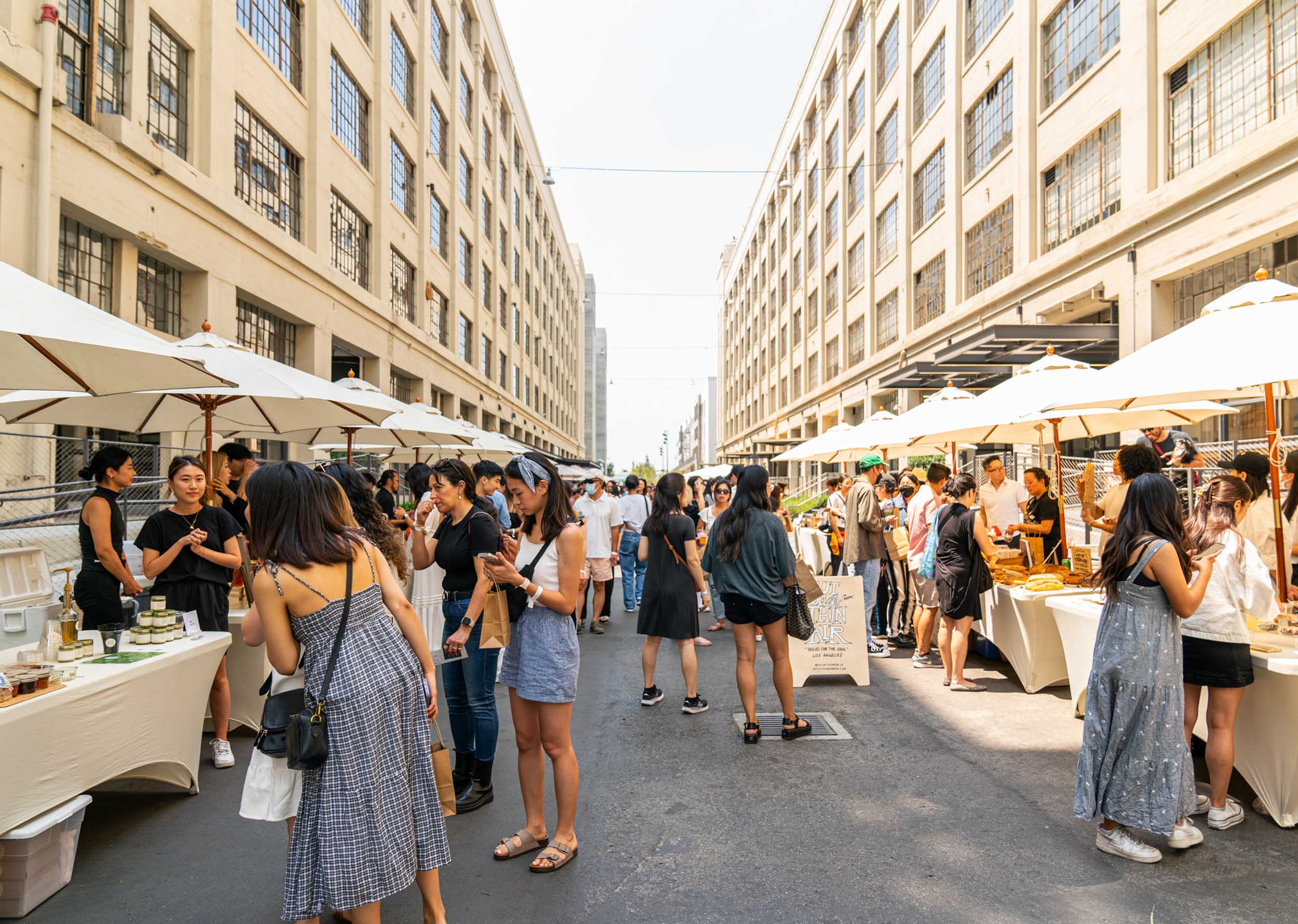
For example, RIOS’ design for ROW DTLA illustrates the power of building repositioning. This languishing, century-old produce distribution center in Downtown Los Angeles was remade as a hub. It now brings together retail, office, and hospitality. A curated tenant mix and an event series activates the site for 16-hour a day. Such repositioning doubled the project’s valuation and led to 91% retail occupancy—outpacing the surrounding Arts District by 25%.
Terminal Market, Los Angeles, 1926. Photo: Library of Congress
The same site transformed into ROW DTLA, where repositioned spaces now attract visitors and activate neighborhoods.
The Economics of Adaptive Reuse
At RIOS, we always believe that good design makes good business sense. Moreover, ground-up construction is not always cost-effective and requires the highest use financial and environmental resources. Design has the capacity to remake an overlooked asset into a valuable destination.
With rising costs and variable returns, adaptive reuse is often the only viable financial path forward for many property owners. “Developers are realizing they can’t afford a new building, so they’re repositioning existing structures,” says Sebastian Salvadó, Creative Director, RIOS. “Additionally, it’s far more sustainable to reuse a building and make it purposeful than build a new one.”
Salvadó embraces a quote by architect and author Carl Elefante: “The greenest building is one already built.” Furthermore, sustainability is important as cities and companies pursue carbon reduction and stewardship. Leveraging existing structures by enhancing what is already built limits waste and carbon impact. Ultimately, sustainability is more than simply an environmental strategy. Given the costs of a changing climate, it’s an economic imperative.
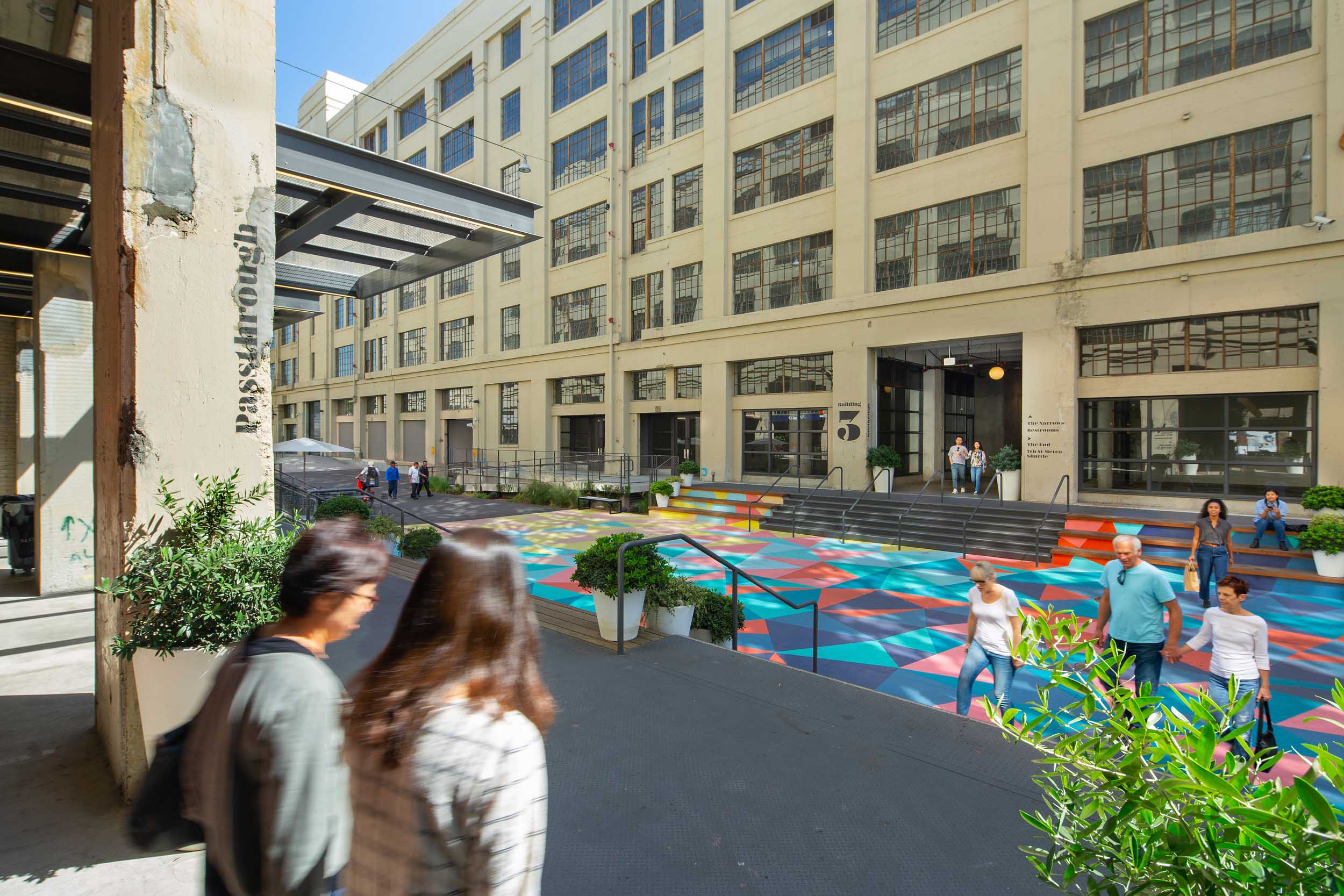
ROW DTLA's vibrant public space and pedestrian zones transform the century-old building into an all-day destination.
Design Beyond Renovation
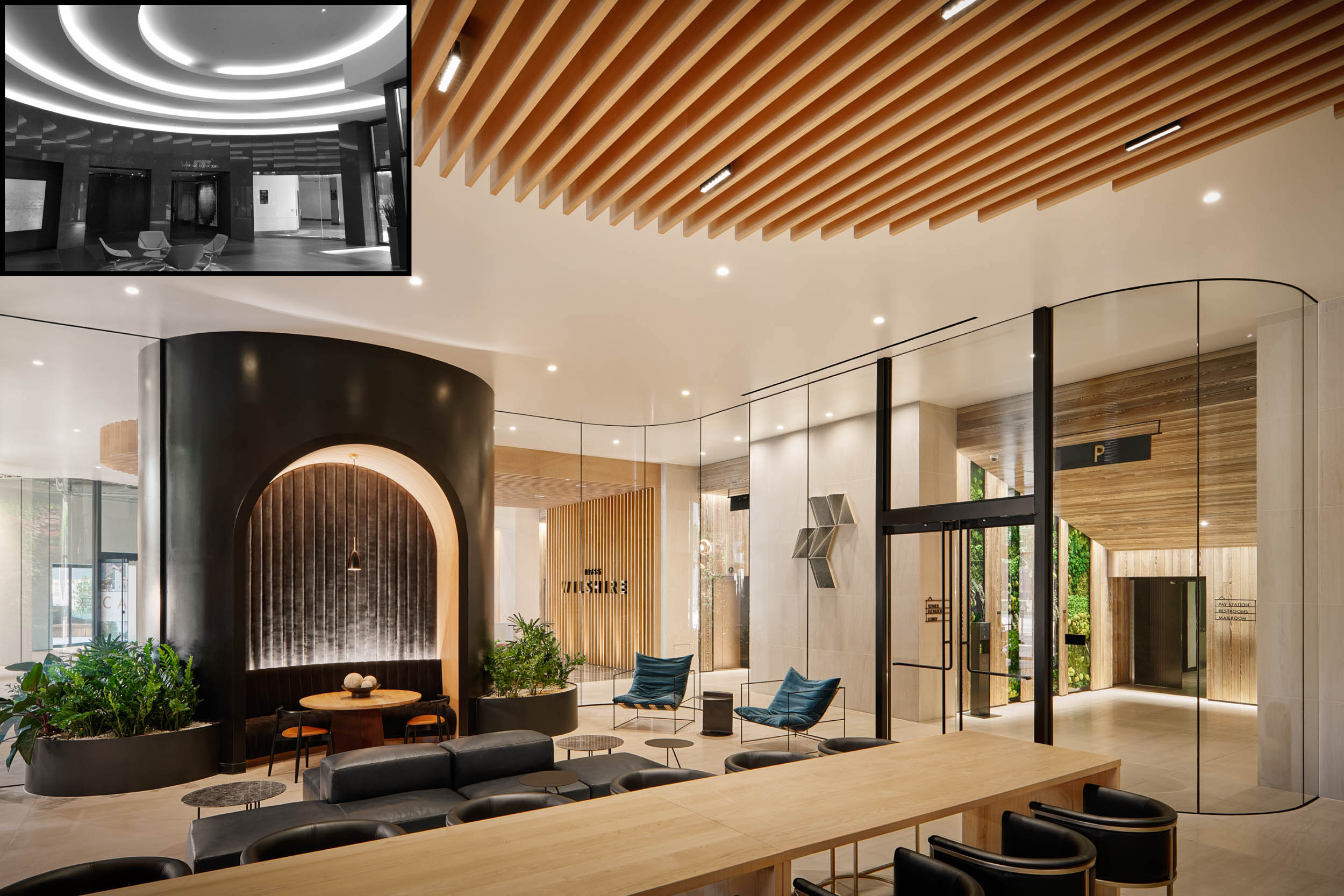
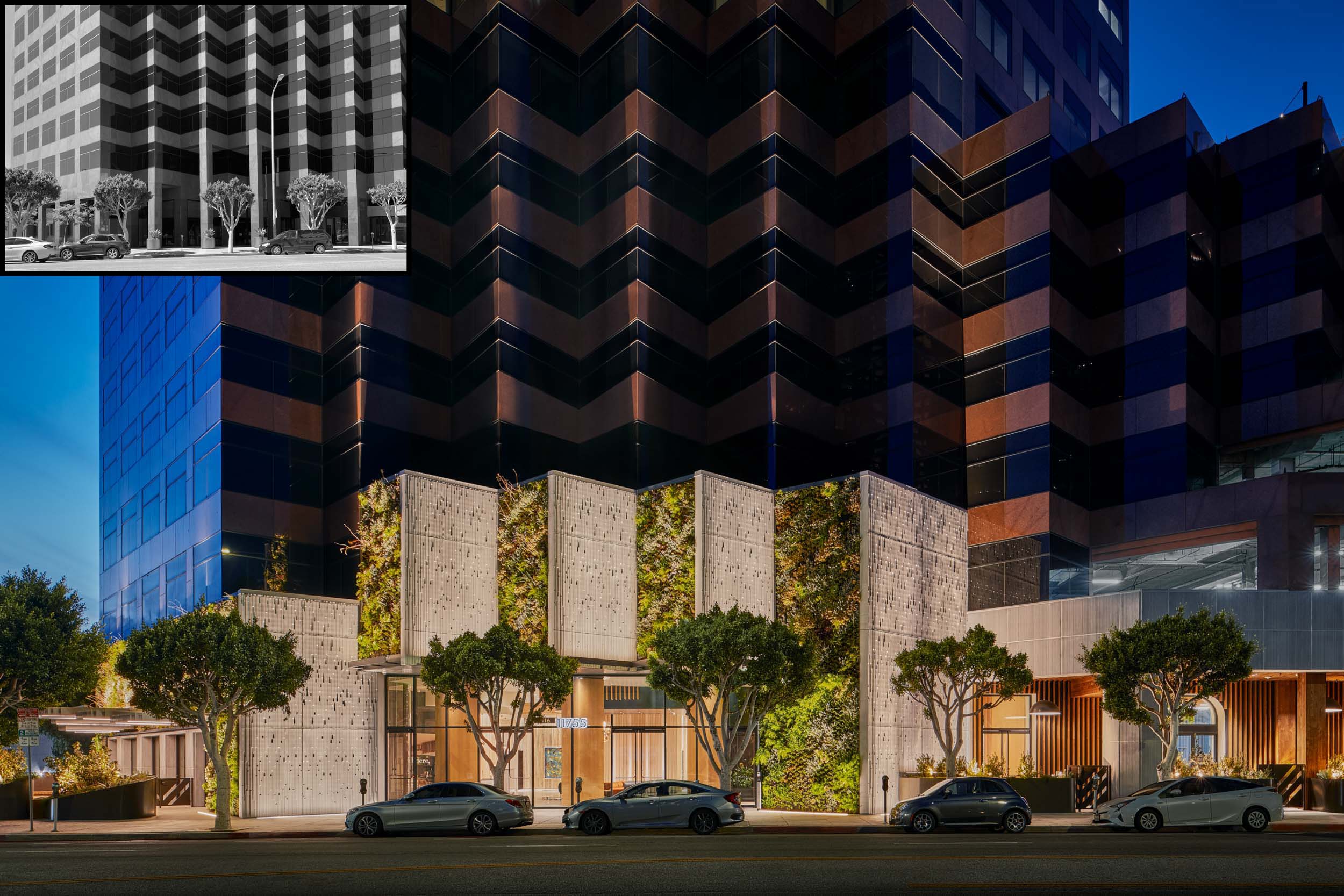
11755 Wilshire demonstrates that property upgrades begin with a design approach that transforms mid-tier properties into high-performing, desirable destinations. RIOS repositioned this 1986 West Los Angeles office tower through minimal intervention. We started with the value inherent in the existing building.
In addition, design upgrades can help reposition mid-tier assets. Elevating a Class B property into a higher class can increase rent premiums by 33%. By raising underperforming properties to Class A and A+, RIOS creates places that are desirable, marketable destinations. This ultimately protects client investments.
Specifically, at 11755 Wilshire we used hospitality-driven programming, biophilic innovation, and thoughtful environmental upgrades to create a Class A office tower for modern corporate needs.
11755 Wilshire's transformation from 1980s office tower to a Class A building.
Biophilic Innovation
The project features a cooling, habitat-supporting living green wall, dynamic conference and co-working amenities, and wellness-focused interiors. It exemplifies how raising underperforming assets creates meaningful, sustainable places rather than relying solely on architectural gestures.
“We start with what’s already there,” says Salvadó. For example, the project uses advanced GFRC panel cladding, which could be easily adapted to the building’s original geometry. This kind of upgrade provides layered value: it improves an aging architectural skin, increases environmental performance, and presents a fresh façade along Wilshire Boulevard.
Strategic upgrades at 11755 Wilshire activate the Wilshire Boulevard streetscape with biophilic features and human-scale design.
Activating the Urban Streetscape
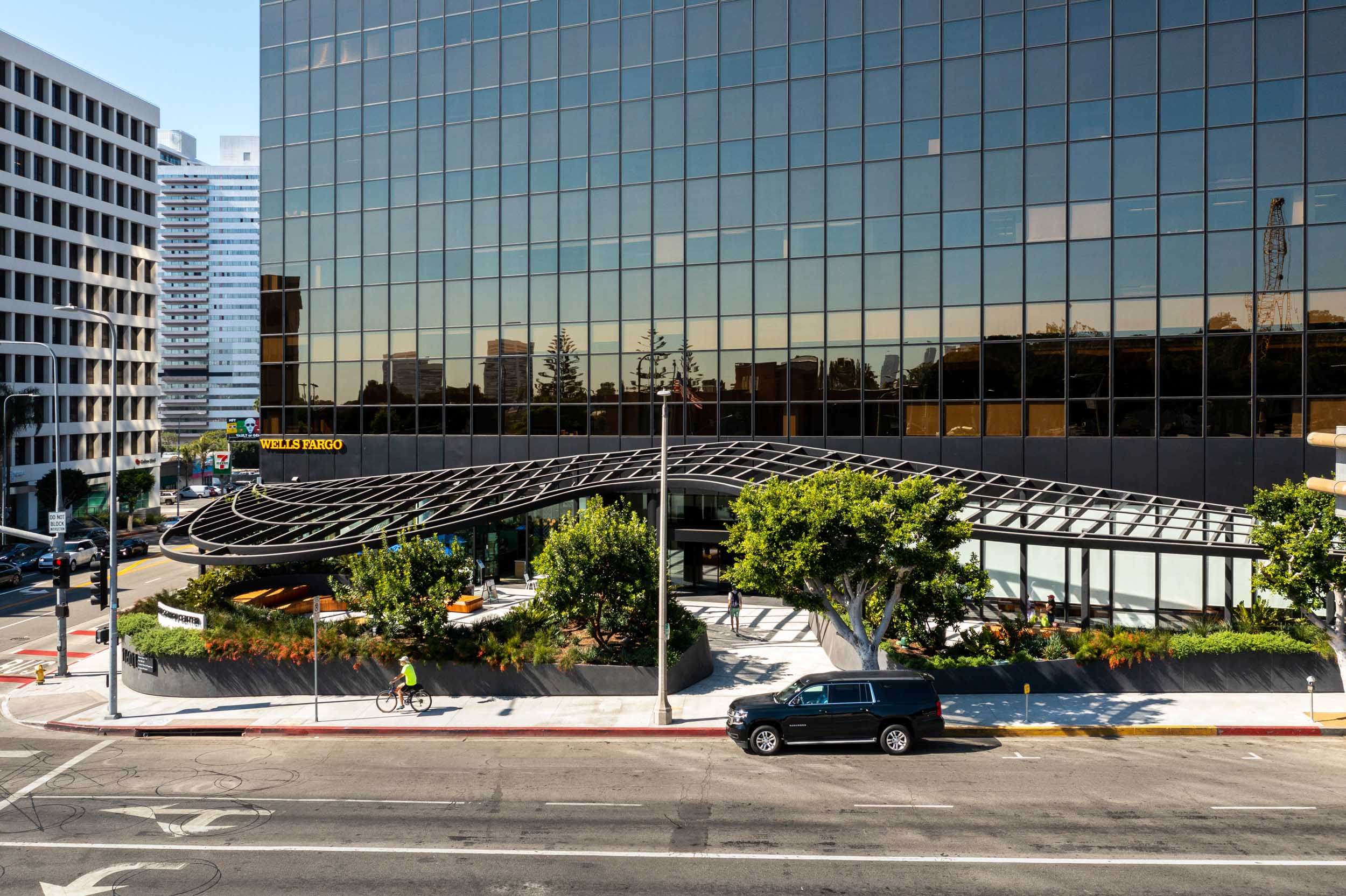
Nearby, at 11601 Wilshire, RIOS brought a fresh design approach to another 1980s commercial office building by adding a sheltering canopy to the 25-story headquarters. Additionally, we activated ground-floor spaces on all sides of the building to reclaim the streetscape. Adding outdoor, human-scale amenities, such as plantings, intimate seating areas, and a custom amphitheater, was an important part of the building upgrades.
The largest interventions is a 6,000-square-foot plaza beneath the new canopy. It functions as both a tenant amenity and a public draw, increasing the building’s daily foot traffic, visibility, and overall value. Amenities elevate the user experience and differentiate the property in a competitive market, directly contributing to long-term asset performance.
Together, 11755 and 11601 Wilshire are strong examples of how aging office stock can be successfully reimagined for today’s market. Both structures respond to today’s workplace expectations while enhancing the surrounding urban environment, illustrating how thoughtful renovation can generate meaningful environmental, user experience, and economic benefits.
Strategic upgrades at 11601 Wilshire, including a new entry canopy and public plaza, directly contribute to long-term asset performance.
In Pursuit of Authenticity
With a global approach spanning from Los Angeles to London to Manila, RIOS’ design philosophy embraces the unique character of every city. Our adaptive strategies are grounded in cross-sector expertise in workplace, residential, and hospitality. RIOS’ design responds to local cultural contexts and respects existing architectural vocabularies.
“Our research into local conditions and user groups is a big design driver,” says Melanie Freeland. “By being quite specific about the neighborhood gives the project a sense of place and character. Attention to materiality and plantings helps give experiential value to a location.”
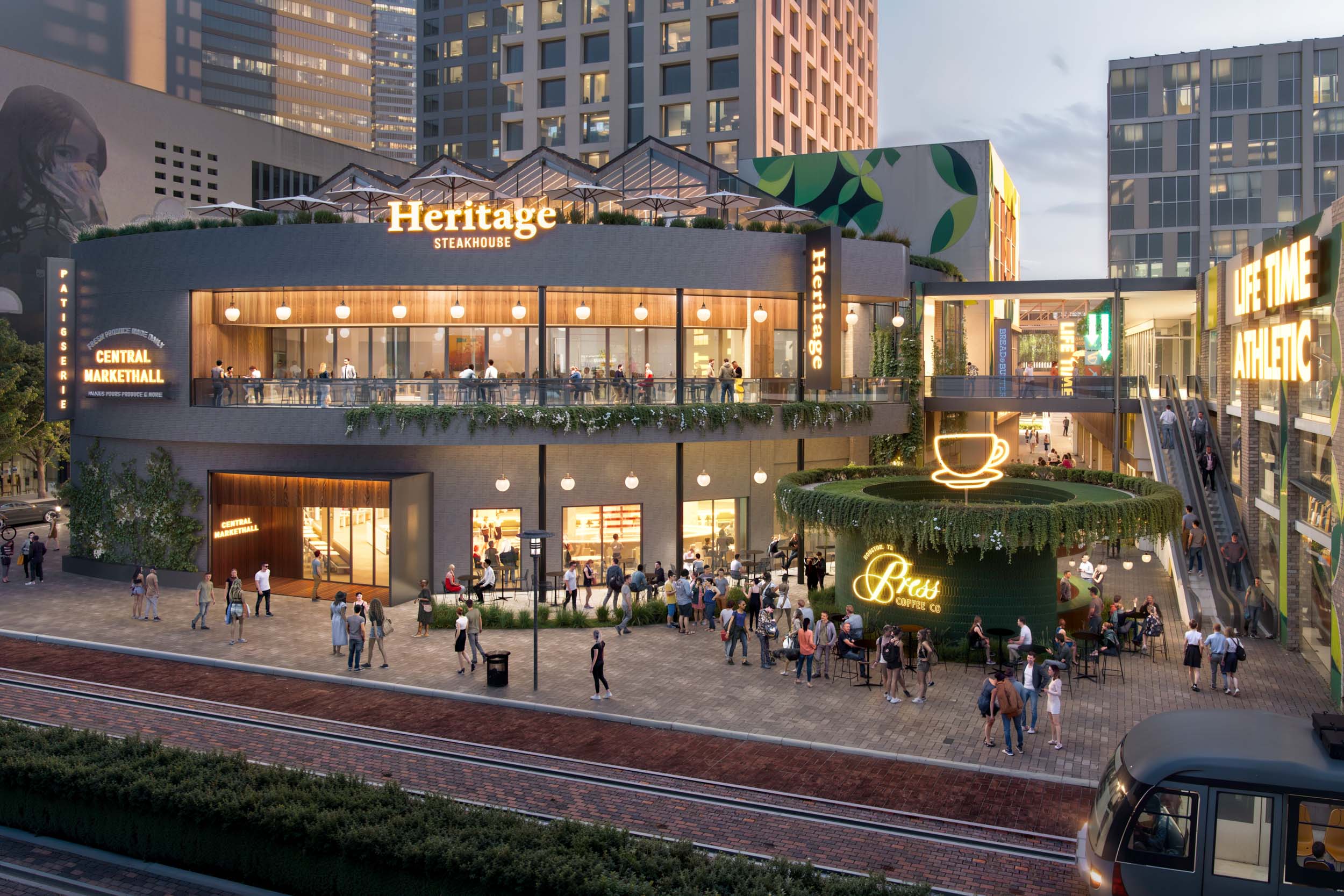
In Downtown Houston, RIOS’ reimagining of GreenStreet shows how effective design can be in breathing life into forgotten urban spaces. Once a nondescript outdoor mall, GreenStreet is now a three-block-long mixed-use district and the anchor of Houston’s Innovation Corridor. The 560,000-square-foot development includes a 260,000-square-foot Class-A office tower and 180,000 square feet of retail space.
GreenStreet combines retail, dining, and entertainment to create an all-day urban destination in Downtown Houston.
From Mall to Innovation Hub
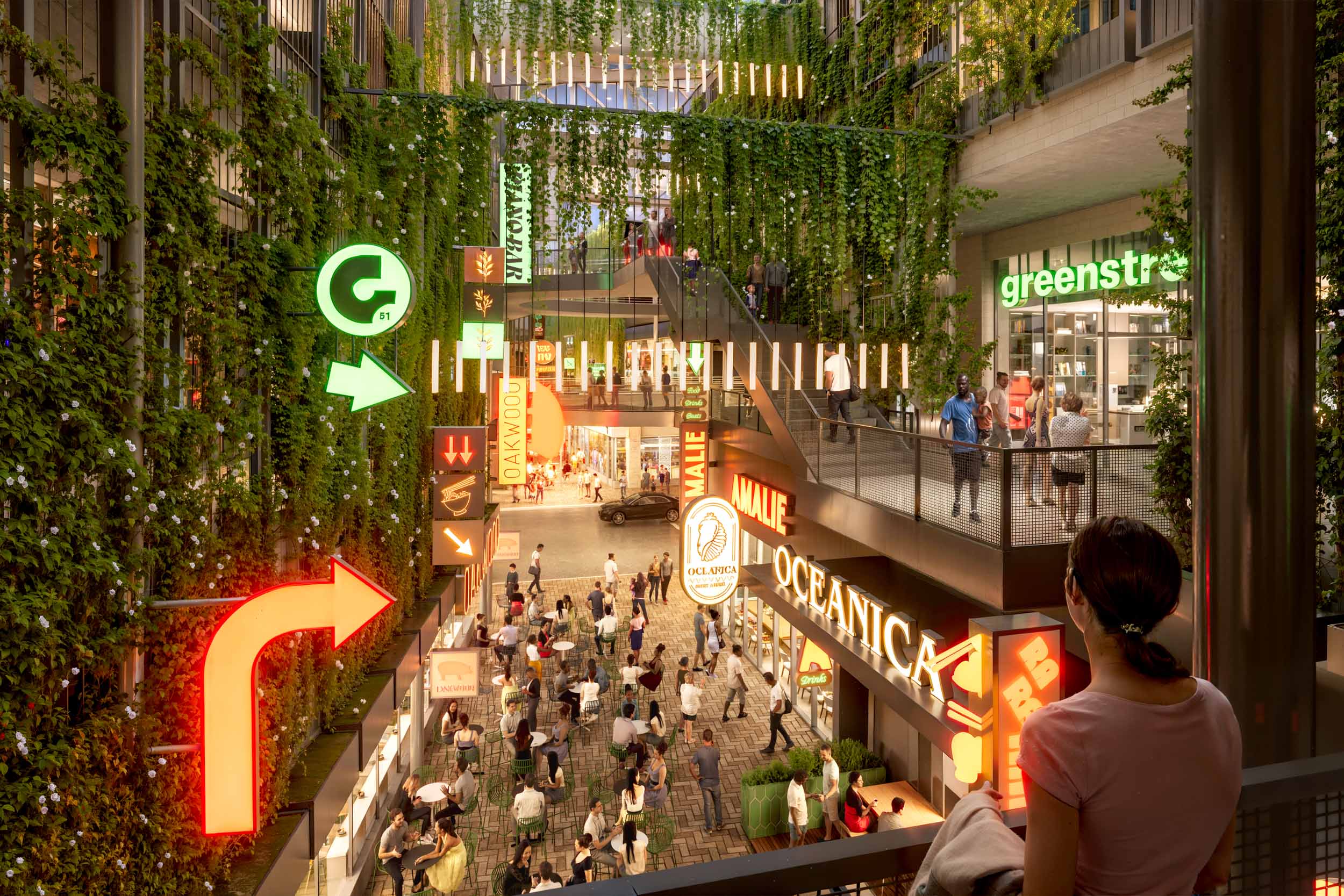
Moving from outdated mall to creative hub required a shift in perception. RIOS used a layered approach to reconsider overlooked space as an engaging pedestrian streetscape reminiscent of Japan’s vibrant alleyways. In addition, eye-catching neon signage and unique storefronts combine with local makers, unique restaurants, and major entertainment and hospitality tenants. This mix of amenities was designed to extend GreenStreet’s active hours—an important component of a lively, 24-hour, 365-day lifestyle ecosystem. Offices and retail make GreenStreet a daytime destination, while the hotel and entertainment venues enliven evening hours. Moreover, landscape elements, like planters and hanging gardens, provide twofold benefits. Plants have a cooling effect in Houston’s warm climate. Additionally, studies show that public green spaces encourage visitors to linger longer.
Inspired by Japan's lively alleyways, GreenStreet's pedestrian streets feature neon signage, local makers, and vertical gardens.
Even Icons Need Repositioning
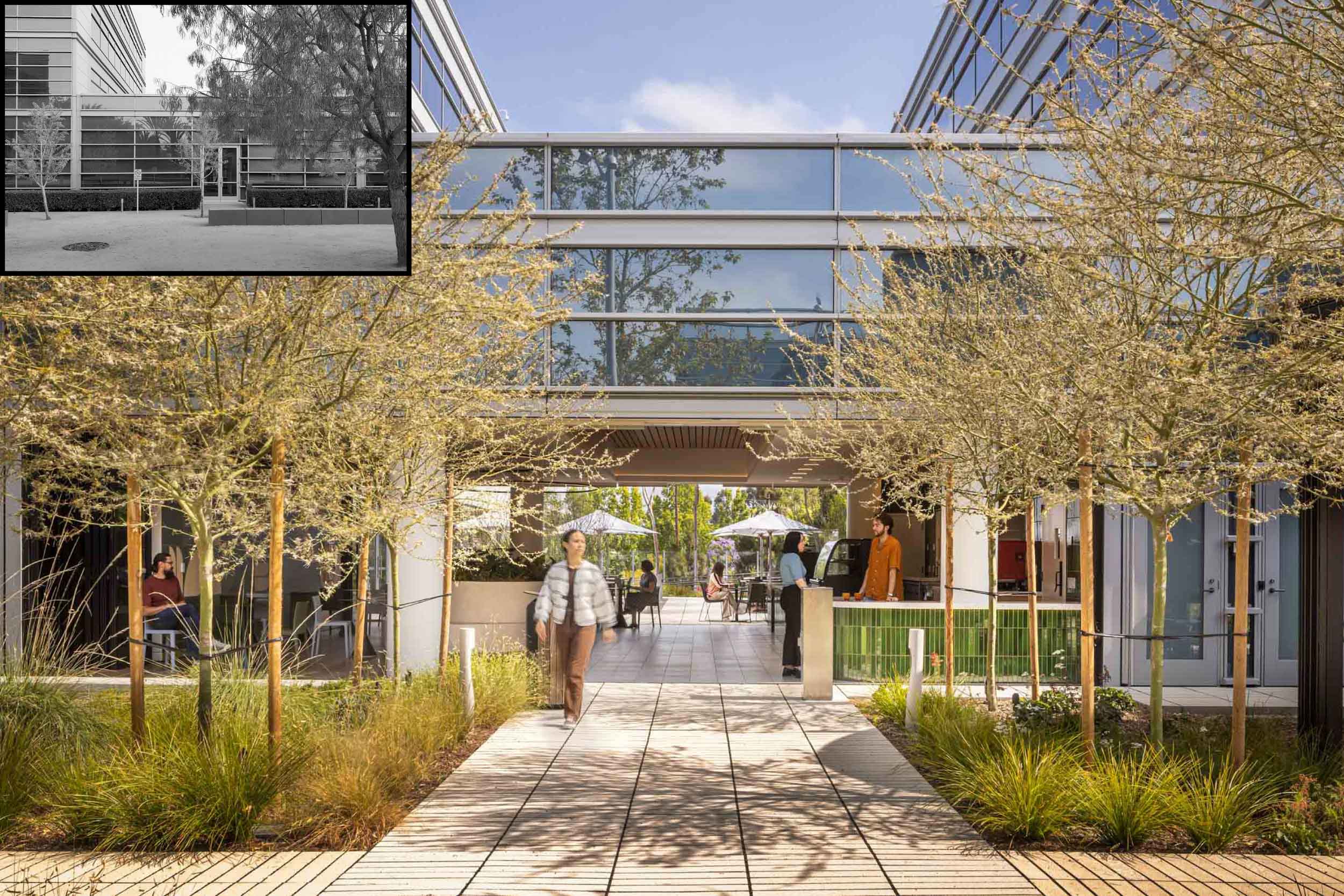
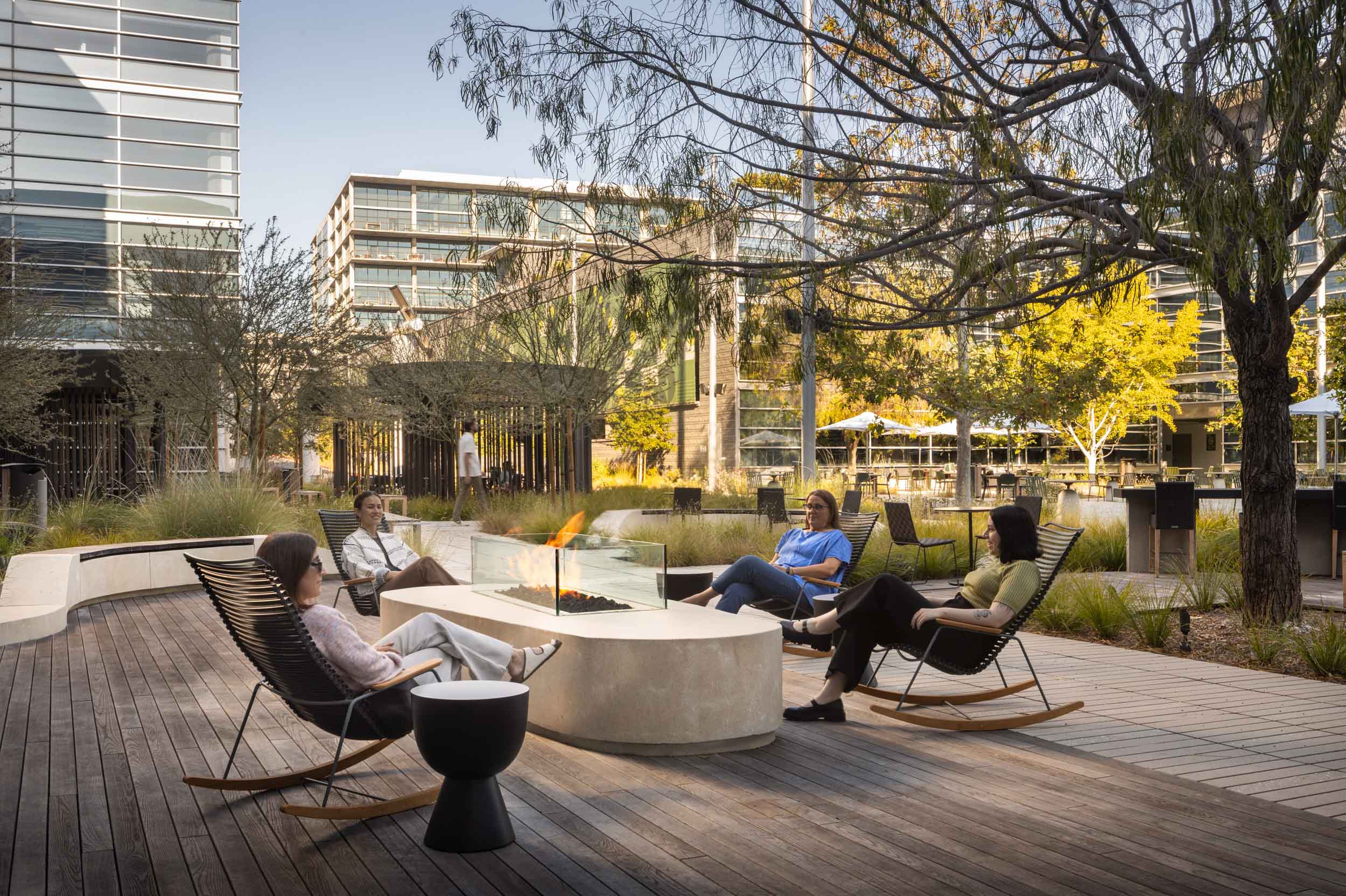
Similarly, even architecturally significant buildings require strategic repositioning to stay relevant in today’s competitive market. At 800 | 900 Culver Pointe, RIOS revitalized an HOK-designed corporate campus by introducing targeted tenant improvements and landscape-driven enhancements that leverage California’s mild climate and support modern work styles, including flexible workspaces and outdoor meeting areas. In addition, landscaped zones—often undervalued in traditional office environments—serve as powerful markers of hospitality and are increasingly essential to attracting and retaining tenants. Recognizing that today’s workforce does not want to be sealed off from the outdoors, RIOS improved the indoor–outdoor flow, creating a pedestrian-friendly open space and an open-air café that transform the campus into a more engaging, marketable, and future-ready asset.
At 800-900 Culver Pointe, RIOS created walkable outdoor spaces and improved indoor-outdoor flow to meet modern workplace needs.
Ready for Transformation
RIOS embraces repositioning as a core strategy for maintaining the relevance, value, and sustainability of the built environment. As cities and markets continue to shift, strategic adaptive reuse and asset enhancement of existing buildings is a financially and environmentally responsible path than new construction.
As a result, repositioning is a powerful investment strategy that delivers measurable economic, environmental, and experiential returns. Ultimately, RIOS helps owners, developers, and city governments unlock the hidden value with targeted, design-driven interventions that transform aging properties into place-based, sustainable, high-performing assets that grow with and enhance their neighborhoods.
Landscape upgrades at 800-900 Culver Pointe create engaging outdoor work and gathering spaces.