In Pursuit of Wonder
Wonder is everywhere in the natural world. It’s in the murmuration of flocks of starlings and in the fibonacci spirals of a romanesco broccoli at the local farmers’ market. From large phenomena to intimate observations, human capacity to experience wonder is rooted in a sense of discovery and the desire to see with fresh eyes.
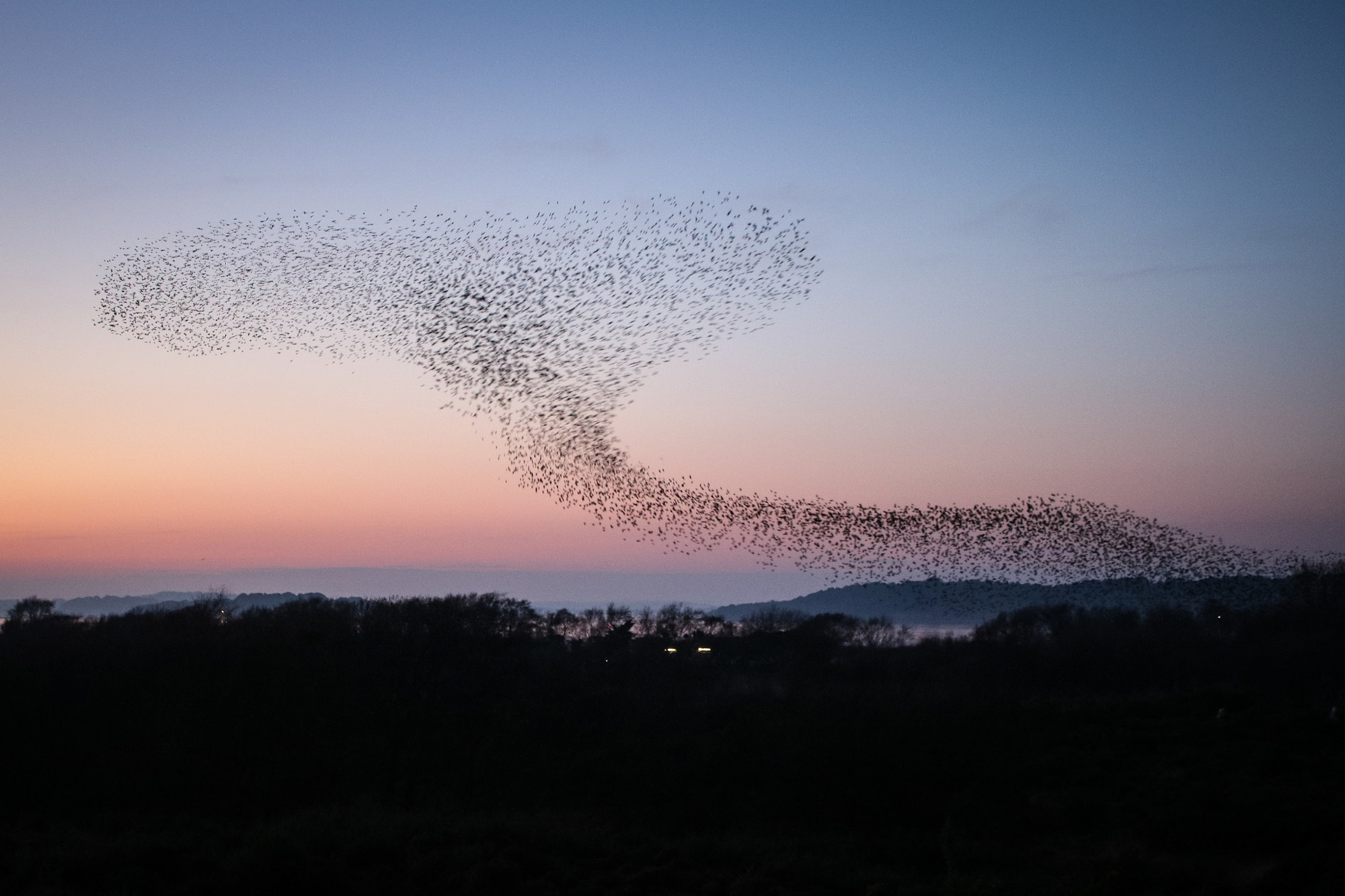
Murmuration of starlings over Studland, Dorset, England; Photo by Tim Gage / CC BY-SA 2.0
Unlike awe, where we might stand dumbstruck or fearful in the face of something we can’t fully comprehend, wonder encourages us to ask questions, be moved by emotion, and express curiosity—resulting in benefits that are both individual and collective. At a moment when daily news paints a picture of a chaotic world and social media fragments our attention, we need to nurture our innate desire to explore and connect.
“Wonder is a really remarkable term, It’s something that sparks curiosity, intrigue, and the desire to learn,” says RIOS Managing Partner Mark Motonaga.
At RIOS, we seek to create impactful spaces that engage all the senses. Wonder and design are both catalysts for creativity and optimism.
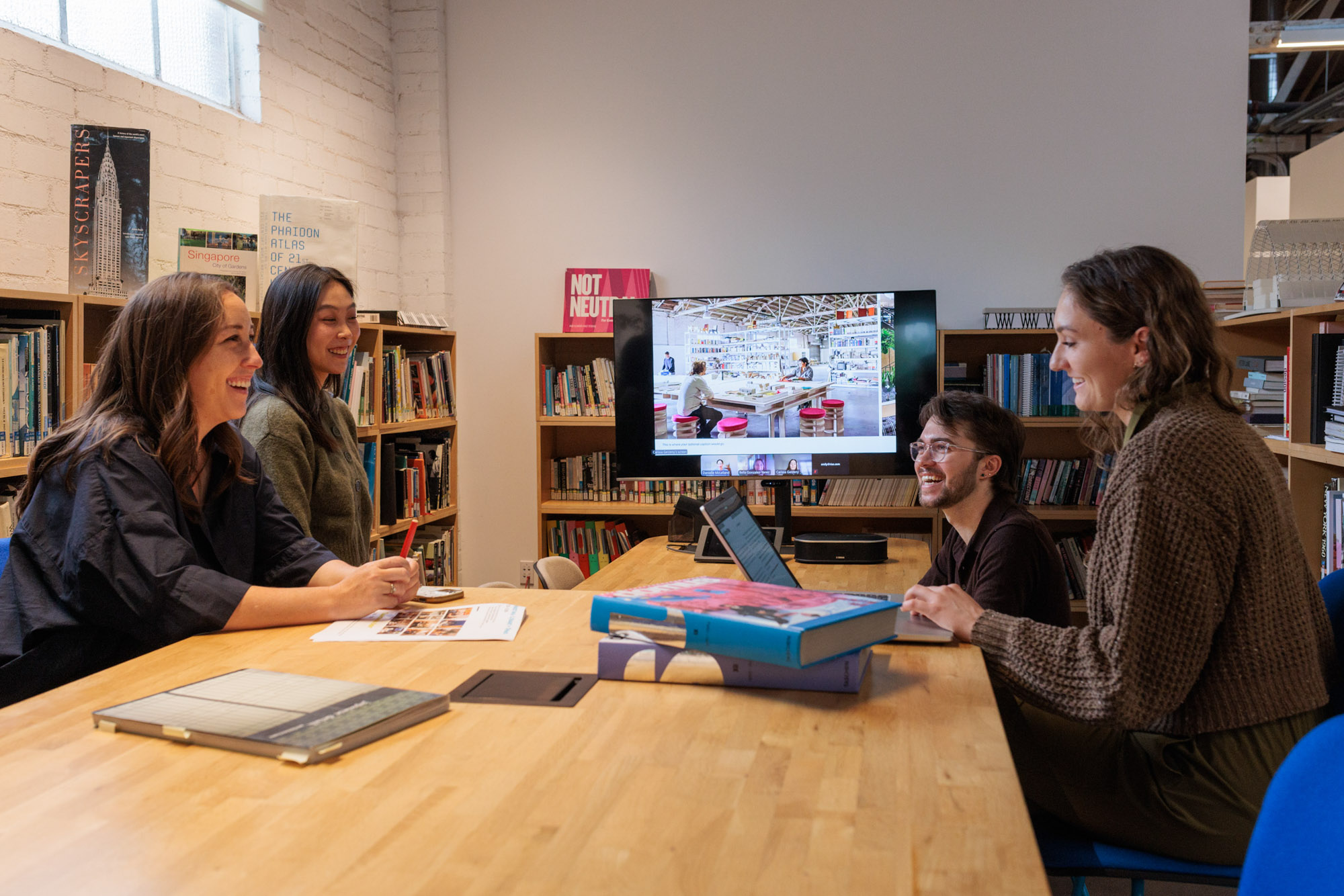
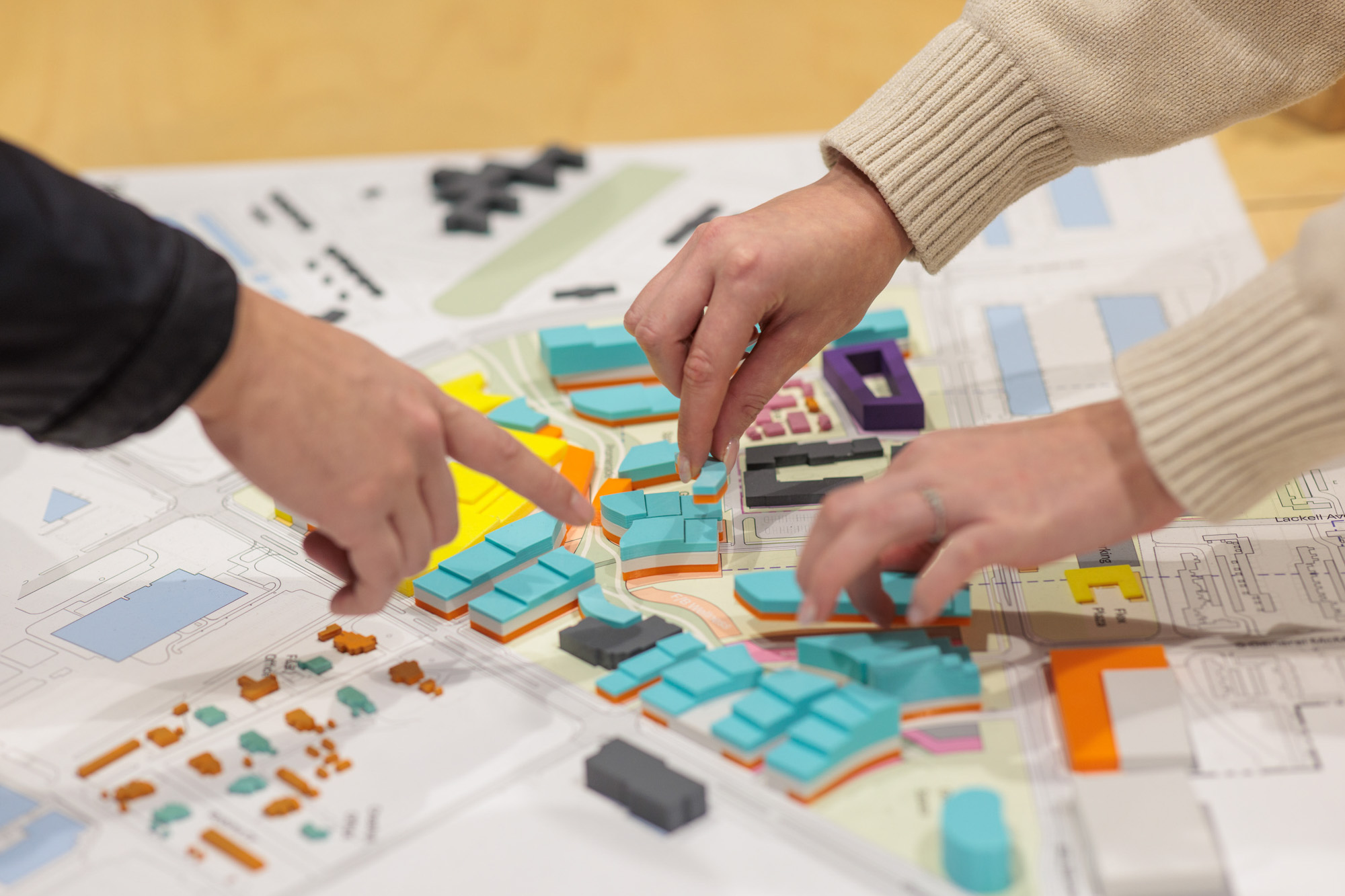
RIOS team members collaborate in the firm's library, where curiosity and shared discovery spark wonder in design; Photo by Michael Wells
Why Wonder Matters
In Awe: The Transformative Power of Everyday Wonder (2023), UC Berkeley psychology professor Dacher Keltner writes that both awe and wonder are universal feelings that cross cultural differences. He notes these emotions transcend “the mundane world of materialism, money, acquisition, and status signaling.” As designers creating places that bring people together, Keltner’s research suggests that a key to good design is valuing shared experience.
The importance of wonder also has measurable psychological and social benefits. Studies point to the ways that wonder reduces stress, increases happiness, and strengthens social connections. Grounded in interviews and scientific findings, Keltner’s book outlines eight types of wonder: moral beauty, collective effervescence, nature, music, visual design, spirituality, big ideas, and life transitions. Each of these categories offer an opportunity to, even for a moment, connect to something larger than ourselves.
Sometimes described as “unselfing,” this sensation of feeling small but tapped into something greater—like losing yourself in the starry vastness of the Milky Way, can help reduce stress and promote creativity, inspiration, and ethical decision making. Beyond these benefits, wonder teaches us how to be curious, guiding our attention, encouraging reflection, and fueling our desire to explore and connect more deeply with the world around us. In the Harvard Business Review, David P. Fessell and Karen Reivich describe how this change of reference leads to “higher levels of overall life satisfaction and well-being.” They write, “As you tap into something larger and your sense of self shrinks, so too do your mental chatter and your worries. At the same time, your desire to connect with and help others increases.”
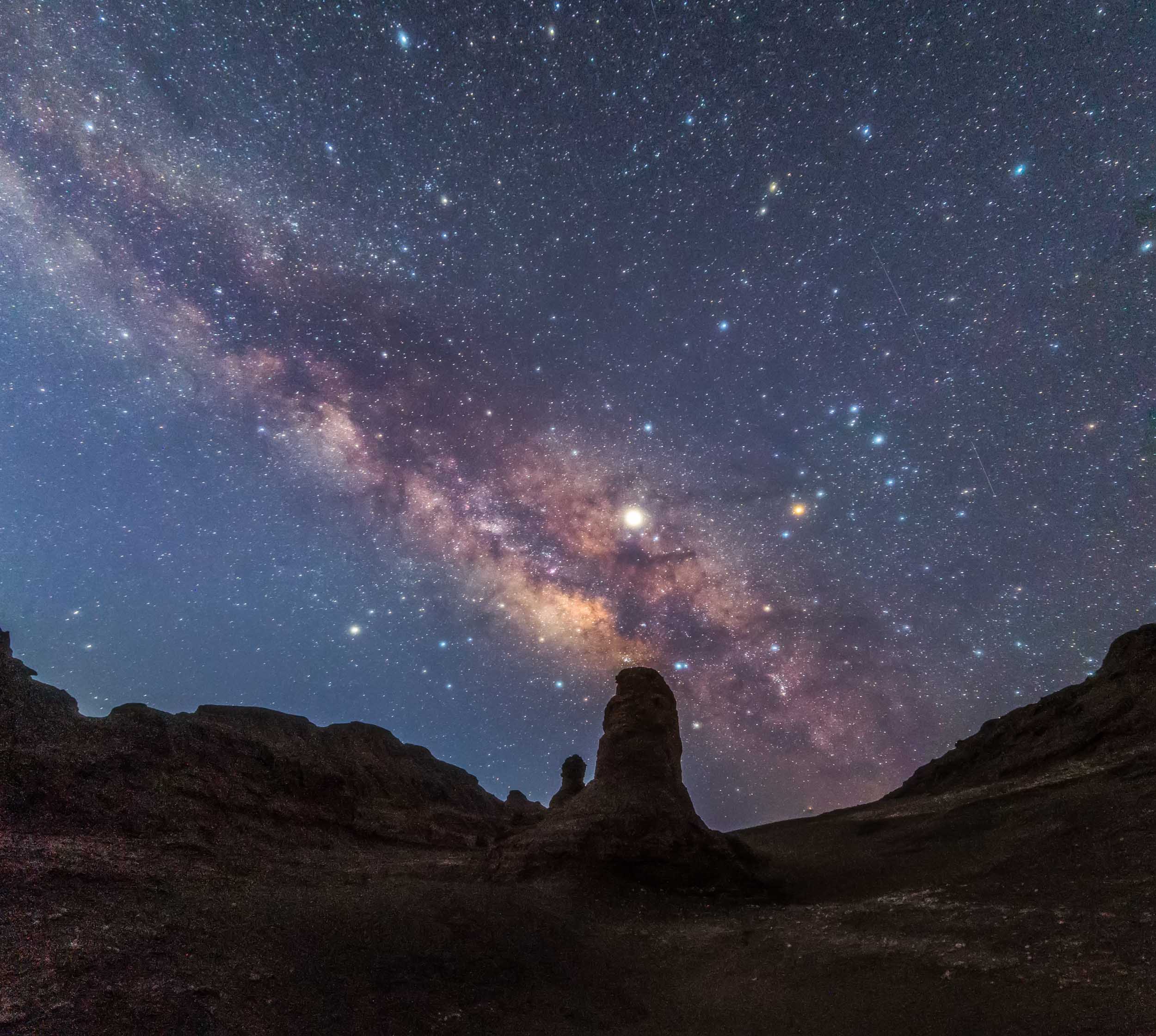
Milky Way over Lut Desert, Iran; Photo by Mehdi Momenzadeh / CC BY-SA 4.0
Breaking the Algorithm
As both investigators and practitioners, RIOS is uniquely positioned to explore the role of wonder in shaping the perception and emotion of place. Qualities of atmosphere, light, and technology certainly contributed to historical examples. It’s impossible to deny the sense of beauty evoked by sunlight streaming through stained glass windows at Chartres Cathedral, or to find metaphysical pleasure in the engineering marvels of Sydney Opera House. Yet contemporary life seems determined to erode meaning from public space, offering blank, cookie-cutter solutions that favor efficiency over transcendence. Our environments are wonder deficient.
As a society, we face a paradox: we’ve never been more connected digitally, yet more isolated experientially. Digital screens—both hand held devices and environmental signage—fight for our attention, feeding us snippets of information that never seem to satisfy. We are creatively, socially, and cognitively suffering as our ability to find wonder in everyday life diminishes.
“How do we as designers create places, spaces, forms, geometries, and landscapes that captivate a sense of wonder—that pull people in and make them want to learn more?” asks Motonaga.
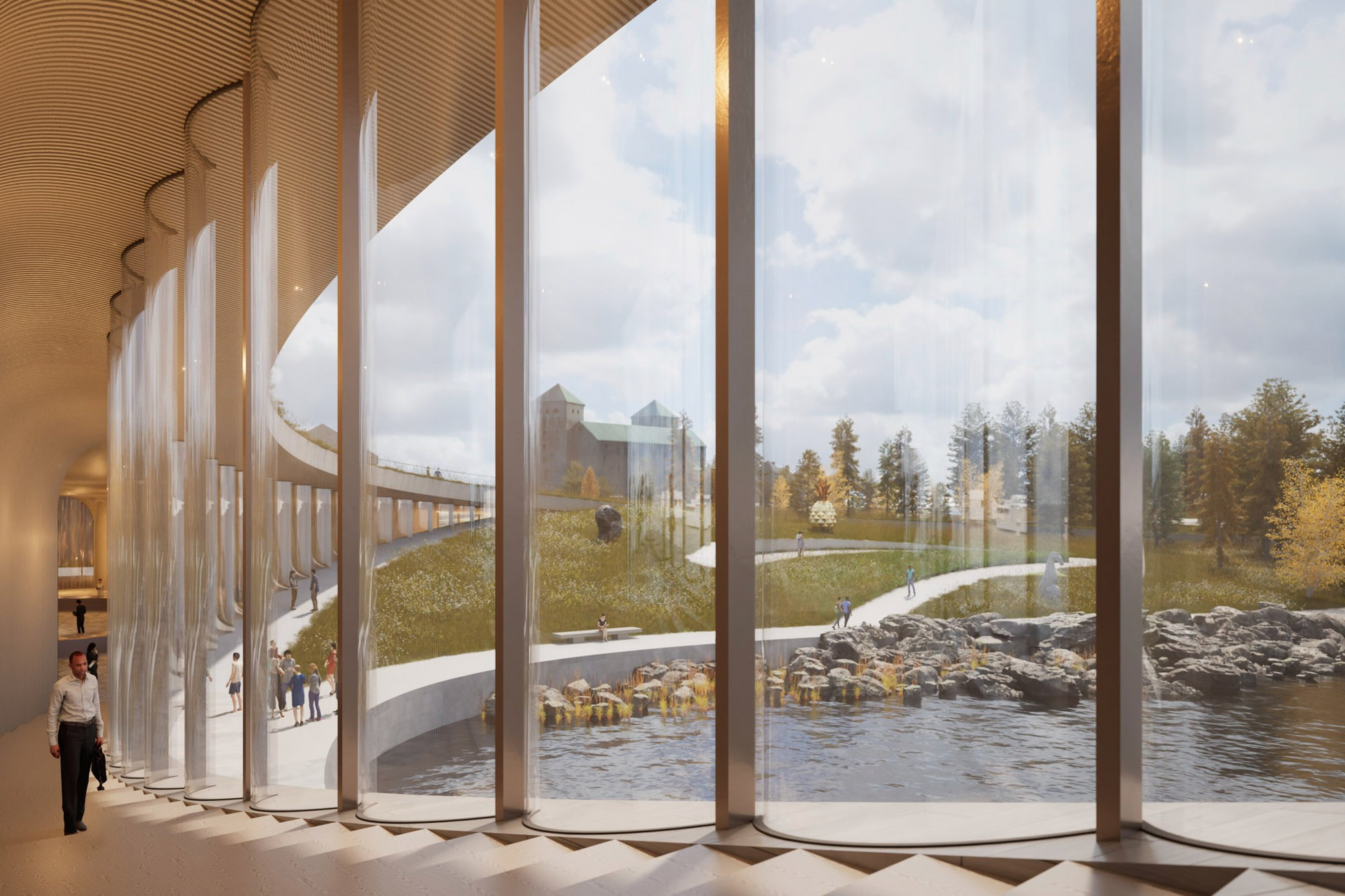
Museum of History and Future, Turku, Finland, where architecture connects visitors to the landscape and creates moments of discovery; Design by RIOS / Rendering by Yanis Amasri
Design has the power to reawaken wonder, restoring the emotional depth and shared meaning too often stripped from our built environments. To better understand how to shape spaces that resonate with beauty, imagination, and belonging, the RIOS team developed in-house research. If wonder is beautiful, unexpected, unfamiliar, and inexplicable, then it would need the global creativity of RIOS designers to capture something so ineffable. The firm surveyed RIOS’ studios across Europe, Asia, and North America and asked individual members to submit their own definition of wonder. Each studio member submitted an image and a description of something they feel evokes a sense of wonder to them personally.
“We want people to think of examples founded in phenomenon, science, mythology, nature, culture, ritual, emotion, or place,” read the firm-wide request.
The nearly two hundred submissions reflected the diversity of the practice and a wide range of scales. For some, wonder is in daily rituals, such as the Swedish tradition of “fika”—a coffee break that embodies a cultural tradition of social connection and live-work balance. Scientific innovation and cosmic phenomena also proved captivating, like a sonic resonance or full lunar eclipse. Many studio members turned to the natural world for inspiration: slime mold networks, annual butterfly migrations, frazil ice pans on frozen rivers. (While we at RIOS love and appreciate art with gusto, for this study it is considered an example of “demonstrated wonder,” a slightly different category than wonder itself.)
By learning from these remarkable examples of wonder, we uncover new precedents that inspire us to challenge the status quo.
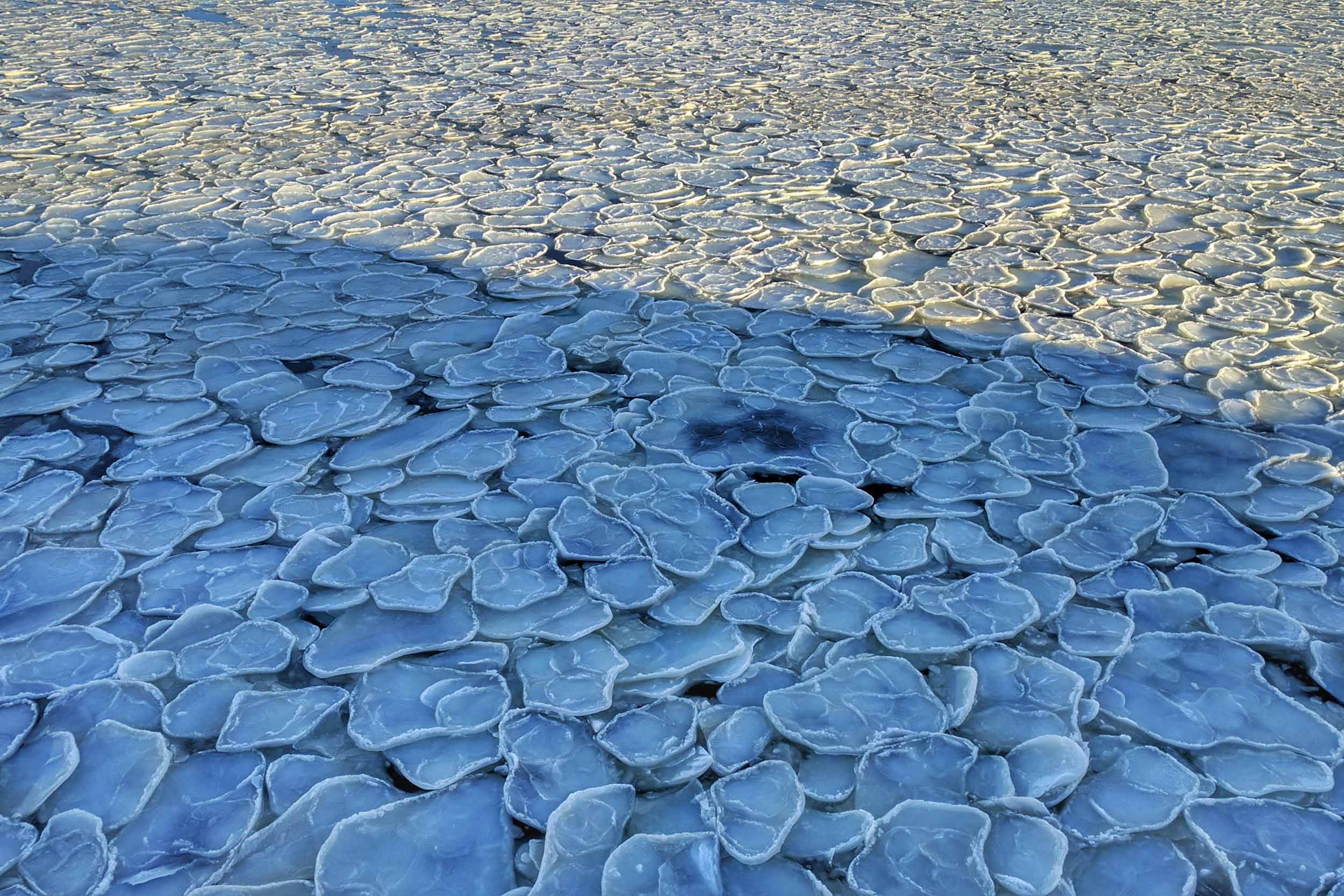
Pancake ice in the Ross Sea, Antarctica; Photo by Steve Nicklas, NOS, NGS / Public Domain
Wondrous Findings
So, recently, we embarked on an in-house research study to explore its characteristics, psychological and neurological advantages, and application within design. From RIOS’ collective imagination, the designers found that wonder lies in the space between culture and science. The findings that are applicable to how RIOS believes design should evolve:
- Wonder is measurable: Neurological and psychological research provides ample evidence to support benefits.
- Multisensory approach: Wonder is an embodied experience. By engaging all our senses, we can create more memorable, impactful experiences.
- Nature connection: Humans are drawn to and find connection and solace in nature. The use of biophilic design elements consistently evokes wonder.
- Scale matters: Wonder happens at all scales. It can be designed into architectural details using light and materials or developed at the urban scale by creating vistas and spaces for gathering.
- Cultural sensitivity: While everyone experiences wonder, the elements that trigger individual responses vary across cultures and contexts.
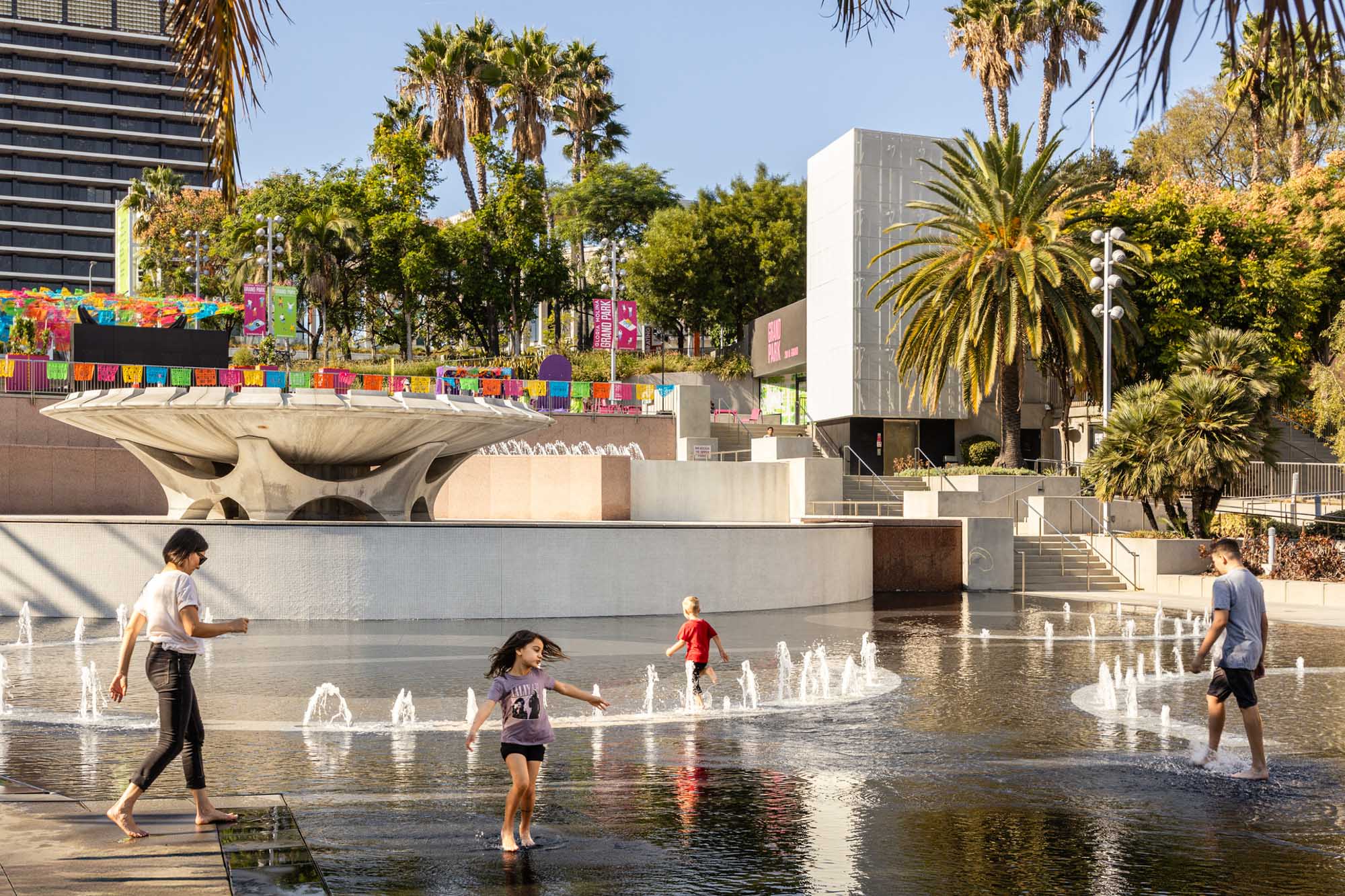
Families find joy in Grand Park's interactive fountain, downtown Los Angeles; Photo by Pavel Bendov / ArchExplorer
From Research to Reality: Design Applications and Placemaking
Humans have an innate need to connect to the natural world, from watering a ficus on the balcony to basking in the beauty of an awesome landscape. At One Beverly Hills, 10 acres of botanical gardens and open space immerse visitors in ecological richness. RIOS blanketed the mixed-use development, including retail and residential towers, with more than 2,000 trees and over 43,000 individual plants, representing 416 unique plant species and varieties, to create a true urban forest.
These plantings form a living civic infrastructure for the City of Beverly Hills and, located on the historic site of the Beverly Hills Nurseries, reconnect the community to the legacy of the land. Visitors encounter moments of wonder along shaded walking trails, pausing on a bench, or experiencing the gardens through water, texture, and seasonal change.
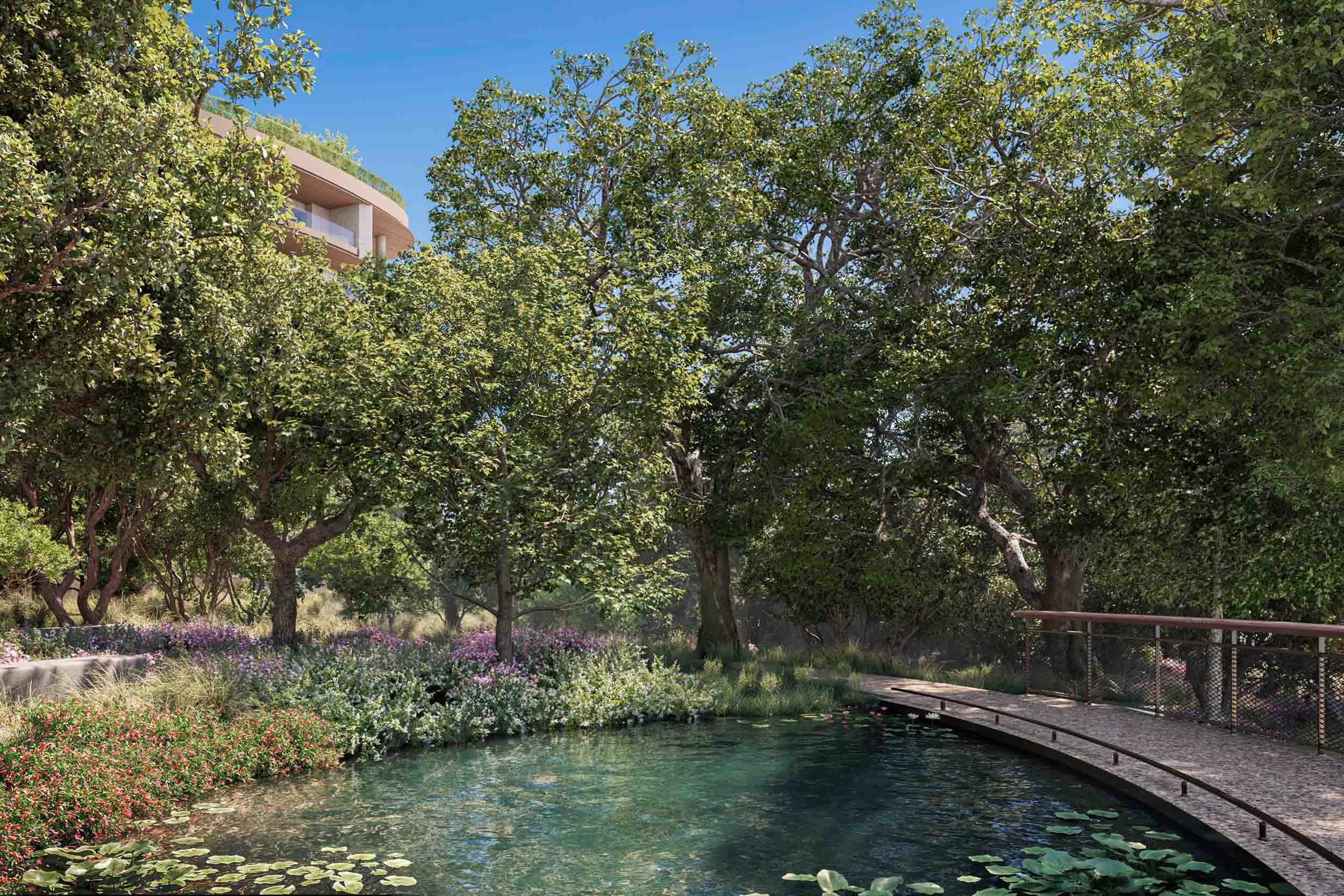
Ephemeral Pond at One Beverly Hills immerses visitors in Southern California native botanicals; Rendering courtesy of One Beverly Hills
Applied to design and architecture, cultivating wonder leads to more meaningful, engaging, and memorable spaces. RIOS aims to spark curiosity with each project. It doesn’t need to be a heroic architectural form to make an impact or make a user smile. It can be something mundane that is simply elevated through design. Small scale details, often high-touch experiences that users interact with each and every day, matter. The patina on a brass door handle caused by years of hands or the warmth and curvature of a comfortable wooden bench are equally able to convey wonder and spark emotion and meaning.
At 400-square-meters, the Singapore Changi Airport Fit&Fun Zone demonstrates how our pursuit of wonder encompasses a variety of scales. This colorful, whimsical environment applies experience design, using technology and research to encourage creativity. Designed as a respite for travelers, we looked to studies of travelers’ commonly experienced emotions, identifying five distinct states—anxiety, frustration, exhaustion, excitement, and the need for peace—to create a playful wellness ecosystem. From meditative pendulum chairs to music-responsive trampoline pods, each element adds layers of joy, creating an engaging and memorable experience in Terminal 2, one of the world’s premier travel hubs.
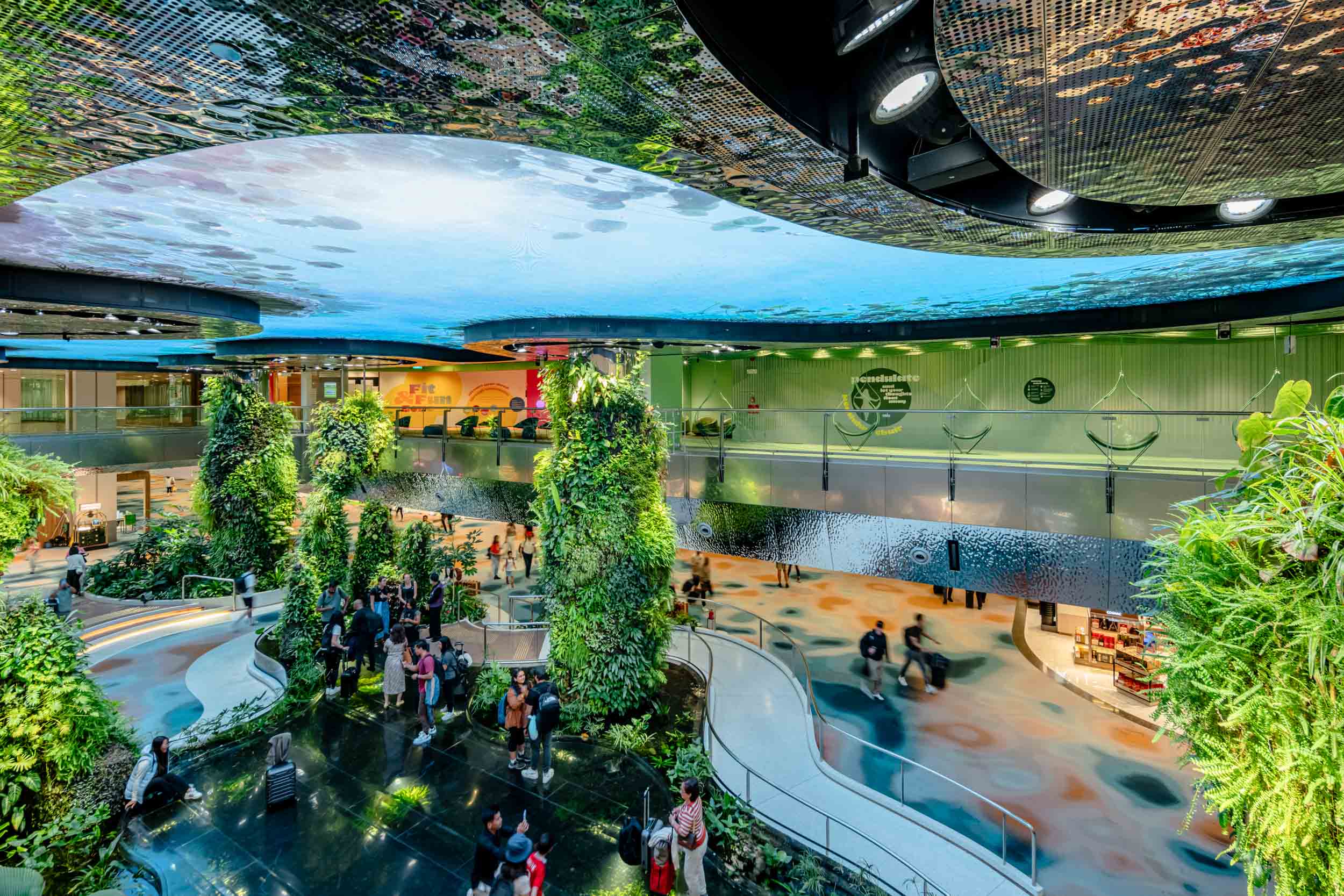
Changi Airport's Fit&Fun Zone, Singapore, transforms travel into playful discovery; photo by Kevin Siyuan
There’s something magical in how concerts produce transcendence. When people are united by music, caught up in the beat, they join in a collective sense of wonder. For nearly two decades, RIOS has applied its placemaking expertise in working with the LA Philharmonic to renovate the legendary Hollywood Bowl. Constructed in 1929, the outdoor amphitheater required small and large updates, from new picnic furniture and refreshed lighting to expanded visitor amenities and a multi-year vision plan. Each intervention builds on the last, respecting the Bowl’s historic structures and topography, while creating an environment that enhances a visitor’s experience. Visitors can comfortably lose themselves in the music . while the improvements preserve the venue’s character and maintain a sense of wonder for all who experience it.
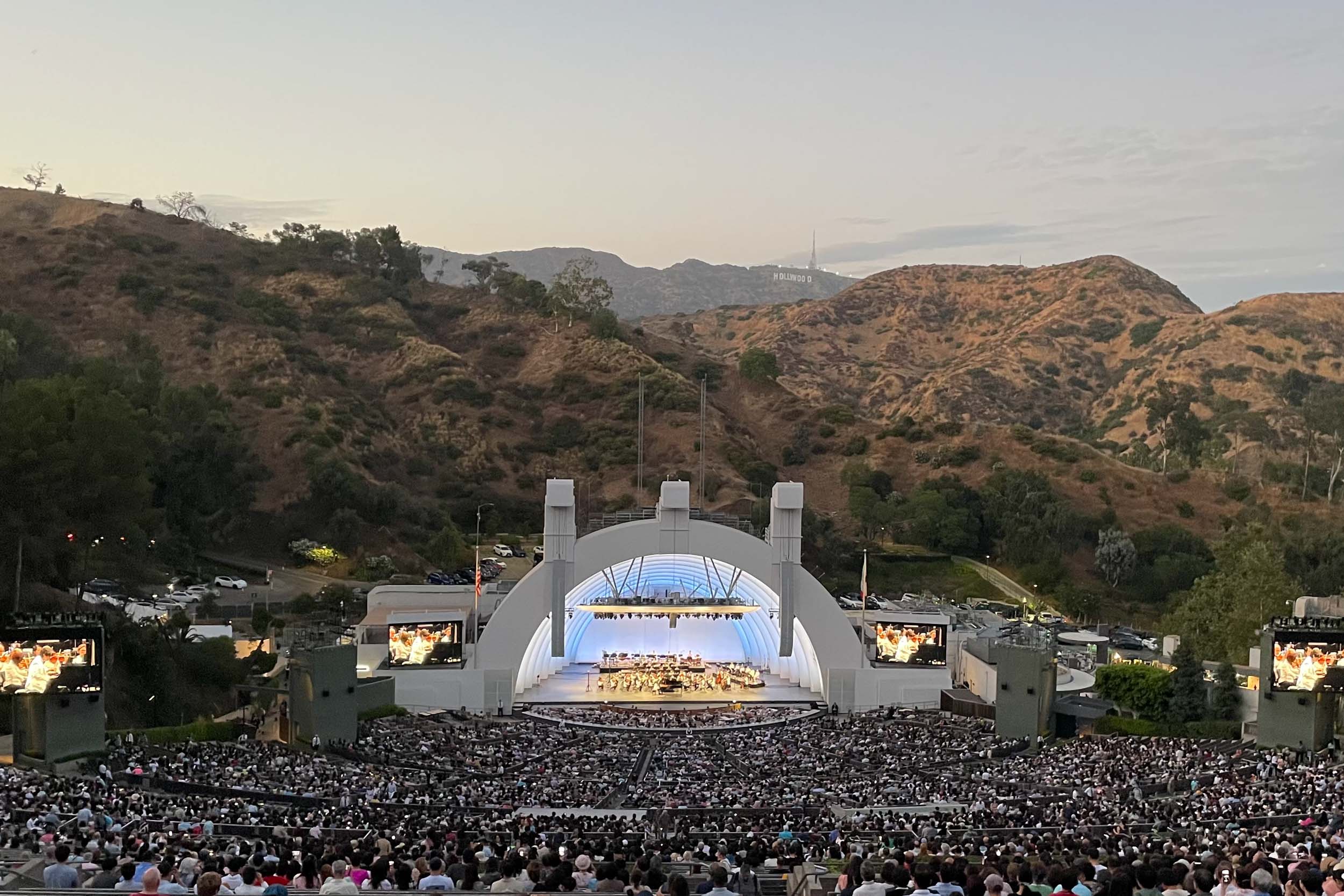
The Hollywood Bowl's place-specific design roots Los Angeles audiences in the landscape and culture of the city; Photo by Matt Frost / CC BY-SA 4.0
Arriving at Wonder
In a world that too often prizes speed and distraction over presence and connection, cultivating wonder is a radical act. Wonder allows us to slow down and deepen our experiences. Beauty, discovery, and curiosity are not luxuries—they are essential to being human. By integrating wonder into design, we don’t just make better buildings or landscapes; we shape environments that transform how people see themselves, each other, and the world around them.
Imagine cities where public spaces invite solidarity instead of isolation, landscapes that celebrate collective cultural rituals and remind us that we belong to something larger. A wonder-driven future is not only possible, it’s already unfolding. At RIOS, we believe that to design for wonder is to design for humans to flourish. We invite you to join us in this transformation: to look closer, ask questions, and demand more from the spaces we share.
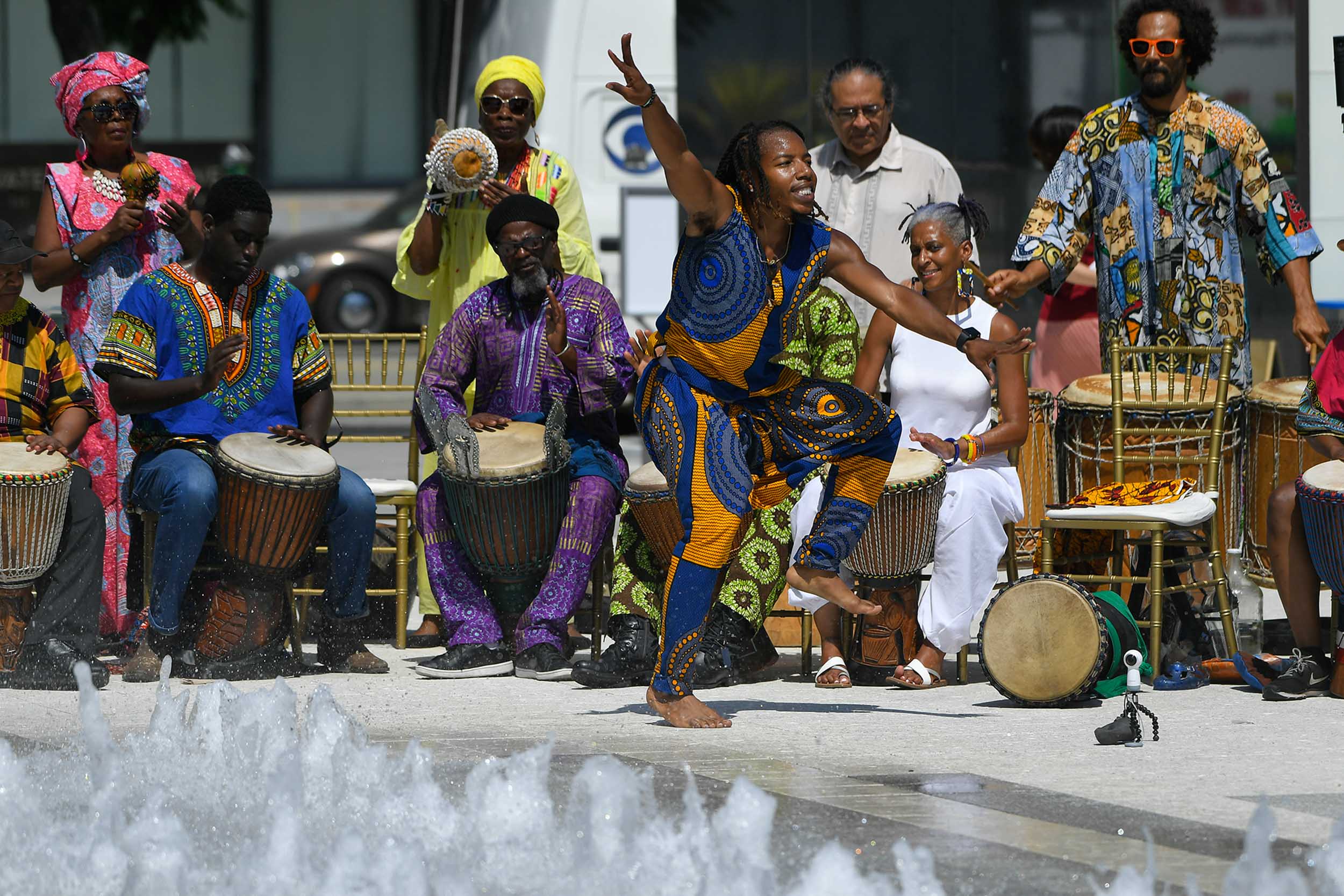
Jerry Moss Plaza at The Music Center creates collective wonder through shared cultural experiences; Photo courtesy of The Music Center