A century ago, Beverly Hills was a scrubland—windswept, treeless, inhospitable. The palms that now define its boulevards arrived through deliberate cultural choreography, transforming barren land into California’s subtropical fantasy.
At One Beverly Hills, over ten palm species line Santa Monica and Wilshire Boulevards. The gardens combine drought-tolerant plantings with the iconic silhouettes that have shaped Los Angeles’ identity for generations. This landscape reflects both the ecological realities and the romanticized vision of Los Angeles as an endless oasis.

General James Longstreet's palm-lined residence on Adams Boulevard, circa 1908. C.C. Pierce & Co./California Historical Society Collection, USC Libraries
Palms in Southern California: From Religious Symbol to Cultural Icon
Palms first arrived in Southern California with Spanish missionaries in the 18th century. Their biblical resonance, particularly with Palm Sunday, gave spiritual meaning to a foreign landscape. By the early 20th century, these trees had shed their sacred origins to become cultural and economic assets. Los Angeles marketed itself as an exotic, sun-drenched escape to East Coast dreamers, and palms became the visual shorthand for that promise.
The transformation was deliberate and dramatic. Pasadena lined its streets with palms at 100-foot intervals, creating grand boulevards signaling prosperity and tropical ease. Venice marked George Washington’s birthday by planting 200 Mexican Fan Palms along Washington Boulevard, embedding civic ritual in the landscape itself.
For the 1932 Olympics, Los Angeles planted 25,000 palms throughout the city, followed by another 40,000 through a Works Progress Administration project during the Great Depression. These weren’t simply beautification efforts. They were strategic branding. Palms became a lifestyle promise: perpetual sunshine, leisure, escape from harsh winters. Real estate developers and city boosters understood that palms sold not just property, but possibility.
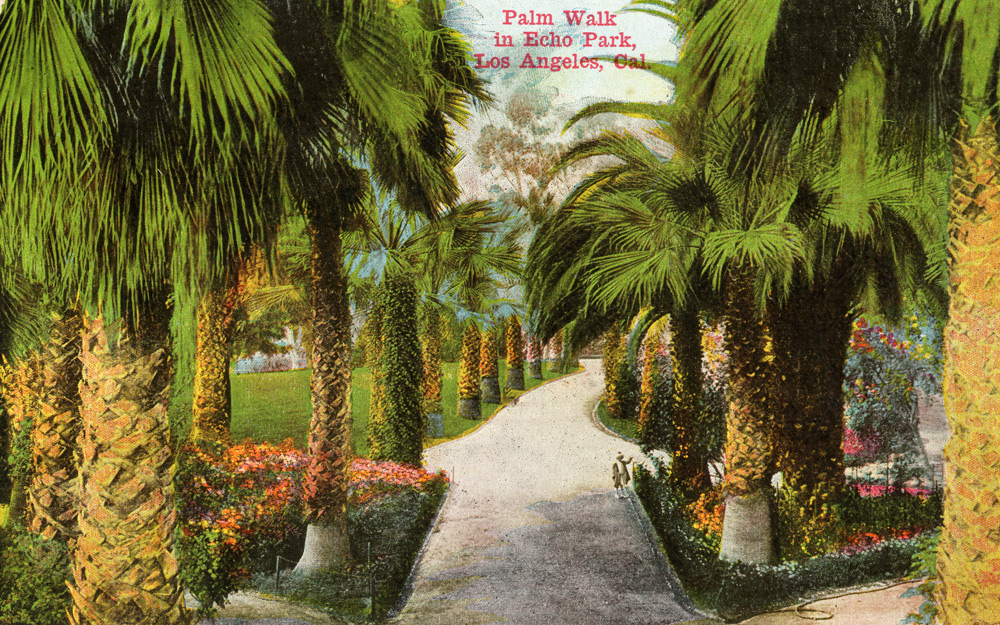
Palm-lined walkways and flowering borders in Echo Park, circa early 20th century. Security Pacific National Bank Collection/Los Angeles Public Library.
Supplying the Dream
Beverly Hills Nurseries shaped the city from within. Founded by the Rodeo Land and Water Company, the nursery was originally located on the south side of Sunset Boulevard. In the mid-1920s, it relocated to the One Beverly Hills site. As one of California’s largest retail nurseries, Beverly Hills Nurseries significantly influenced the city’s development. The nursery provided diverse arrays of palms, trees, and ornamental plants that shaped entire landscapes.
The nursery oversaw Beverly Hills’ master tree-planting plan and supplied Virginia Robinson Gardens, one of the city’s most significant historic estates. Beyond Beverly Hills, it provided landscape design for the original location of the Los Angeles Public Library. Beyond Beverly Hills, it contributed to the original Los Angeles Public Library and designed early estates including Buster Keaton’s home and the Electrical Adobe House, built to showcase modern appliances.
Beverly Hills Nurseries employed skilled landscape architects and arborists renowned for ambitious projects. One notable feat involved relocating an entire orange grove from Whittier to the Marion Davies estate—an era-defining example of shaping landscapes through sheer determination. The nursery also hosted weekly live classical music broadcasts on KNX radio in the 1920s, blending culture, commerce, and horticulture. Landscapes, it seemed, were as much about lifestyle as they were about plants.
Though the nursery closed in 1946, its legacy endures. In 2023, the Beverly Hills Cultural Heritage Commission nominated the site for the Golden Shield Cultural Program, honoring its contribution to the city’s cultural and horticultural heritage.
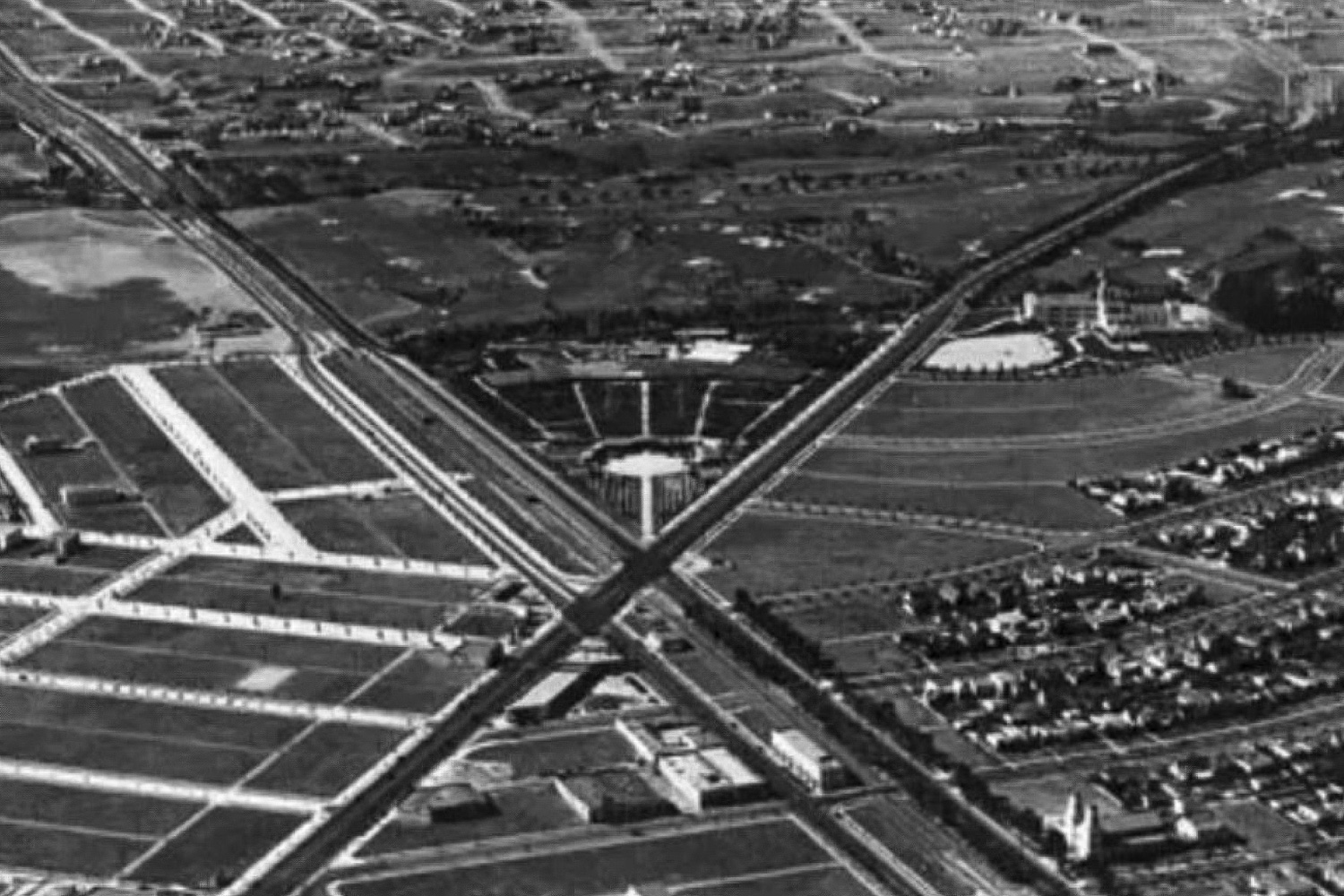
Beverly Hills Nurseries, relocated site at Wilshire and Santa Monica boulevards, 1928. Image courtesy of the City of Beverly Hills.
Sustainable Palm Garden Design for Modern California
The Palm Gardens at One Beverly Hills continue this story while embracing sustainability. Rather than nostalgic recreation, the gardens are a thoughtful reinterpretation that honors cultural legacy while responding to environmental realities.
Palms are paired with other vital Southern California plants and palm-like species, creating dynamic and textural compositions. Hardy, low-water species like Brahea, Chamaerops, and Jubaea add structural diversity. Companion plantings of succulents, flowering perennials, and shrubs ensure year-round interest and ecological function.
Unlike historic boulevards dominated by a single species, this garden emphasizes biodiversity, resilience, and water conservation. Multiple planting layers provide shade at various heights, enhance habitat value, and create visual variety. The result feels familiar yet forward-looking—recognizably Californian while adapted for climate uncertainty. Cultural symbols can evolve without losing their meaning.
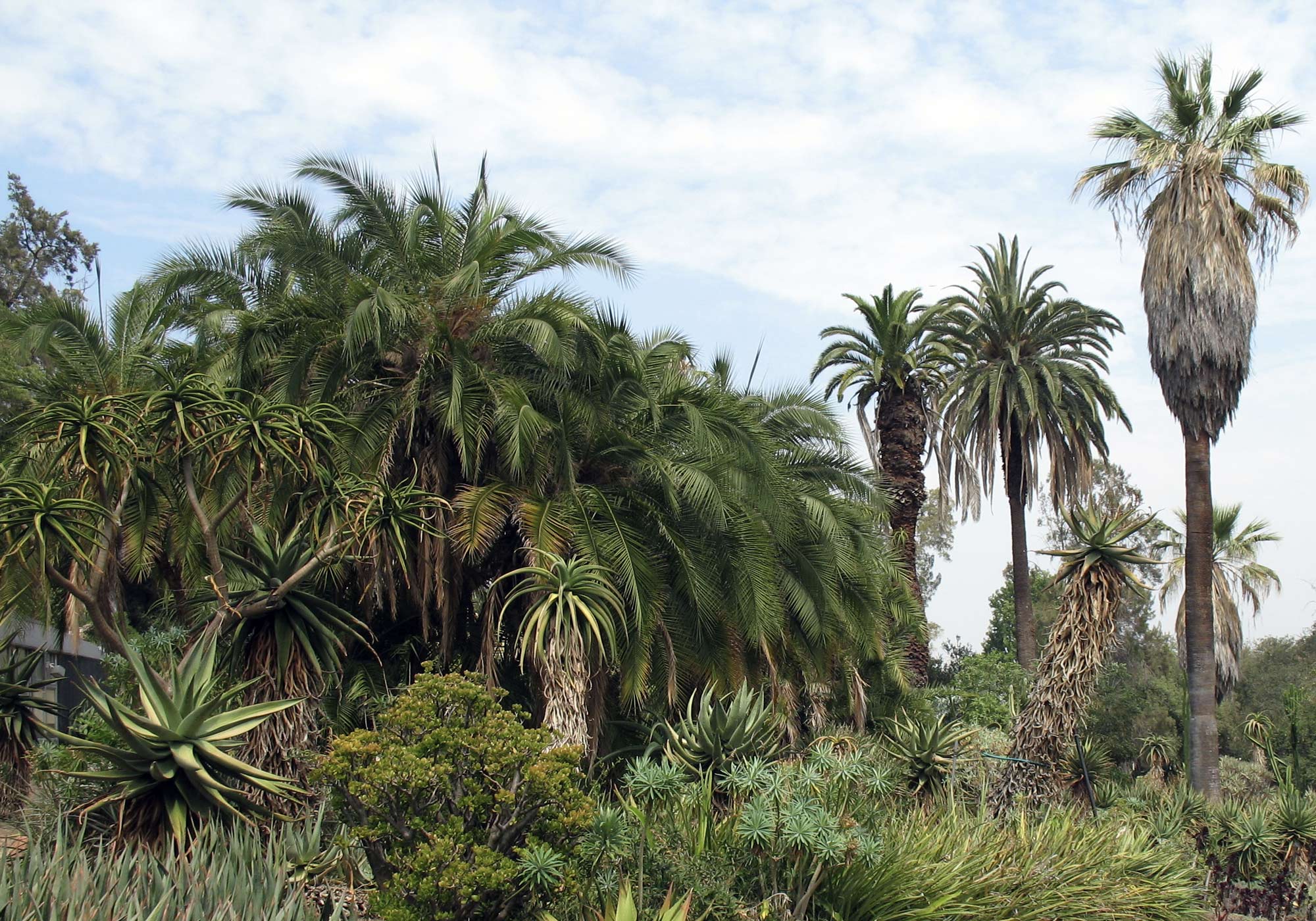
Drought-tolerant palms demonstrate the resilience that shaped Southern California's sustainable landscape approach.
Water Conservation in Palm Garden Landscape Architecture
The water story is central to reimagining the palm garden. Historic palms required constant irrigation to maintain lush appearances. At One Beverly Hills, irrigation uses no potable water. Captured rainwater and treated greywater from on-site hotels and residences meet all needs, conserving millions of gallons annually.
Drought-tolerant companion plantings further reduce water demand. Smart irrigation systems adjust to soil moisture and weather. This supports pollinators, urban wildlife, and the site’s carbon sequestration goals. Sustainability extends beyond water to ecosystem restoration.
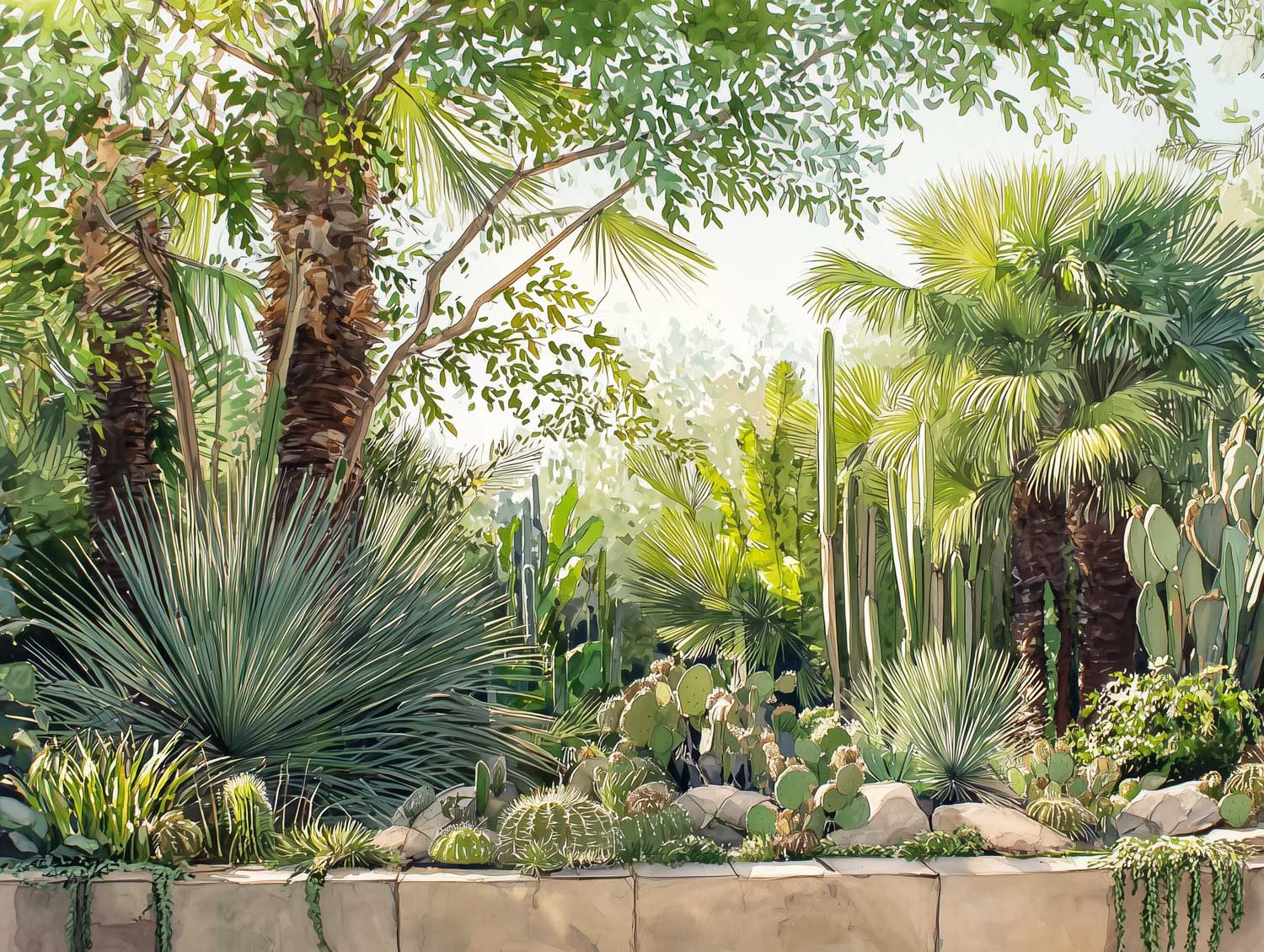
Conceptual visualization of the Palm Gardens at One Beverly Hills. Image by RIOS.
Palm Species at One Beverly Hills
The Palm Gardens showcase both iconic Southern California species and lesser-known varieties suited to Mediterranean climates:
- Jubaea chilensis (Chilean Wine Palm) – Slow-growing, massive trunk stores water internally.
- Brahea armata (Mexican Blue Palm) – Silvery-blue fronds shimmer in sunlight; extremely drought-tolerant.
- Phoenix dactylifera ‘Medjool’ (Date Palm) – Classic date palm, recalling Middle Eastern origins and local agricultural history.
- Phoenix reclinata (Wild Date Palm) – Multi-trunked species that creates lush, jungle-like groves.
- Phoenix roebelenii (Pygmy Date Palm) – Delicate, fine-textured species. It adds graceful contrast at a smaller scale.
- Roystonea regia (Royal Palm) – Tall, smooth trunks with regal presence; gifted to California officials in 1928.
- Washingtonia filifera (California Fan Palm) – Native to desert oases and canyons.
- Pachypodium lamerei (Madagascar Palm) – Palm-like form adds exotic architectural interest.
- Chamaerops humilis ‘Cerifera’ (Blue Mediterranean Palm) – Compact clumping species with silvery-blue foliage.
- Cycas revoluta (Sago Palm) – Ancient cycad species, adding prehistoric character.
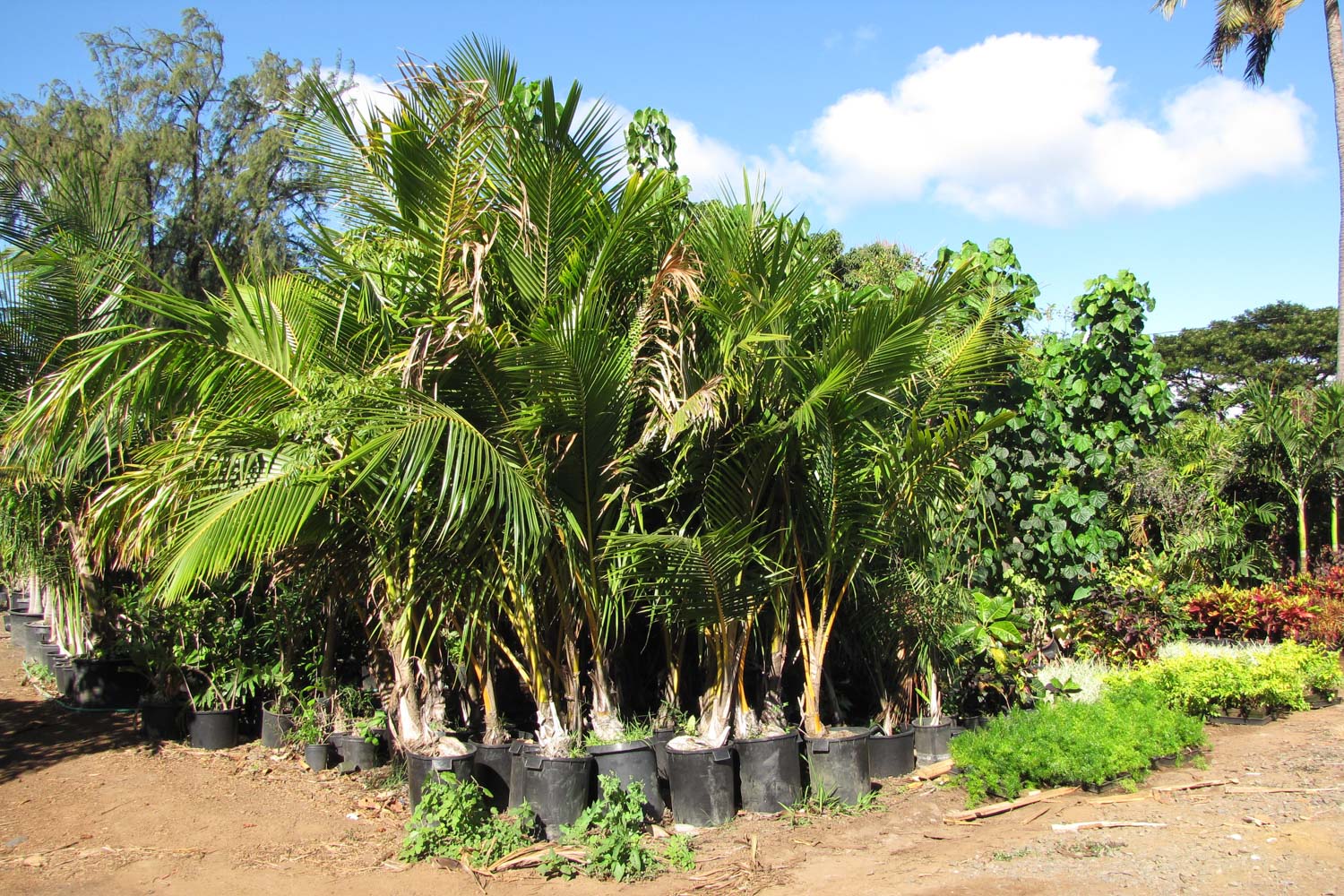
Commercial palm nursery cultivation supplied California's 20th-century palm-planting ambitions. Photo by Forest & Kim Starr.
Bridging the Past and Present through Climate-Responsive Design
The Palm Gardens at One Beverly Hills form a living link between the city’s past and future. These gardens acknowledge the aspirational imagery palms have long represented—luxury, leisure, exotic escape. They also foster landscapes suited to the region’s climate challenges.
Palms remain powerful markers of place and identity, but their meaning has evolved. Where they once represented unlimited resources, they now demonstrate how cherished landscapes can adapt through thoughtful design.
By celebrating the legacy of palms while reimagining their role in modern landscape architecture, One Beverly Hills Gardens keeps Southern California’s oasis vibrant, sustainable, and rooted in culture. They honor what Beverly Hills Nurseries began a century ago, charting a path forward that balances history and ecological responsibility.
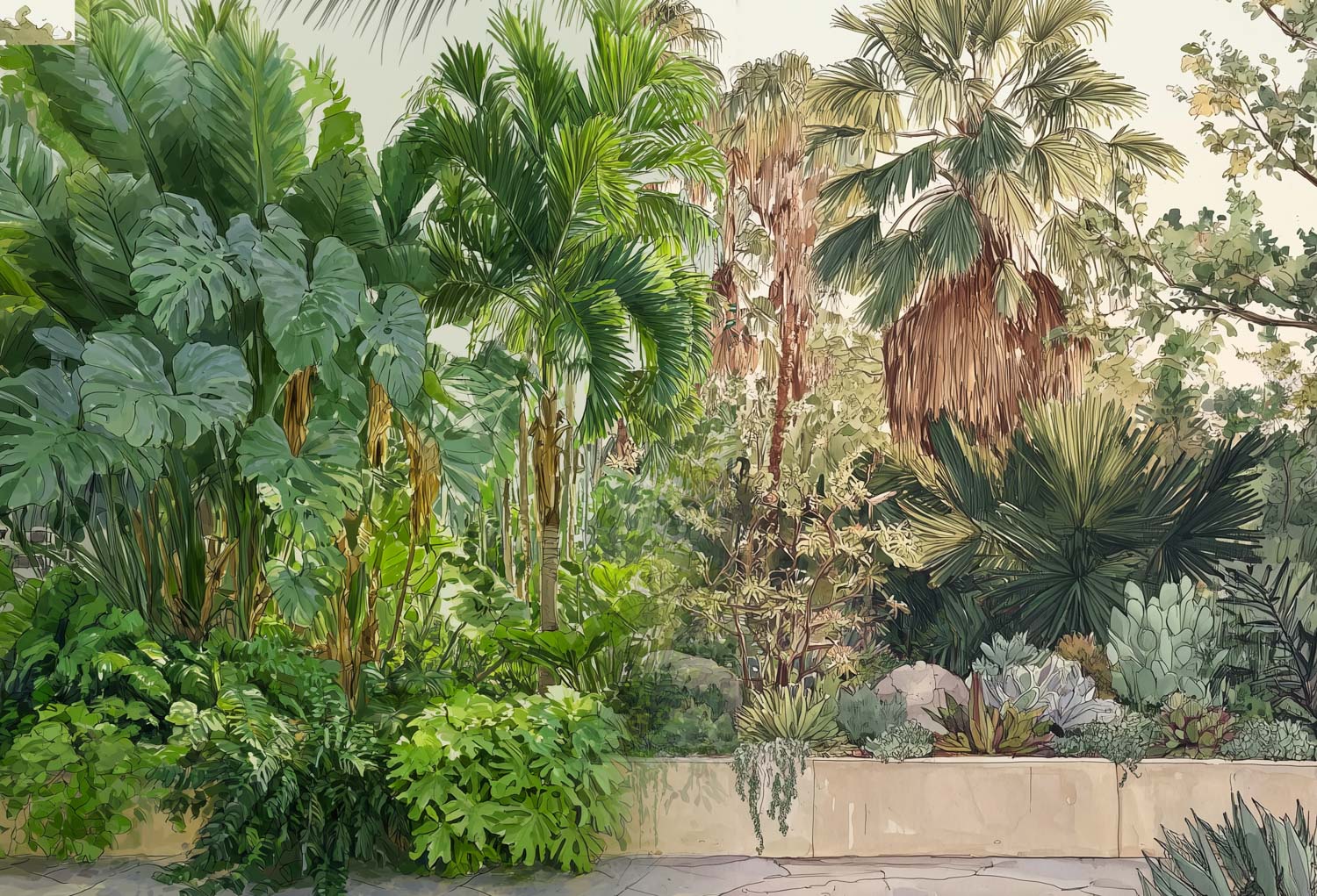
Conceptual visualization of the Palm Gardens at One Beverly Hills. Image by RIOS.