Connecting to Southern California’s Horticultural Legacy
The botanical gardens at One Beverly Hills, designed by RIOS, celebrate the extraordinary diversity of plants that thrive in Southern California’s Mediterranean climate. These gardens are based on history yet designed for the future. They reflect the eclectic planting styles that emerged as Beverly Hills developed in the early 1900s.
The landscape has around 2,100 trees from 45 different species. It also includes 43,000 shrubs from 355 species. This makes it one of the most biodiverse urban gardens in California.

Off of Doheny Road, Beverly Hills, showing the original Beverly Hills Nursery; Security Pacific National Bank Collection/Los Angeles Public Library
In the early 1900s, new Beverly Hills residents wanted to recreate the elegance and beauty of the estates they had admired abroad, inspired by Grand Tours of Spain, Iran, France, Japan, and beyond. Southern California’s climate mirrors many of these regions. This makes it a place where plants from around the world could be seamlessly woven together.
The historic Beverly Hills Nurseries, located on this site, helped shape the city’s early estates. From 1920 to 1946, it was one of the biggest retail nurseries in California. It offered highly sought-after plantss that created the grand gardens of that era.

Beverly Hills Nurseries, relocated site at Wilshire and Santa Monica boulevards, 1928. Image courtesy of the City of Beverly Hills.
The Gardens that Shaped Beverly Hills
Beverly Hills Nurseries shaped the city’s landscapes, supplying plants for the Virginia Robinson Gardens and designing estates like Buster Keaton’s house and the Electrical Adobe House. It also contributed to major projects, including the original Los Angeles Public Library. The nursery employed skilled landscape architects and arborists who took on ambitious tasks, like relocating an entire orange grove to the Marion Davies estate.
Beyond horticulture, the nursery was a cultural hub, hosting weekly classical music broadcasts on KNX radio in the 1920s. In 2023, the Beverly Hills Cultural Heritage Commission recognized its historical significance by nominating the site for the Golden Shield Cultural Program.
The gardens at One Beverly Hills celebrate this legacy. They will include many plants originally stocked by the nursery, preserving a piece of Southern California’s horticultural history.
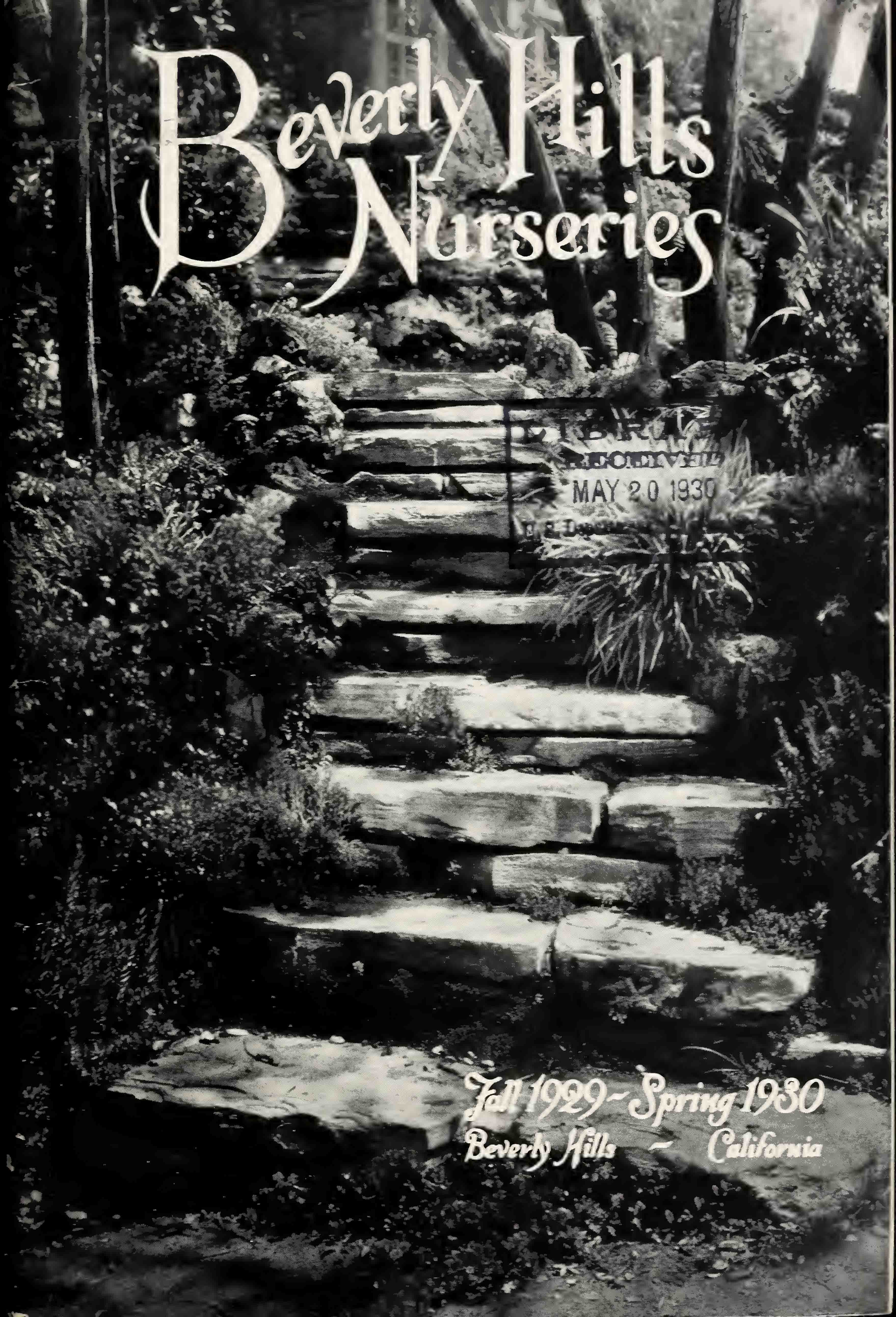
Beverly Hills Nurseries catalog cover, Fall 1929–Spring 1930; courtesy of the Biodiversity Heritage Library and the U.S. Department of Agriculture, National Agricultural Library.
A Modern Approach to Mediterranean Planting
The gardens take a sustainable approach by replacing water-intensive landscapes with lush plantings irrigated without potable water. An innovative system captures rainwater and reuses treated greywater from the hotels and residences. This approach keeps the gardens green and resilient while conserving millions of gallons of water each year.
Carbon Sequestration and Heat Island Reduction
The trees on One Beverly Hills form an urban forest, acting as a vast carbon sink. Fast-growing species with large trunks, dense wood, wide crowns, and large leaves—like Oaks, Sycamores, and Pines—are especially effective at absorbing carbon.
Grasses make up a large part of the site’s planting design and store carbon in the soil. Their roots stabilize soil, retain nutrients, and maintain moisture, sequestering carbon year-round. Grasses establish quickly, often reaching peak carbon storage in one to three years, creating healthier soil and reducing atmospheric carbon.
Reducing the Urban Heat Island Effect
Urban heat islands form when asphalt and rooftops absorb and reflect the sun, raising temperatures and contributing to CO2 emissions. Trees and shrubs at One Beverly Hills create shaded oases, improve air quality, and provide wildlife habitat. By covering parking lots and rooftops with greenery, the site benefits from lower temperatures through shading and natural evaporative cooling.
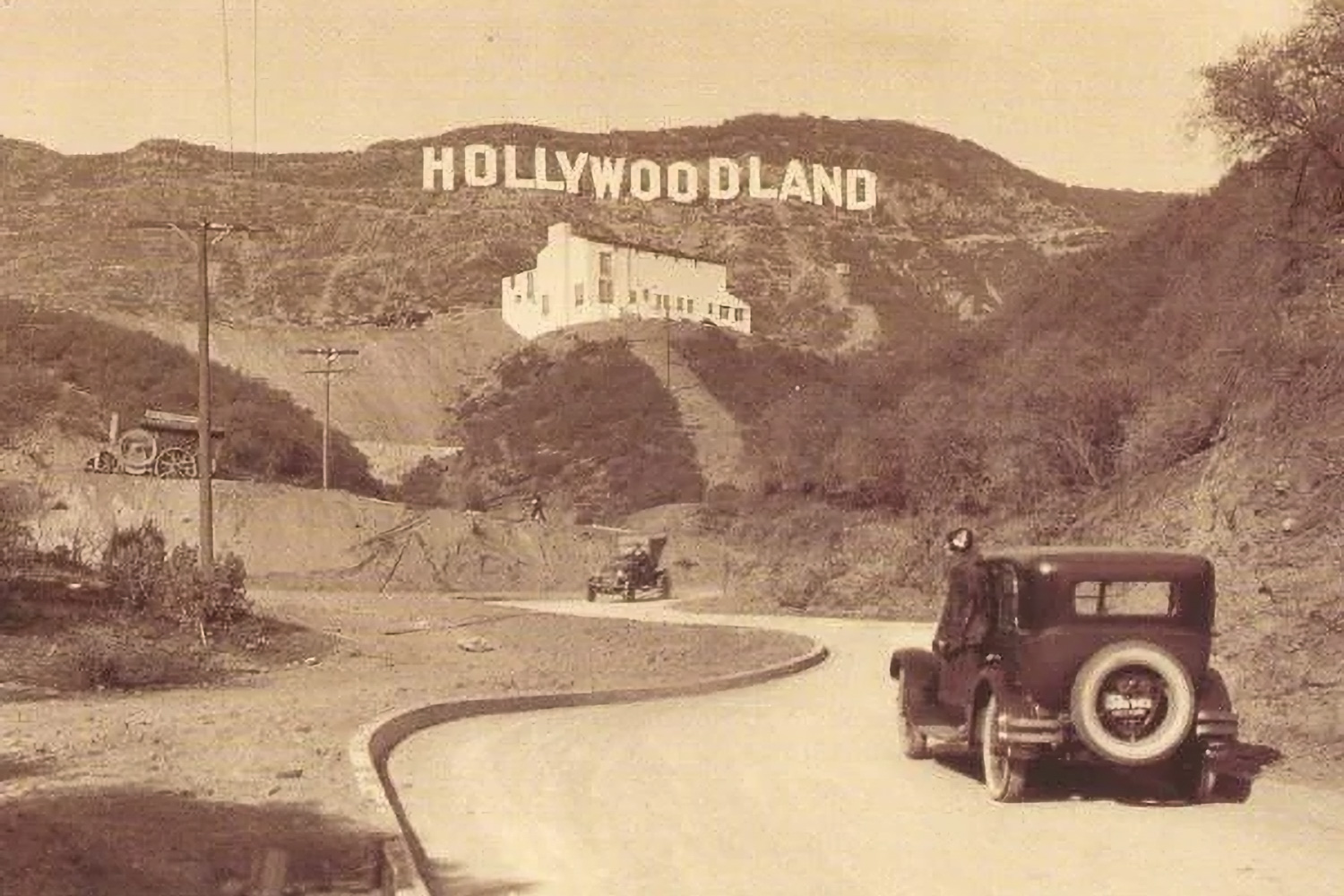
The original Hollywoodland Sign, circa 1930, overlooking Los Angeles; Image courtesy of Wikimedia Commons (Public domain, U.S.)
Plants That Tell California's Story
The gardens at One Beverly Hills feature plants that reflect the stories of early Southern California. Many of them originally imported by Beverly Hills Nurseries:
- Toyon (Heteromeles arbutifolia): The red-berried shrub that may have inspired the name “Hollywood.”
- Mexican Fan Palms (Washingtonia robusta): A Los Angeles icon; 25,000 were planted in 1931 as part of a citywide beautification effort for the 1932 Olympics.
- Canary Island Date Palm (Phoenix canariensis): Before Fan Palms arrived, Date Palms were the preferred landscape tree for Beverly Hills estates.
- Royal Palms (Roystonea regia): Provided as gifts from Hawaiian delegations to Southern California officials in 1928, bringing a regal, tropical presence to the streetscape.
- Bird of Paradise (Strelitzia reginae): Los Angeles’ official city flower, known for bold, architectural blooms that reinforce the region’s exotic image.
- Coral Tree (Erythrina caffra): Los Angeles’ official city tree, with striking red flowers that bloom vibrantly against the skyline.
- Yucca (Hesperoyucca whipplei): The namesake of the Cahuenga Pass, its dramatic form a reminder of California’s rugged terrain.
- Dragon Trees (Dracaena draco): Another early “tropical” tree imported to Southern California in the late 1800s. Many of these early specimens still remain in historic Southern California gardens.
- Century Plant (Agave americana): A Hollywood staple grown extensively to evoke Western and desert landscapes on early film sets.
- Cork Oak (Quercus suber): Planted in Griffith Park in the 1930s, either as an experimental crop during wartime or as a material source for knife props in old films.
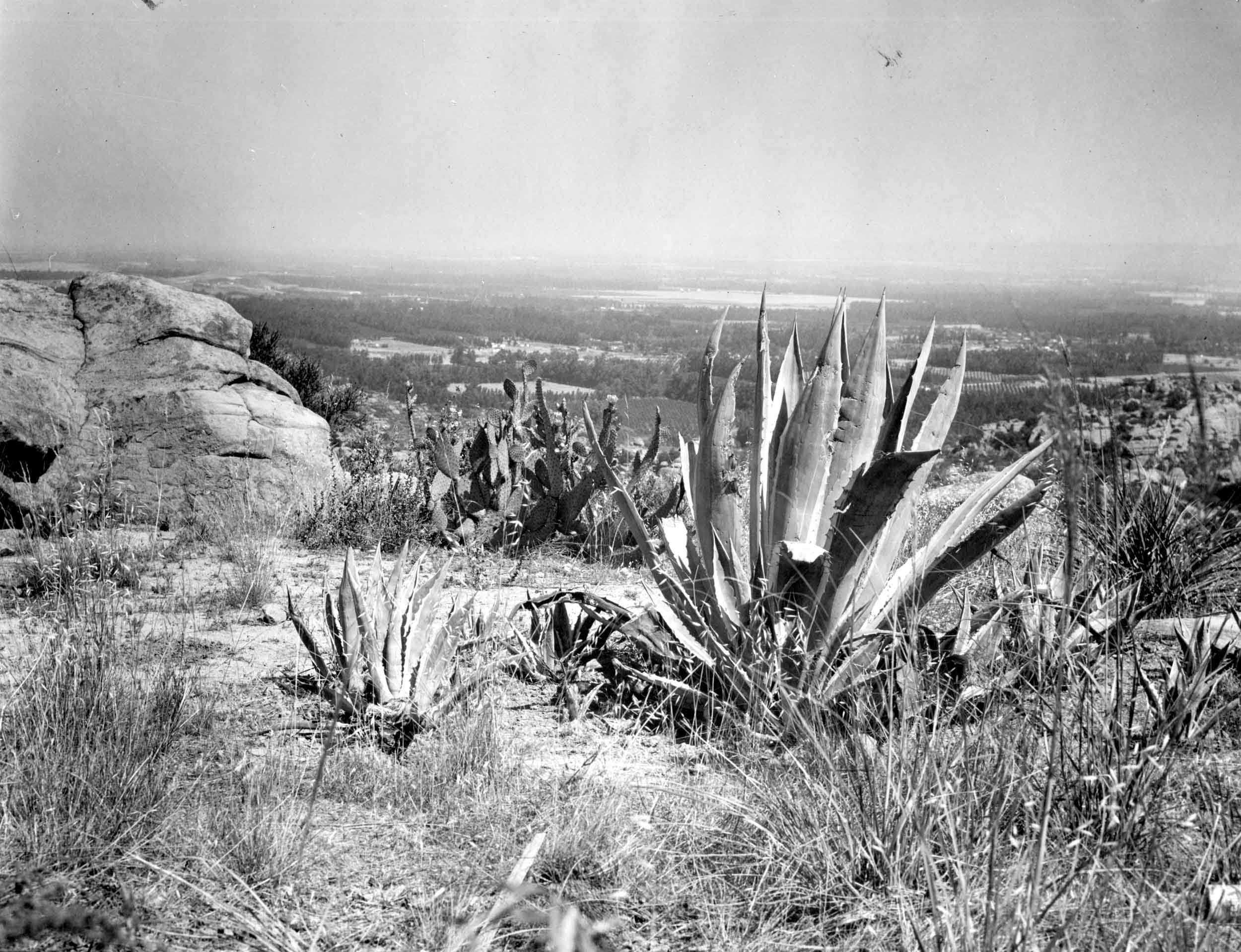
Cacti at Iverson Movie Ranch, overlooking Chatsworth; Valley Times Photo Collection/Los Angeles Public Library.
A Journey Through California Landscapes
The gardens at One Beverly Hills are designed as immersive experiences, guiding visitors through distinct California-inspired zones:
- Palm Gardens: Along Santa Monica and Wilshire Boulevards, over ten palm species mix with drought-tolerant plantings, honoring Southern California’s iconic palm-lined streets.
- A Hike Across California: Explore ecological zones—from lush foothills and oak woodlands to open meadows and coastal-inspired landscapes.
- Pollinator and Wildlife Habitat Gardens: Support California’s 1,600 bee species, butterflies, hummingbirds, and migratory birds along the Pacific Flyway with food, shelter, and breeding grounds.
- California Color Gardens: Showcase the region’s seasonal palette through Red, Blue, and Gold garden zones featuring native and adapted species.
- The Garden of Time: Experience the shifting colors, scents, and cycles of the seasons, from spring blooms to winter’s quiet beauty.
- The Cascading Journey: Trace California’s hydrological landscapes via water features that rise from flowing cascades to an ephemeral pond, representing the imagined source.

Immersive forest landscape; visualization by RIOS.
More Than a Garden: Cultural Infrastructure for Beverly Hills
The gardens at One Beverly Hills connect Southern California’s horticultural history with contemporary sustainable design. Water conservation, biodiversity support, and climate-resilient plantings combine with the aesthetic richness of early Beverly Hills landscapes.
Over $200 million has been invested in resilient infrastructure. Fire-resistant materials, geothermal energy systems, and advanced stormwater management will ensure the gardens can withstand climate and fire challenges while remaining beautiful.
The One Beverly Hills gardens creates a new standard for urban botanical spaces where luxury, ecology, and community can coexist.

Project team collaborating; photo by RIOS.