RIOS on creator spaces in the workplace, from podcast studios to campuses.
Tishman Speyer New York Headquarters
Interior Landscape Redefining the Urban Office
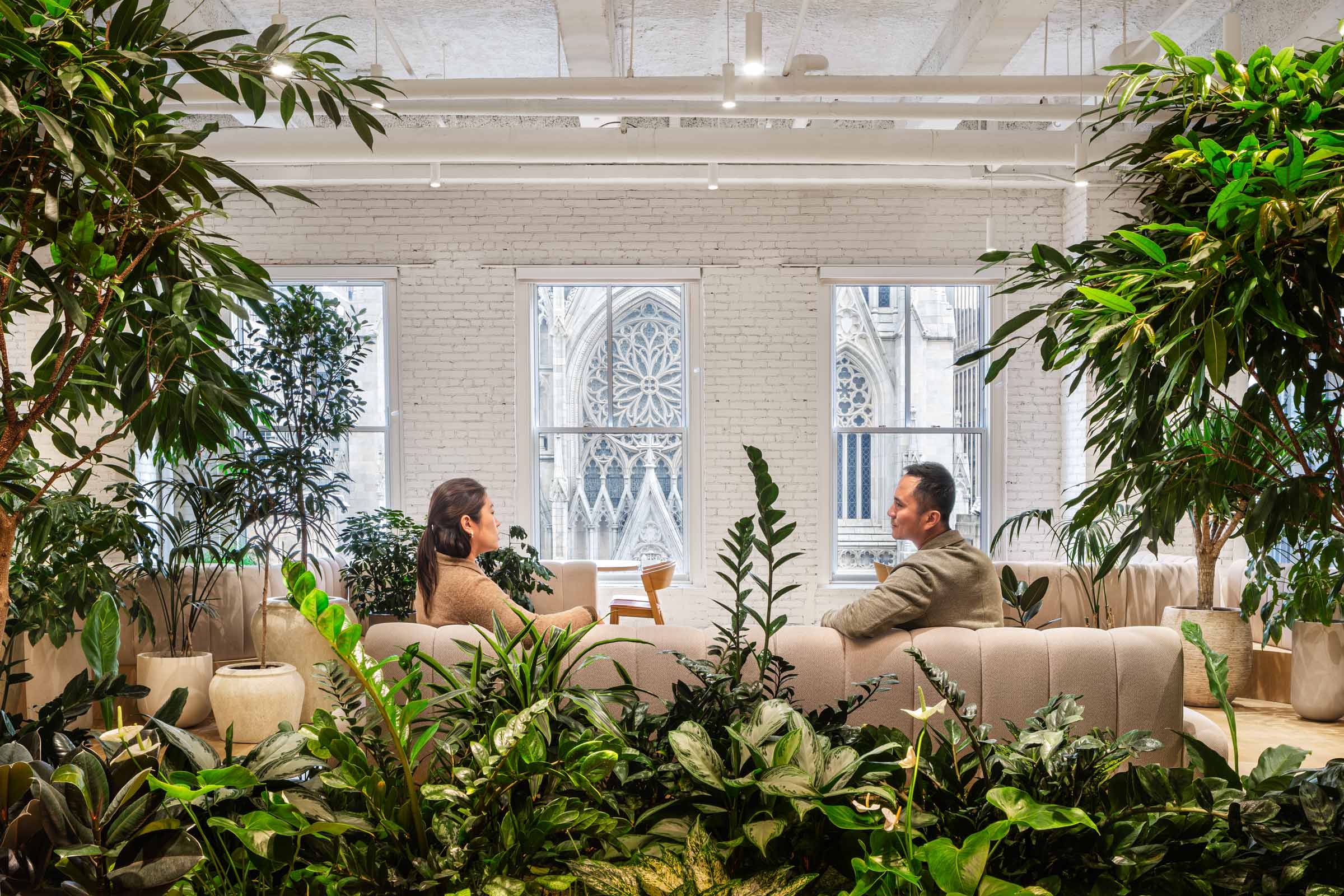
Tishman Speyer’s New York Headquarters creates a biophilic workplace where landscape becomes part of the daily work experience. The headquarters is located inside the iconic Rockefeller Center in Midtown Manhattan. The project presents an opportunity to reconnect users with nature and introduce moments of restoration. To realize this vision, RIOS collaborated with A+I Architecture Plus Information and Greenery NYC on the interior landscape. The result is an immersive layer of greenery that merges ecological storytelling with biophilic performance.
The project also positions landscape as an organizing element within the workplace. Furthermore, integrated planting supports spatial definition, maintains visual openness, and ensures nature is in view throughout the office environment.
A Landscape Framework Inspired by Manhattan’s Ecology
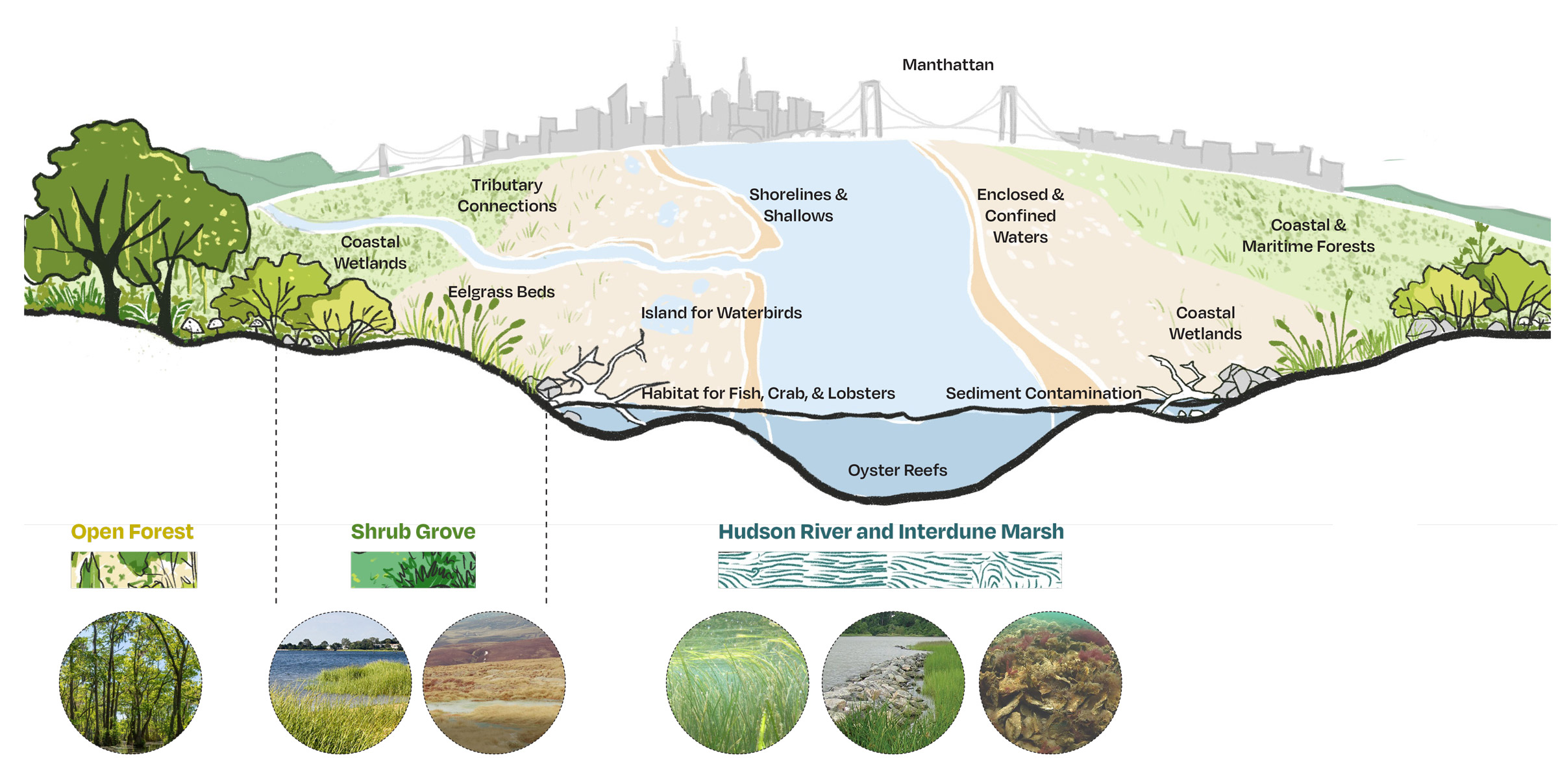
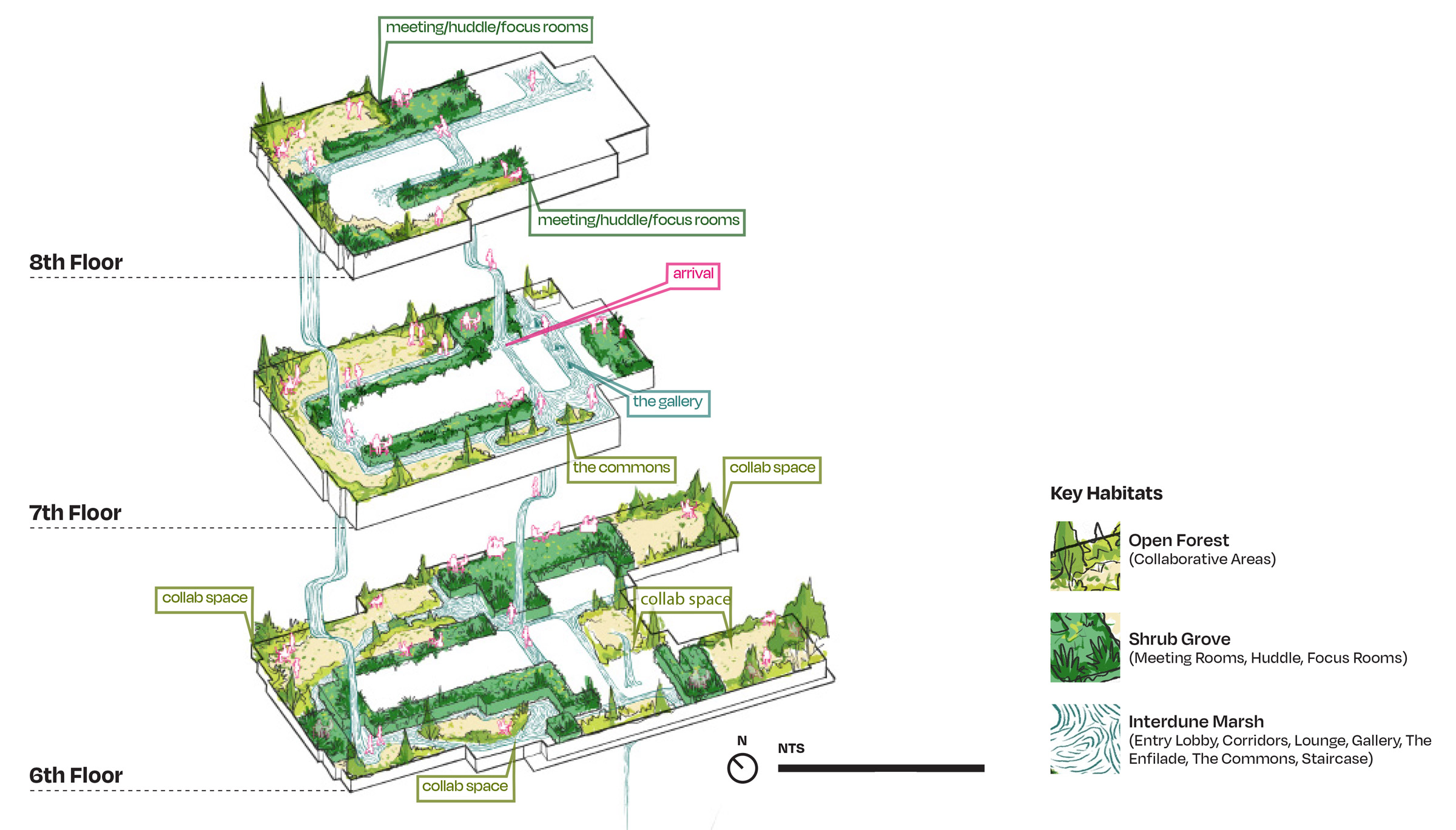
The design process began with research into Manhattan’s historic plant communities. Local ecological patterns directly inform the interior planting strategy. Three landscape conditions then emerged to guide plant selection and placement:
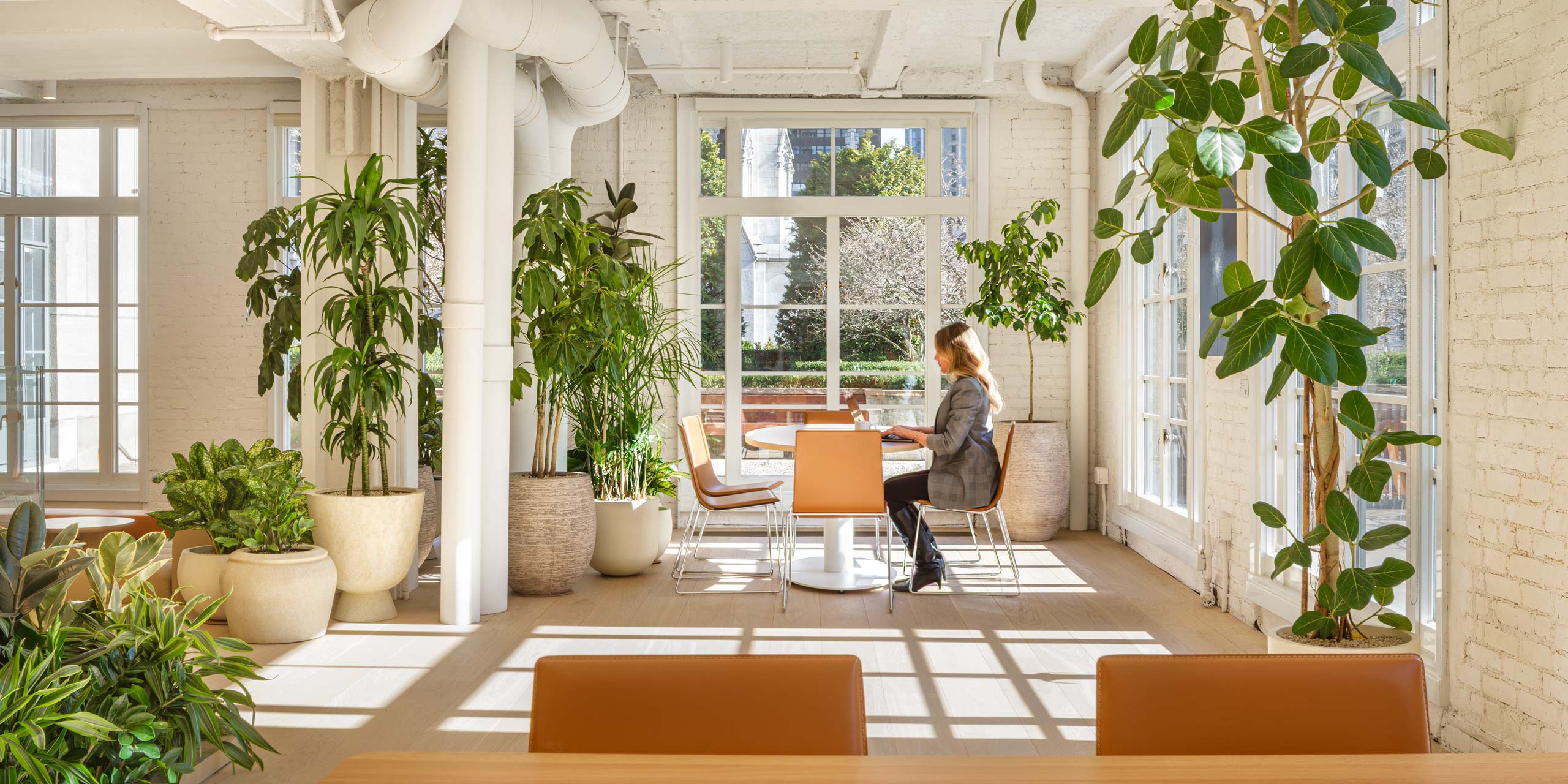
Open Forest zones along window perimeters support sun-loving species and maximize natural light
Shrub Grove areas introduce shade-tolerant planting deeper within the floor plates
Transitional zones near circulation and arrival spaces incorporate textural planting that bridges spatial conditions
This ecological framework allows planting to respond to interior microclimates. Species placement reduces the need for grow lighting and aligns performance with available daylight.
Storytelling diagram of Manhattan's ecology
Integrating Nature into the Workplace
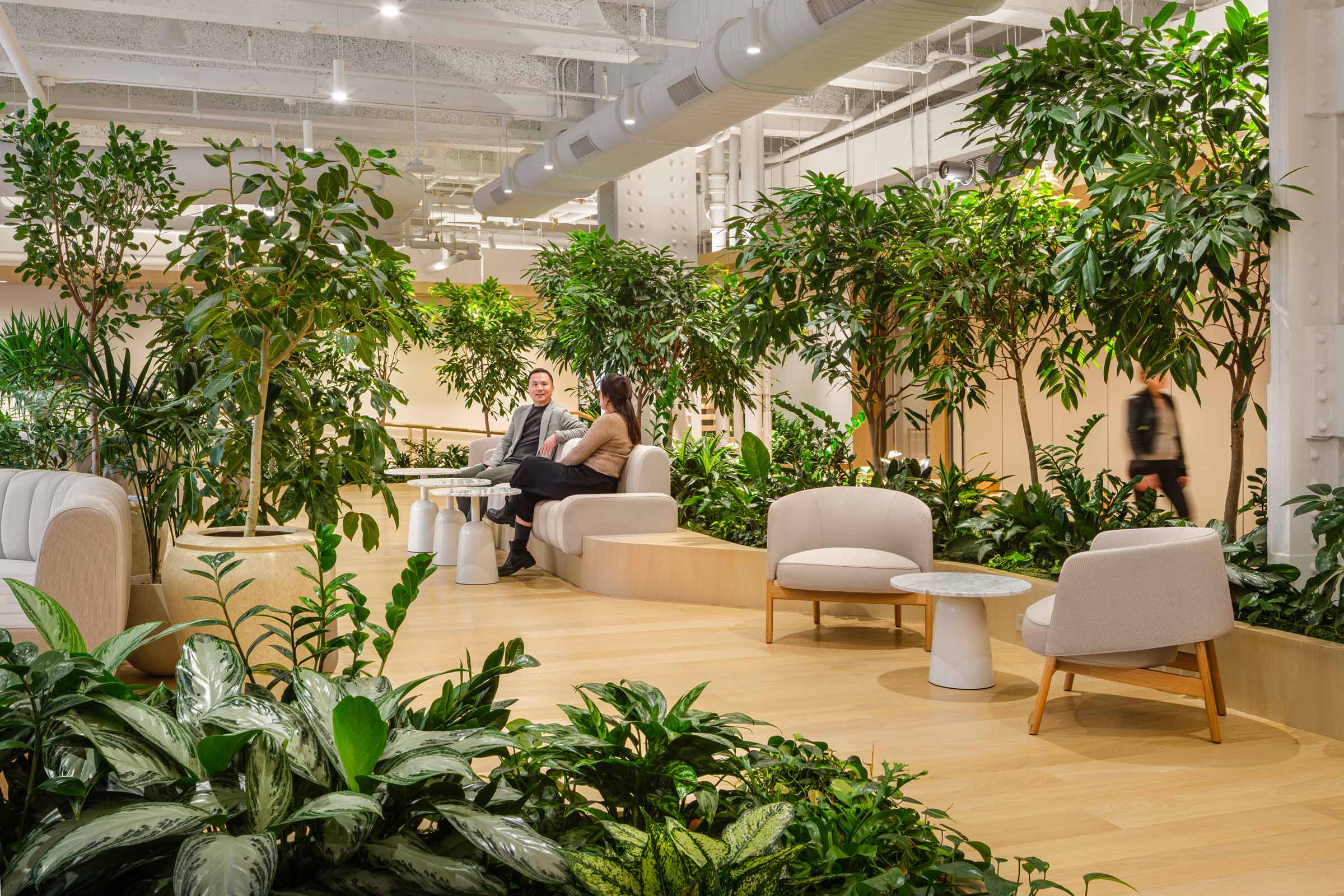
Planting is therefore concentrated within shared environments and circulation zones across three office levels. This placement supports daily work patterns and informal interaction.
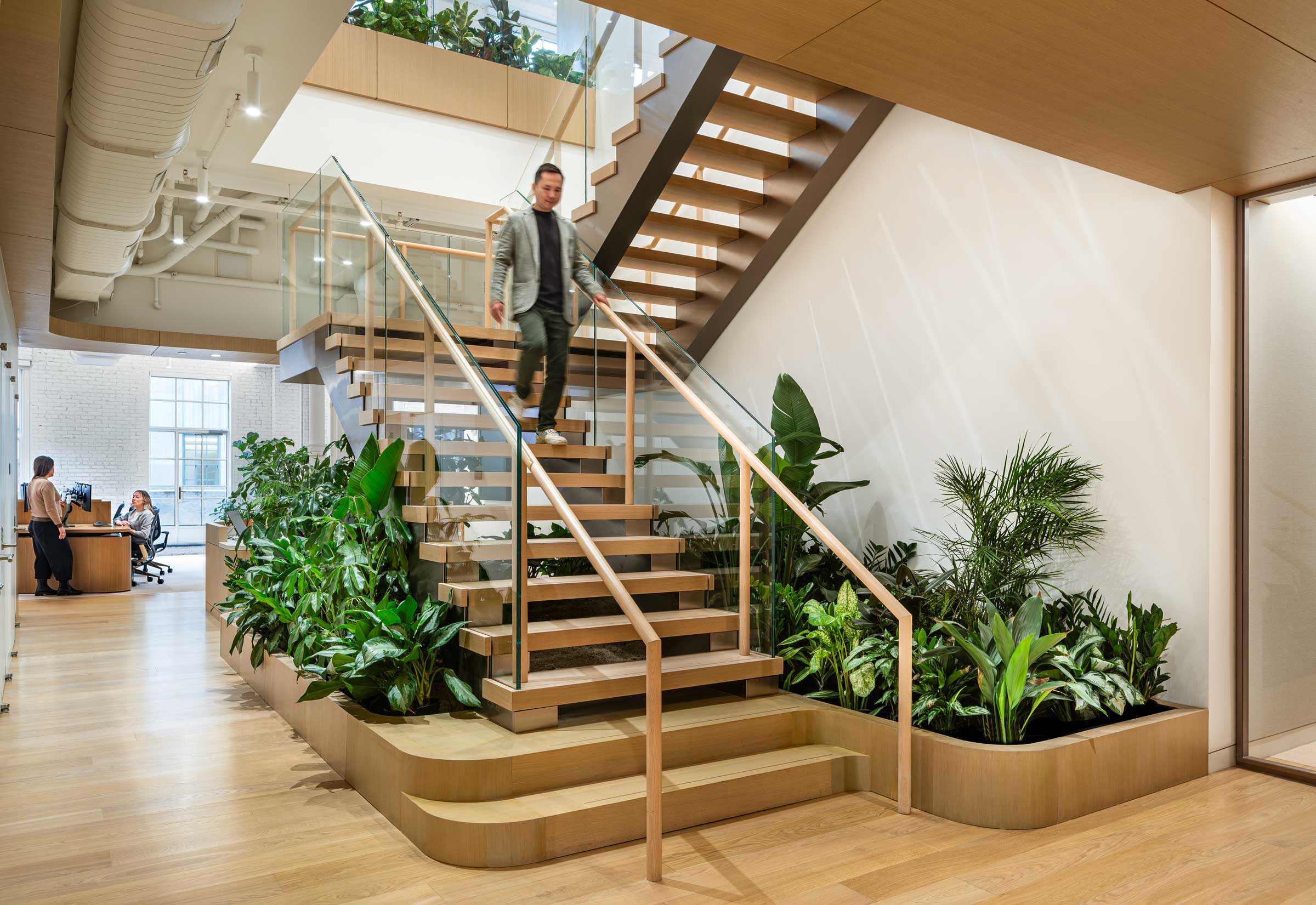
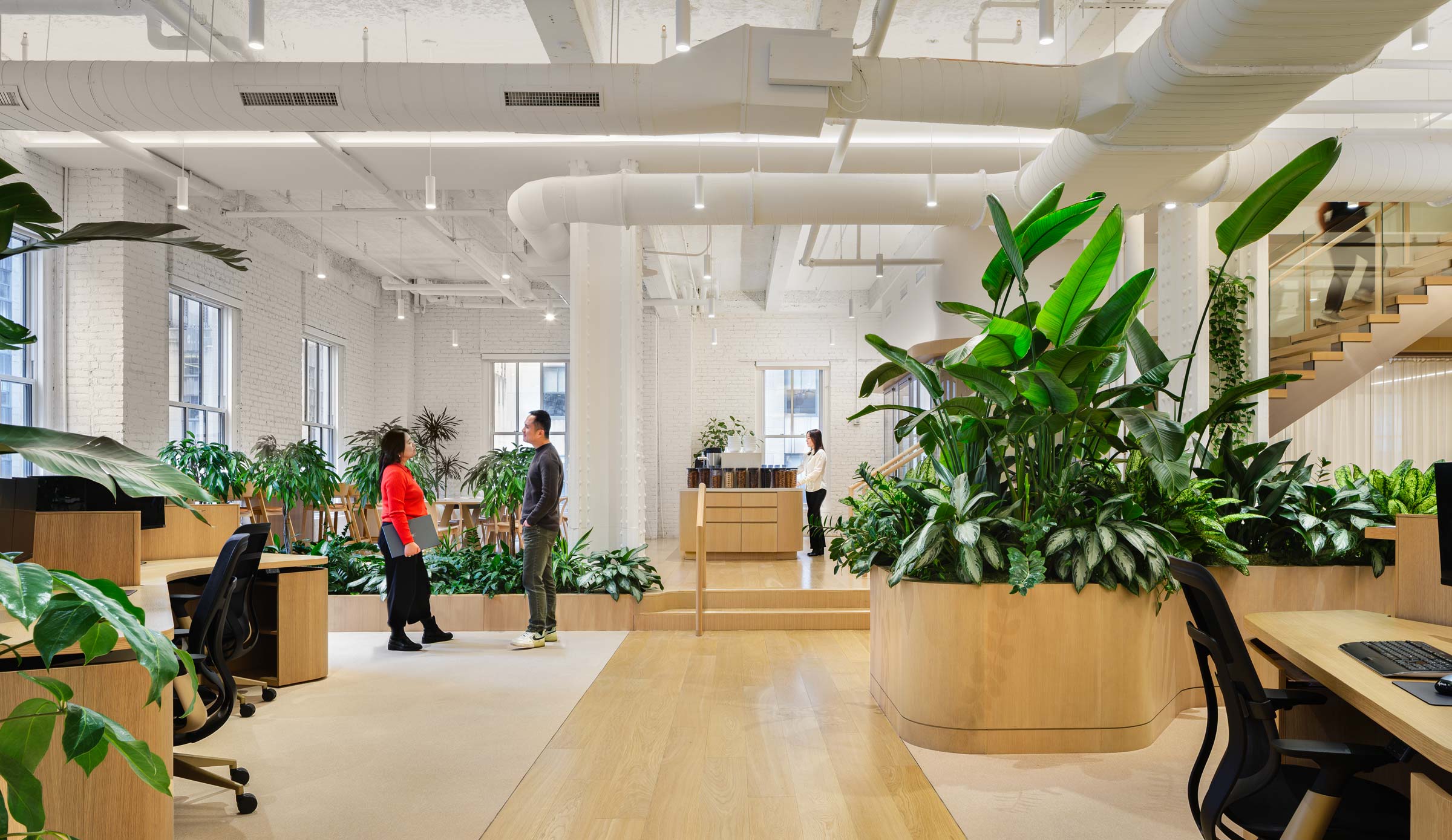
For example, the 6th-floor collaboration area incorporates flush planting beds that create a park-like setting within the workplace. Meanwhile, the 7th-floor Commons integrates clusters of planters that frame gathering and dining areas. In addition, perimeter planting establishes a consistent green edge along the office floors, maintaining visual access to nature throughout the workspace.
Concept diagram of weaving an immersive eocsystem into the workspace
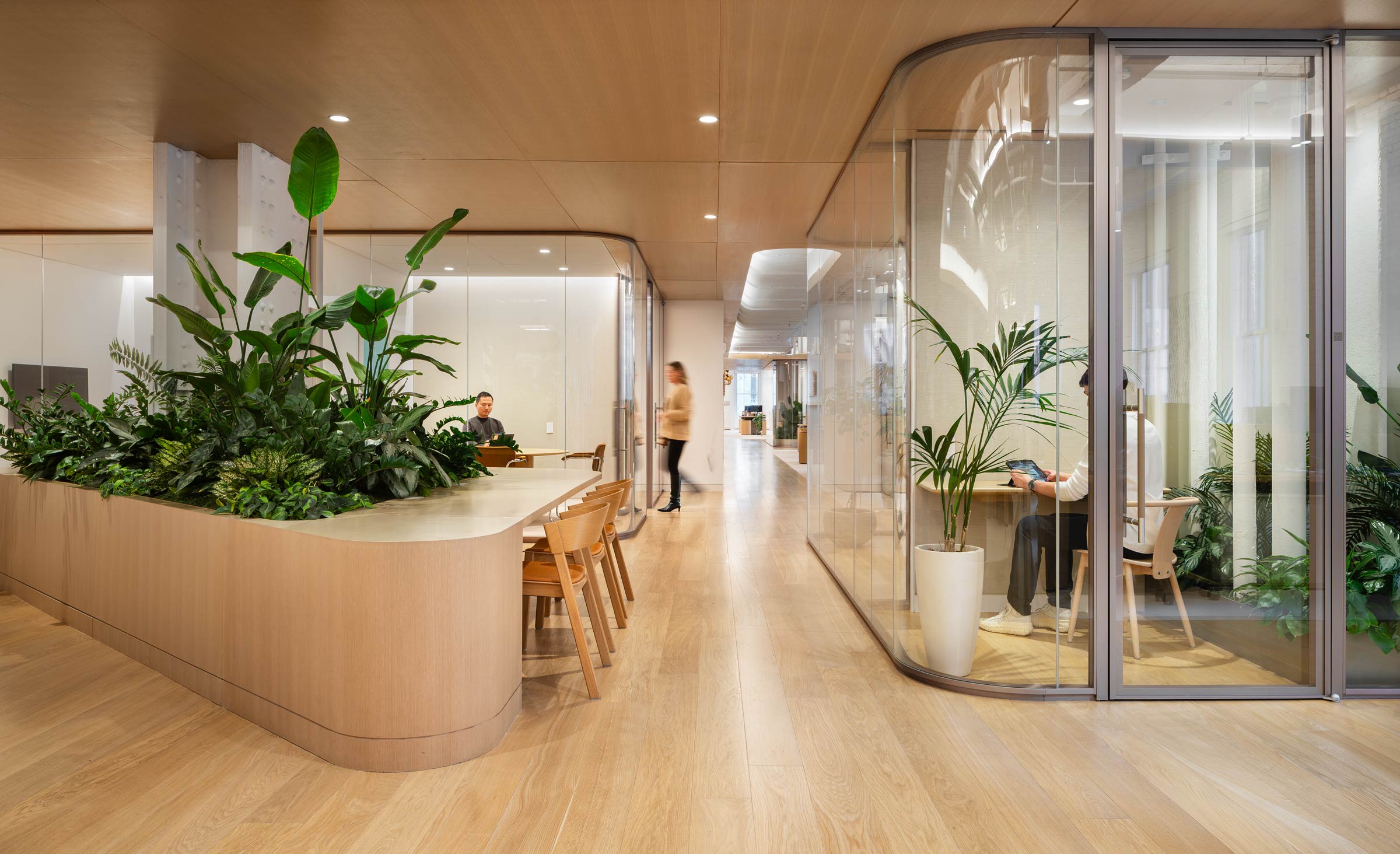
Nature remains in view from every workspace through plant-integrated desk systems and greenery framing glass-walled "jewel box" meeting rooms.
Landscape Performance and Workplace Experience
The interior landscape establishes a continuous presence of nature within a dense Midtown office environment. Greenery is visible from nearly every workstation and shared space.
Performance and maintenance considerations inform the planting strategy from the outset. As a result, species are selected for resilience in interior conditions. Placement is organized according to light availability across the floor plates. Planters with removable containers simplify plant replacement and long-term care, supporting the operational needs of a high-occupancy workplace.
In this way, the interior landscape balances ecological intent with practical constraints, creating a New York workplace environment that feels consistently green, open, and connected to nature.