Spirit of Place: A Hyperlocal Approach to Climate Adaptation
IdeasRIOSArchitectureLandscape
Cultivating Resiliency Through Research
RIOS’ highly attuned design process shapes meaningful experiences and environments that are comfortable, resilient, and rooted in a site’s culture. The multilayered research strategy behind the award-winning design of Palm Springs Downtown Park serves as a critical case study in how the contextual storytelling of the spirit of place creates more hospitable spaces for both people and the environment.
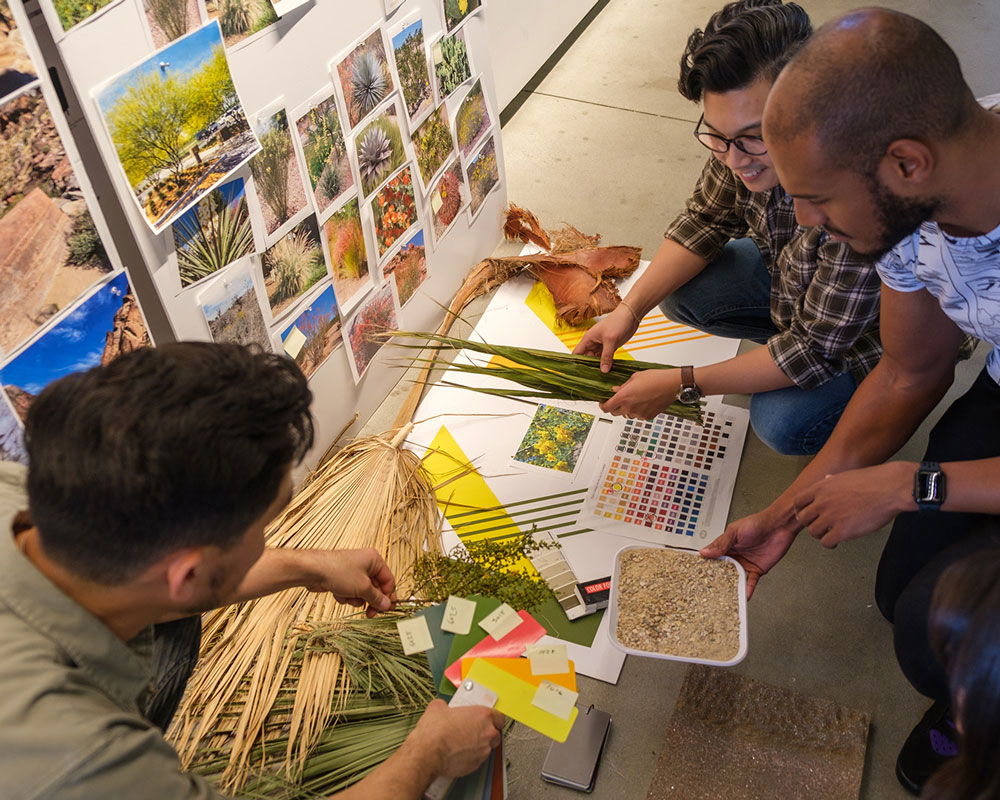
The multilayered research approach included a robust community engagement process and exploration of the site’s history, ecology, and climate. The resulting design, which incorporates a hyperlocal material palette and strategic cooling techniques, establishes a framework for climate adaptation and resilience while celebrating the unique spirit of the desert locale.
Storytelling and the Spirit of Place
Located in the ancestral homeland of the Agua Caliente band of the Cahuilla people and on the historic site of the famed Nellie Coffman’s sanitorium-turned-resort The Desert Inn, Palm Springs Downtown Park was designed to amplify the spirit of place, immerse visitors in the multisensory beauty of the desert, and celebrate the city’s legacy as a destination for health and nature-focused experiences.
Considering this unique history and the diverse perspectives of Palm Springs residents and visitors, RIOS led community engagement exercises to inform the concept development. The outcome revealed a communal desire for the park to provide shade and water and to reflect the uniqueness of Palm Springs through its use of materials and plantings.
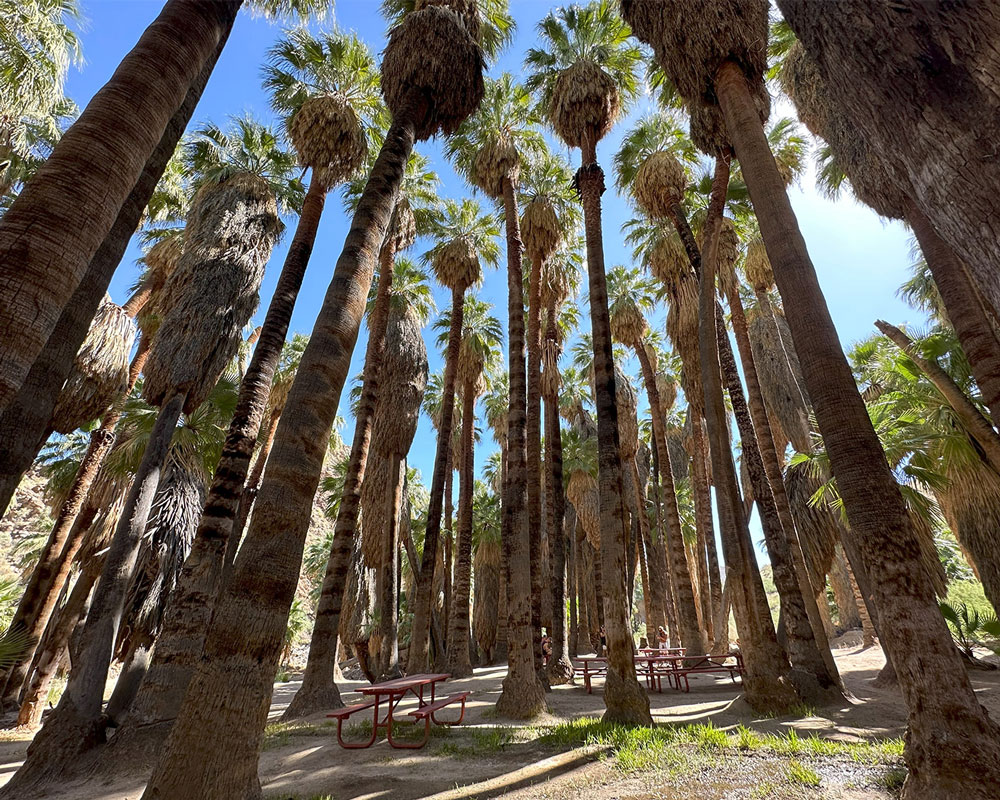
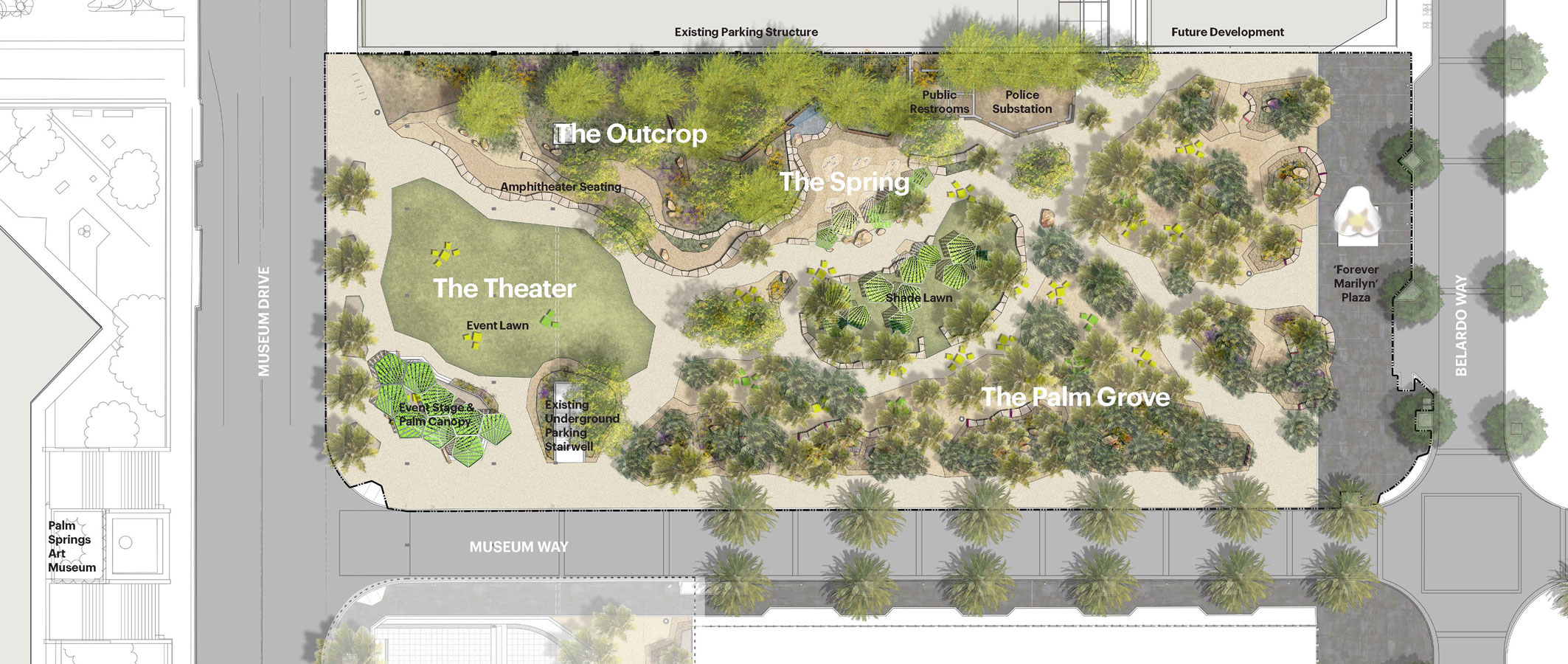
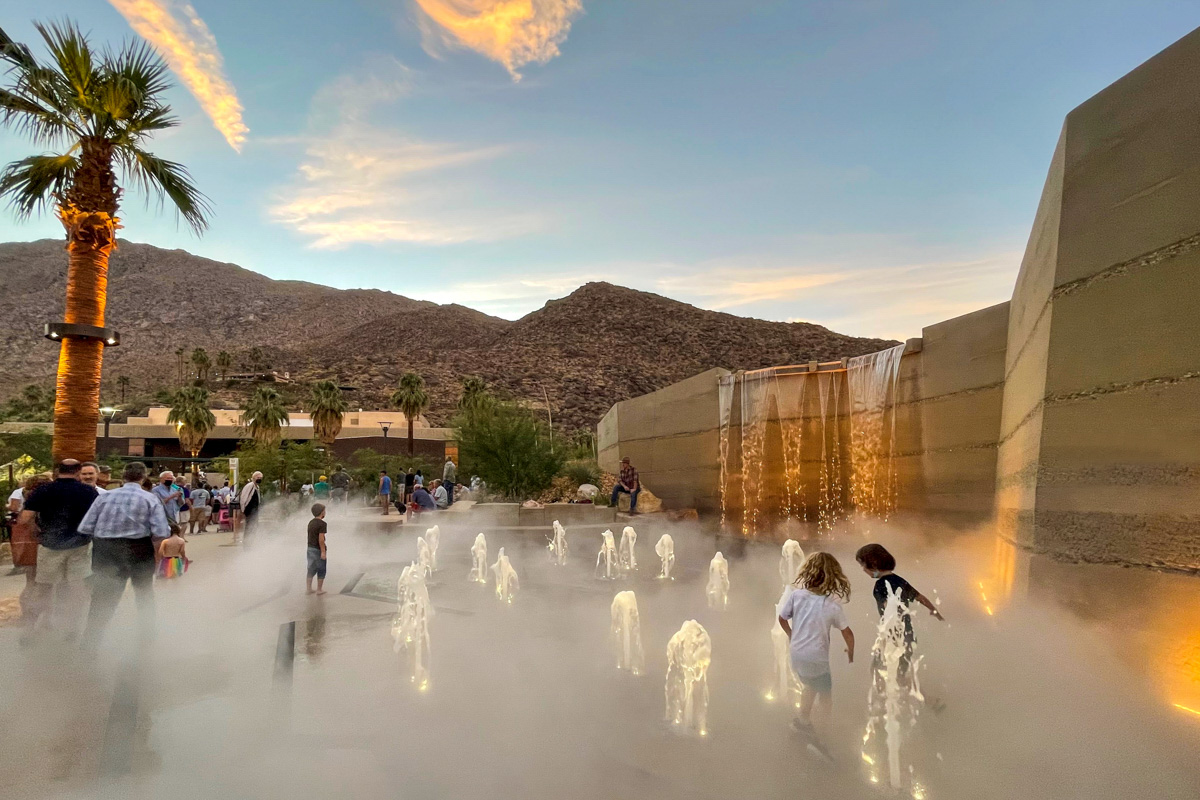
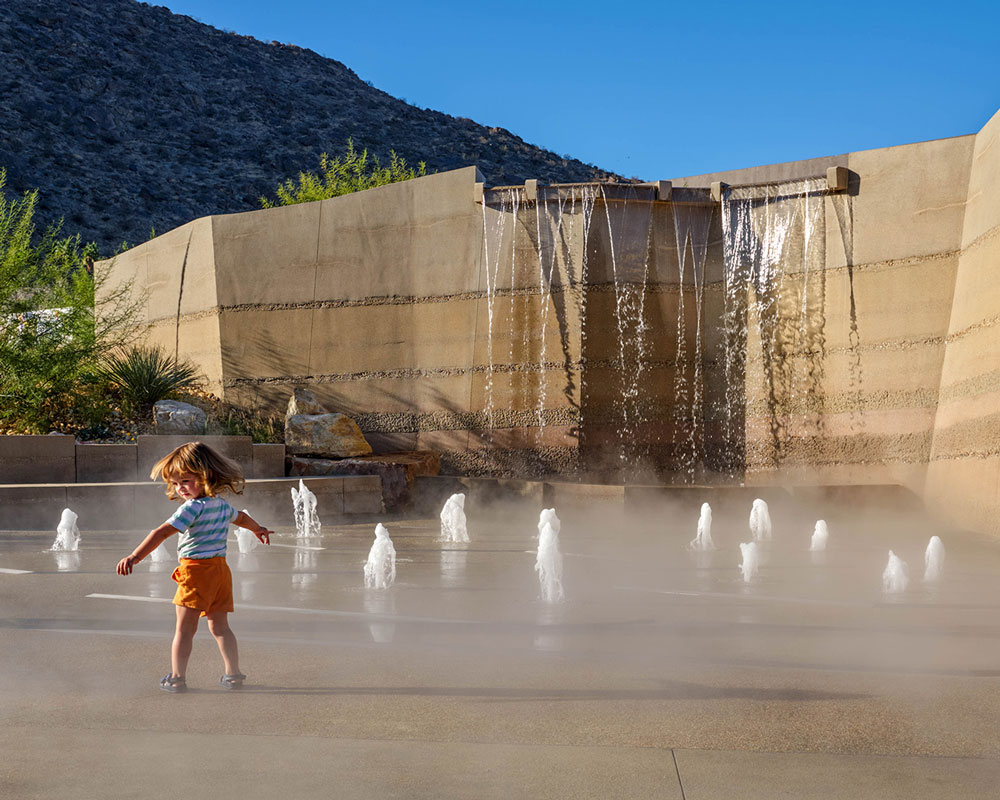
The team undertook a series of deep immersion field trips through the surrounding region to gain a better understanding of these elements. The final design of the park reflects the needs of the community while celebrating the site’s natural landscape across its Palm Grove and cooling water feature that evoke visual connections to the surrounding Palm Canyon oasis and waterfalls and striking geology of Tahquitz Canyon.
Hyperlocal Materiality as Expression
The park’s material palette provided an opportunity to capture the essence of the desert on a granular scale with a focus on two materials endemic to the region: the California fan palm (Washingtonia filifera) and local stone known as Palm Springs Gold.
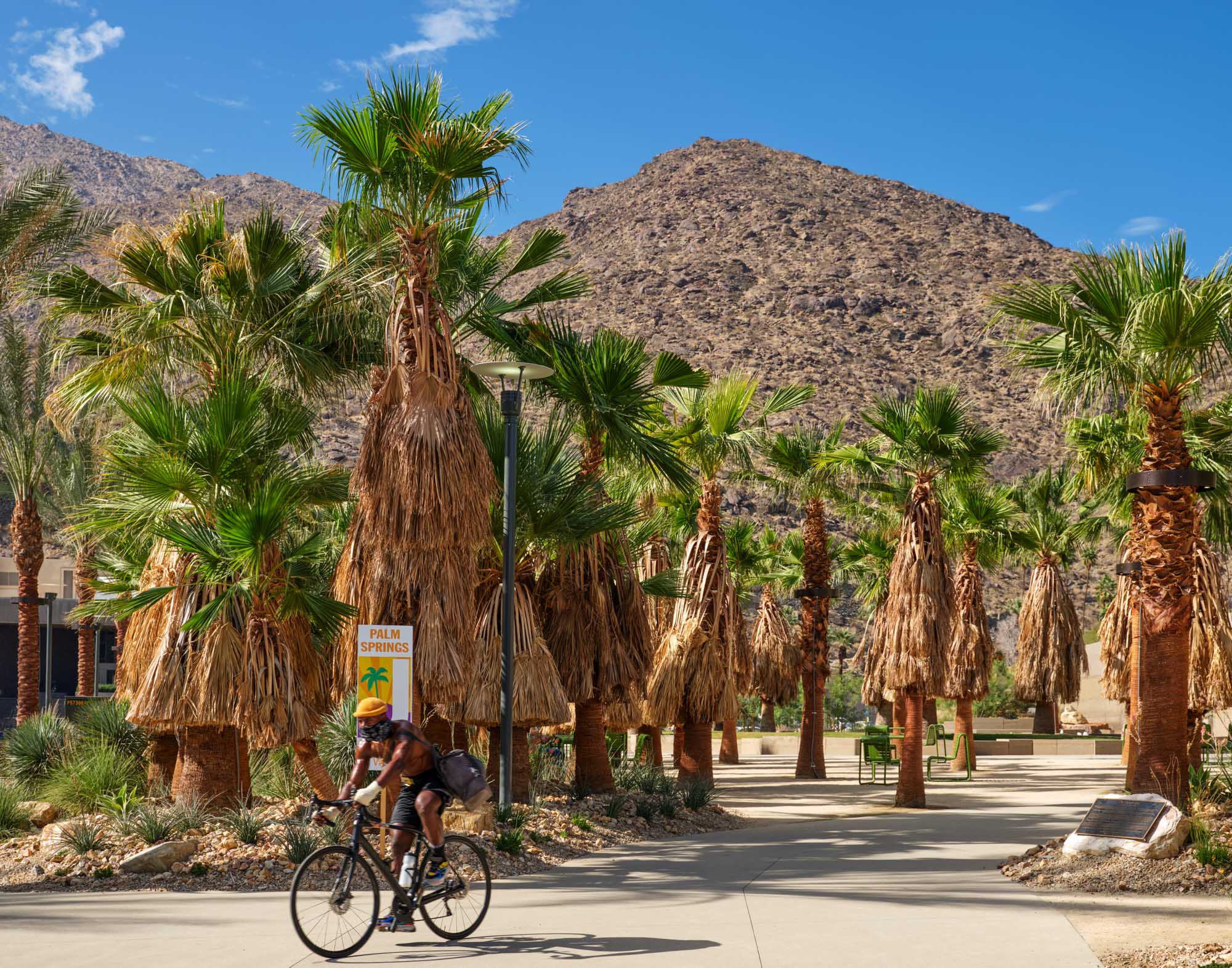
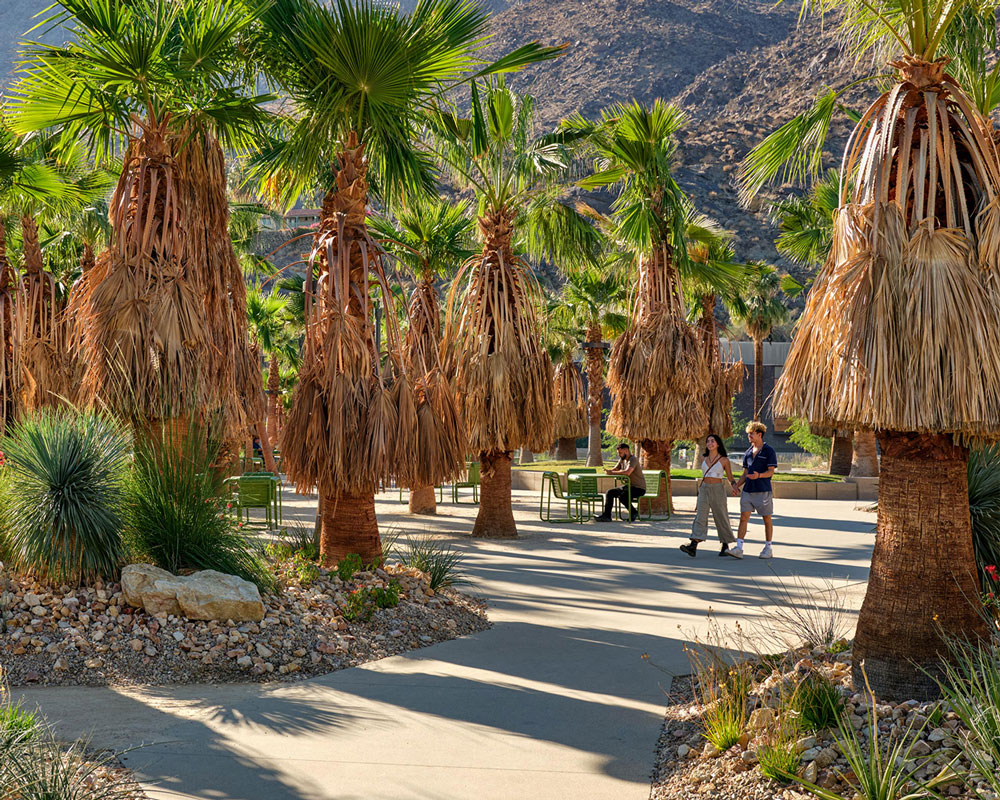
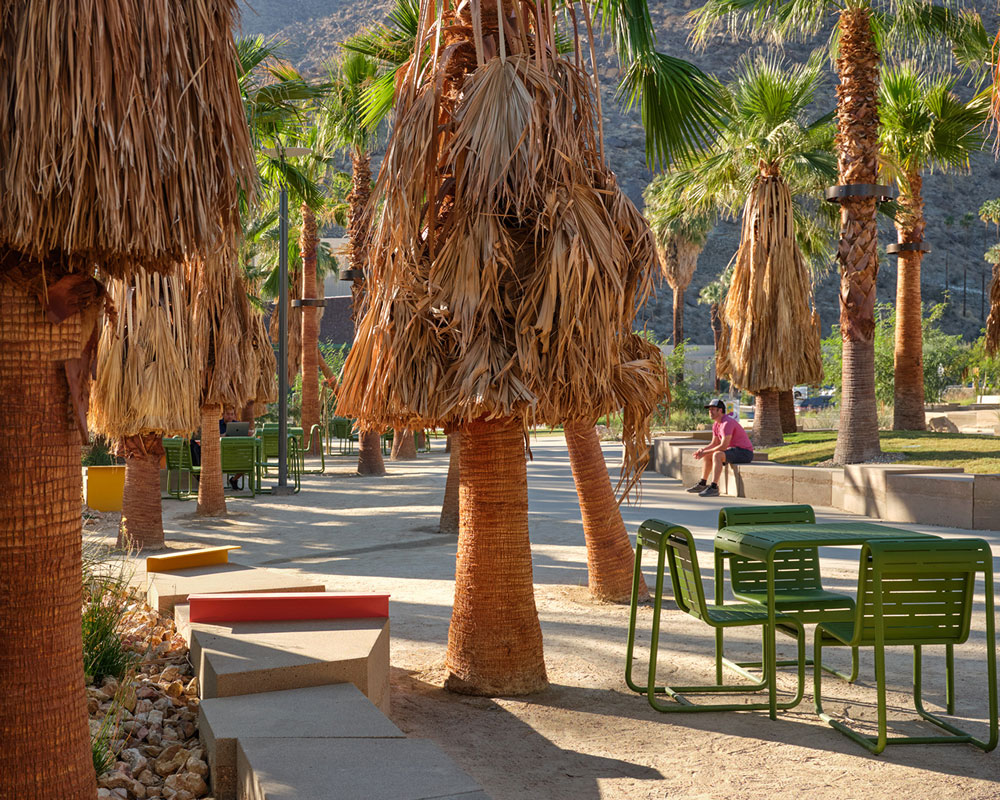
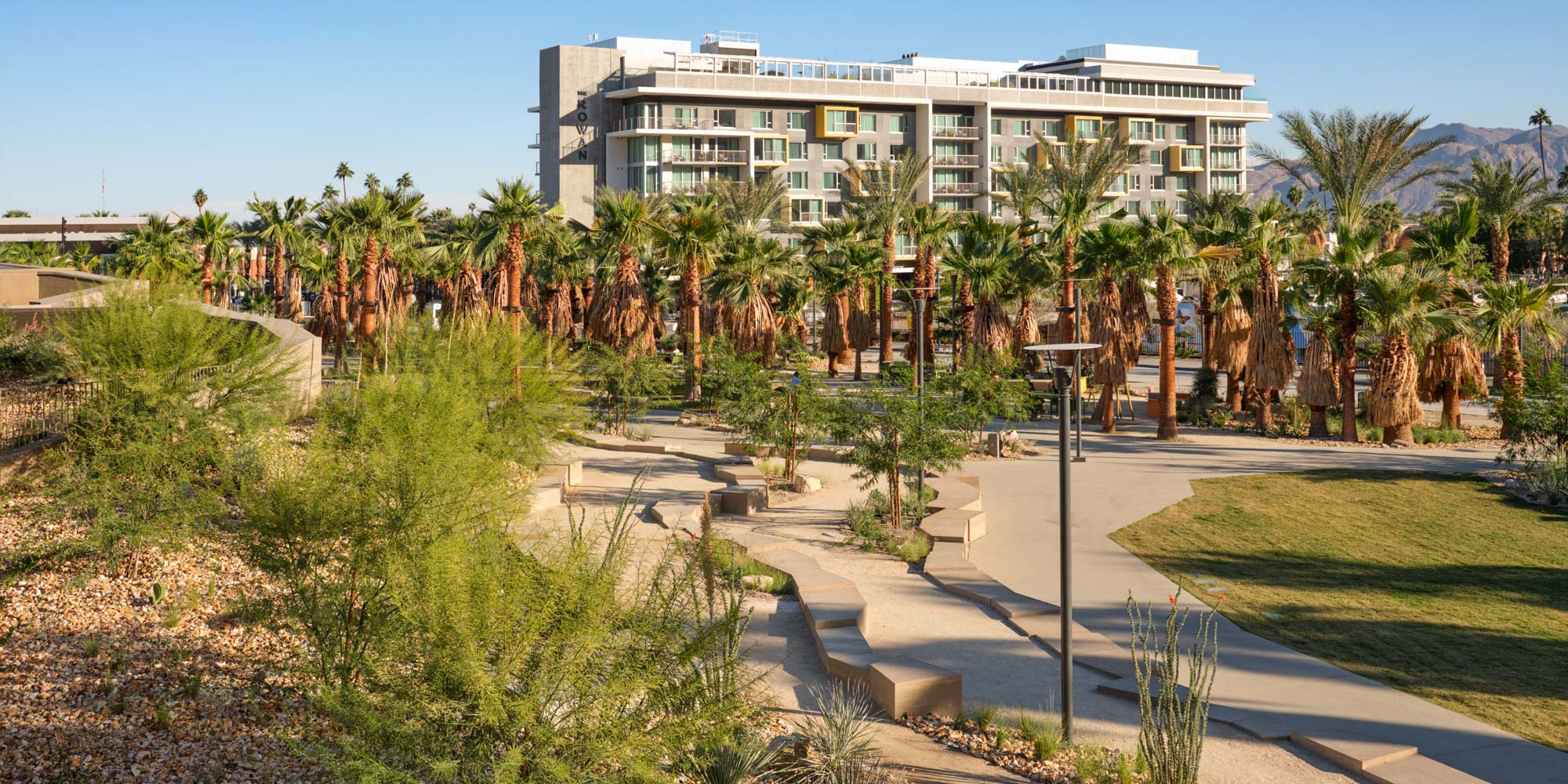
The park’s Palm Grove houses over 130 locally sourced Washingtonia filifera — the only native palm tree in the western United States — in a densely populated arrangement that replicates the microclimate of the nearby Palm Canyon. The species has evolved to withstand heat and wildfire and attracts pollinators, making it an instrumental contributor to an enhanced ecosystem. Additionally, the remaining planting palette relies on local desert species that were carefully chosen to extend bloom times for pollinators, further supporting native biodiversity.
Locally sourced Palm Springs Gold was a key element in the park’s hardscape, connecting the site to its desert locale through its unique gold and dusty pink tones. The park’s feature wall celebrates this unique expression through a striated composition evoking the color, tone, and texture of canyon sediments.
Climate Adaptation and Resilience
This hyperlocal material palette and approach to storytelling shaped a resilient landscape adapted to climate extremes, ensuring Palm Springs Downtown Park can adapt to changing environmental factors and climate threats.
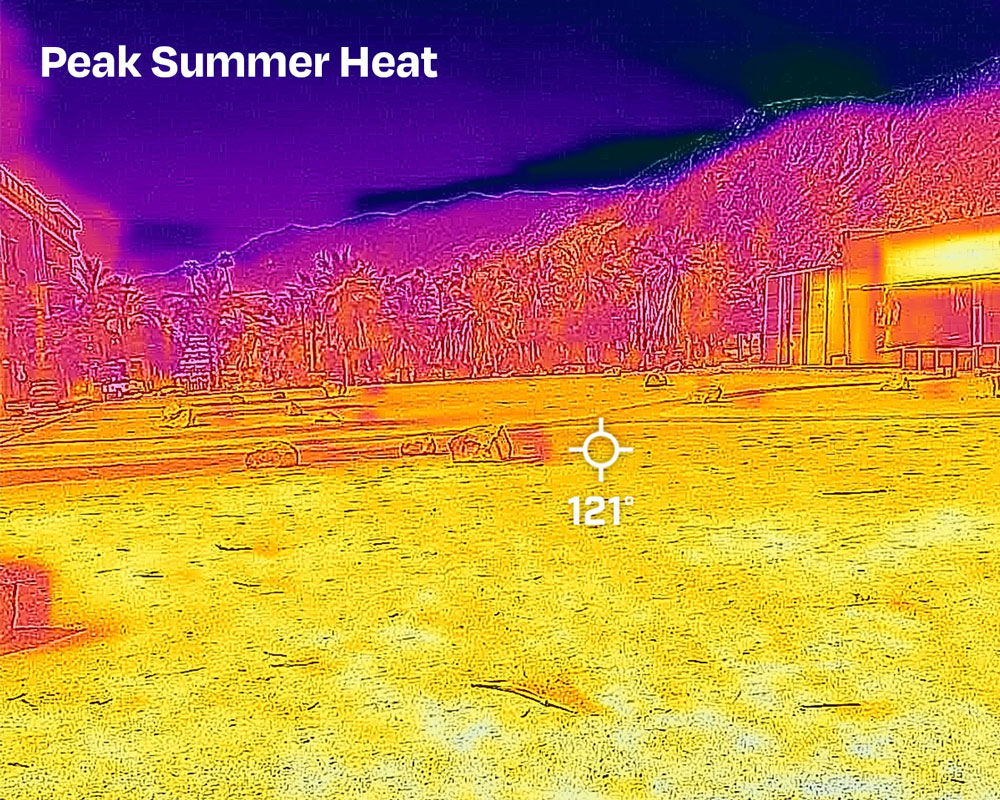
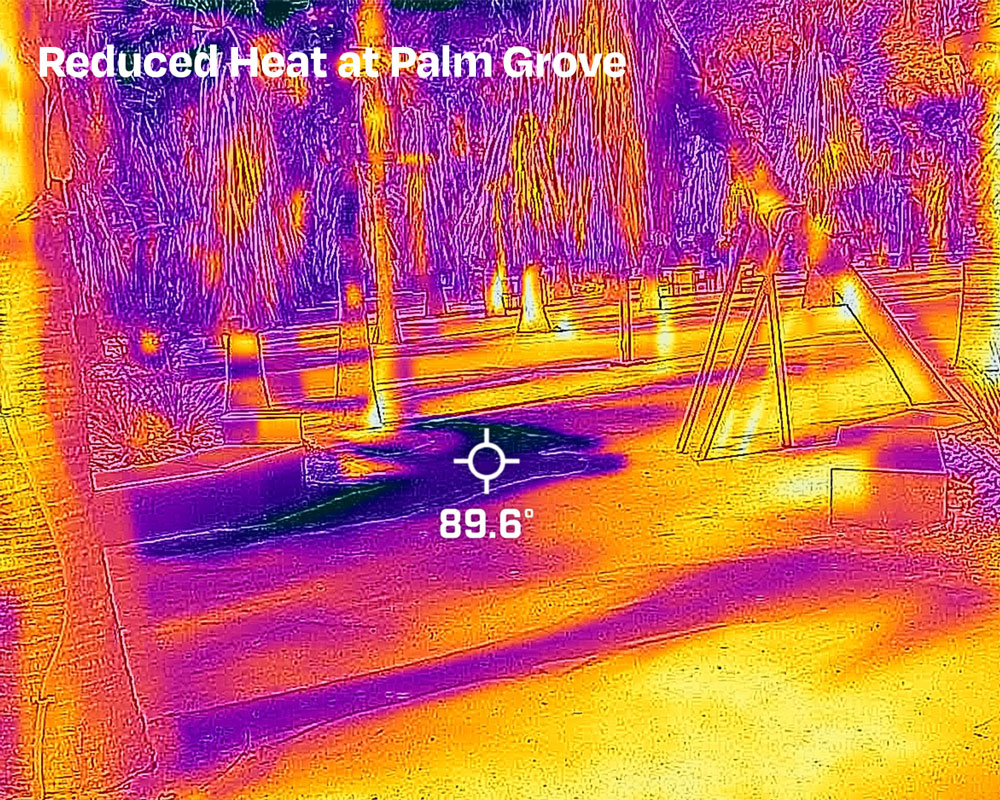
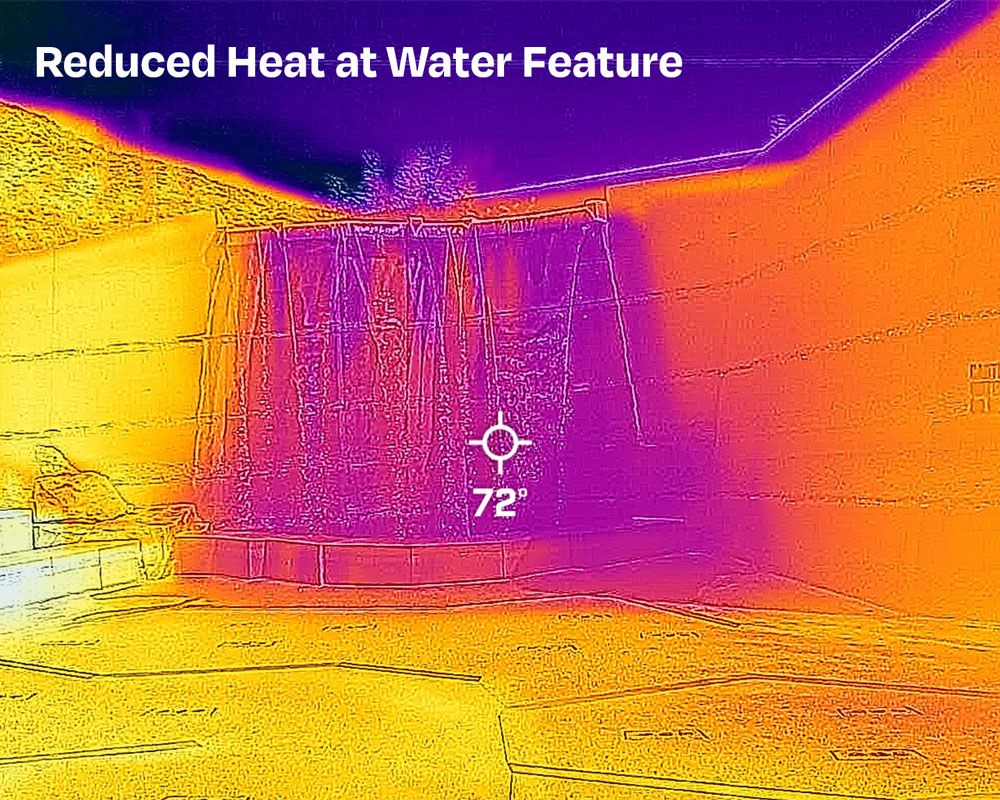
Infrared analysis has shown that elements of the park, including the wildfire-resistant palm tree plantings, built shade canopies, and cooling water feature reduce air temperature by an average of 37-39 °F (2.8-3.9 °C) and surface temperatures of hardscape surfaces by up to 63°F (17.4°C), resulting in a comfortable urban oasis.
Based on an analysis of the city’s water bills, the park utilized half the amount of water as a nearby park with a typical grass and tree planting scheme over a year-long period. Water consumption is expected to decrease over time, due in part to 2 drywell biofiltration and infiltration basins that capture and refilter stormwater and the design of the Outcrop section, which can be sustained without irrigation. The cooling water feature can also be turned off in times of extreme drought without sacrificing visual interest.
Palm Springs Downtown Park has become a beloved space for the surrounding community, welcoming a diverse range of residents and visitors to gather and partake in events ranging from film screenings to food festivals. Its highly attuned design firmly connects the park to the region’s unique culture, provides a roadmap for future resilience, and ensures the space can be enjoyed for generations to come.