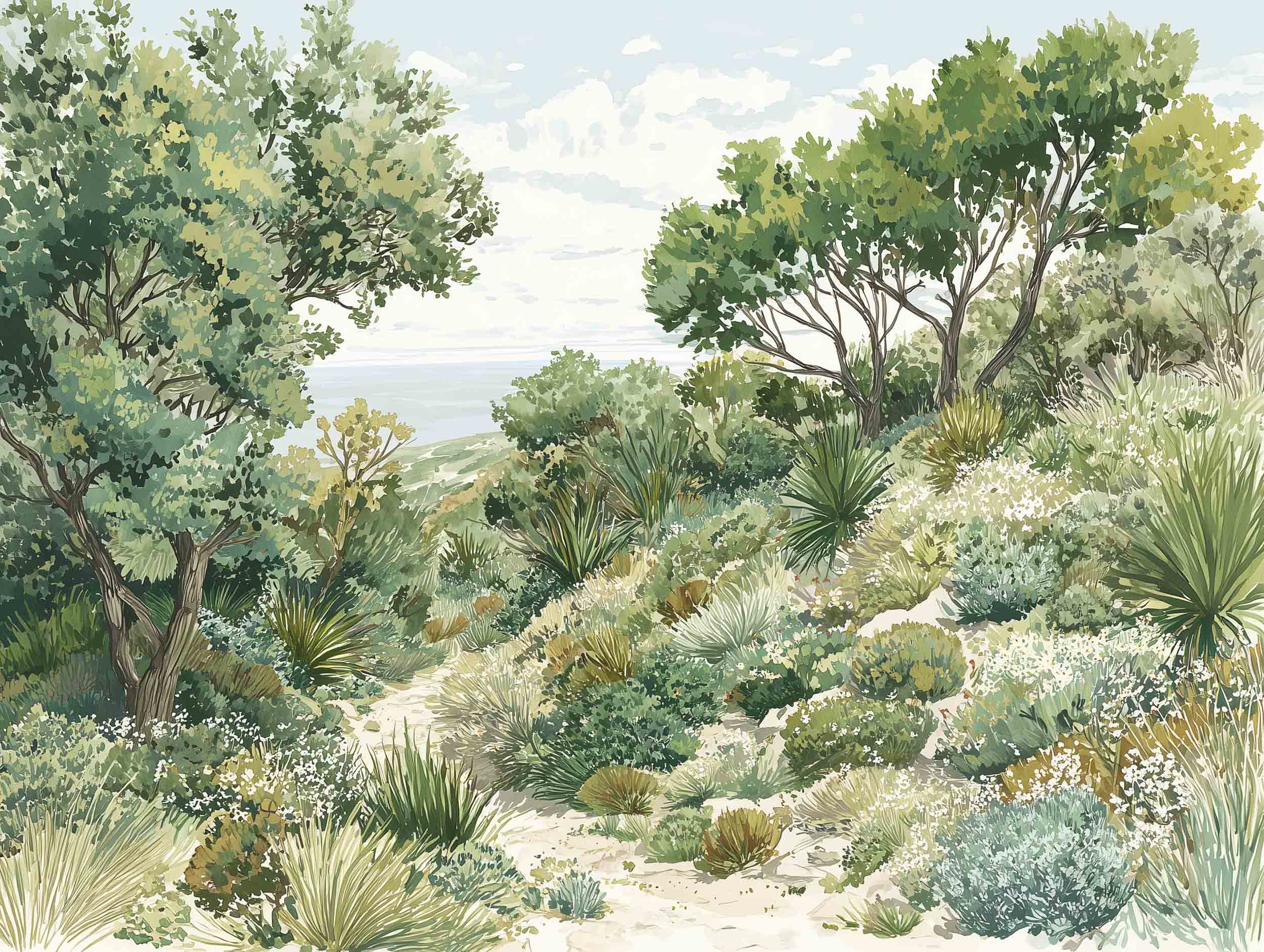
The gardens at One Beverly Hills invite visitors to explore California’s native plant communities across 4.5 acres of thoughtfully designed public space. Designed by RIOS, the landscape experience mirrors an abbreviated hike through the hills to the north. Distinct ecological zones begin in lush foothills and ascend into oak woodlands. The paths cross an open meadow and descend toward a coastal-inspired landscape.
Along the way, the gardens highlight the beauty, resilience, and biodiversity of California’s native and adapted plants. The narrative unfolds through elevation and ecology, like a compressed version of California’s remarkable topographic diversity. This approach to landscape architecture shows how these ecosystems can thrive in urban environments and support local biodiversity.
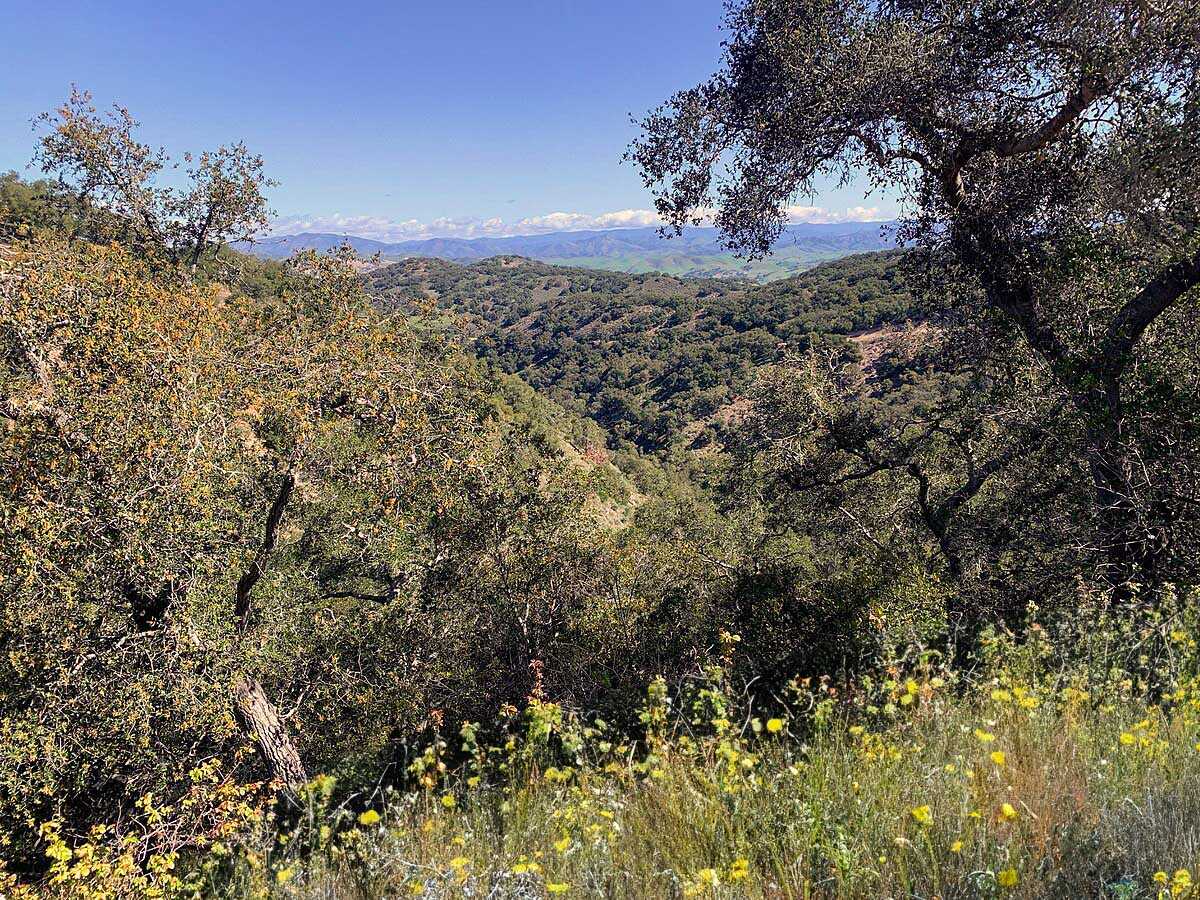
Oak woodlands and native grasslands frame distant mountain vistas in California's coastal foothills. (Photo by DocFreeman24, CC BY-SA 4.0)
California Ascent Through Foothill Landscapes
The first garden is the California Ascent. As the gateway to the hike, it leads visitors upward through a series of landings lined with large stone slabs. The highly textured plant palette combines large-leaved foliage, ornamental grasses, and seasonal flowering plants that evoke the lushness of the lower foothills.
Tanacetum vulgare, Cistus salviifolius, and Adenostoma fasciculatum ‘Nicolas’ add layers of color and movement, reflecting the rugged beauty of California’s lower elevations. The garden creates a sense of transition, leaving the urban environment behind and entering a wilder and naturalistic landscape.
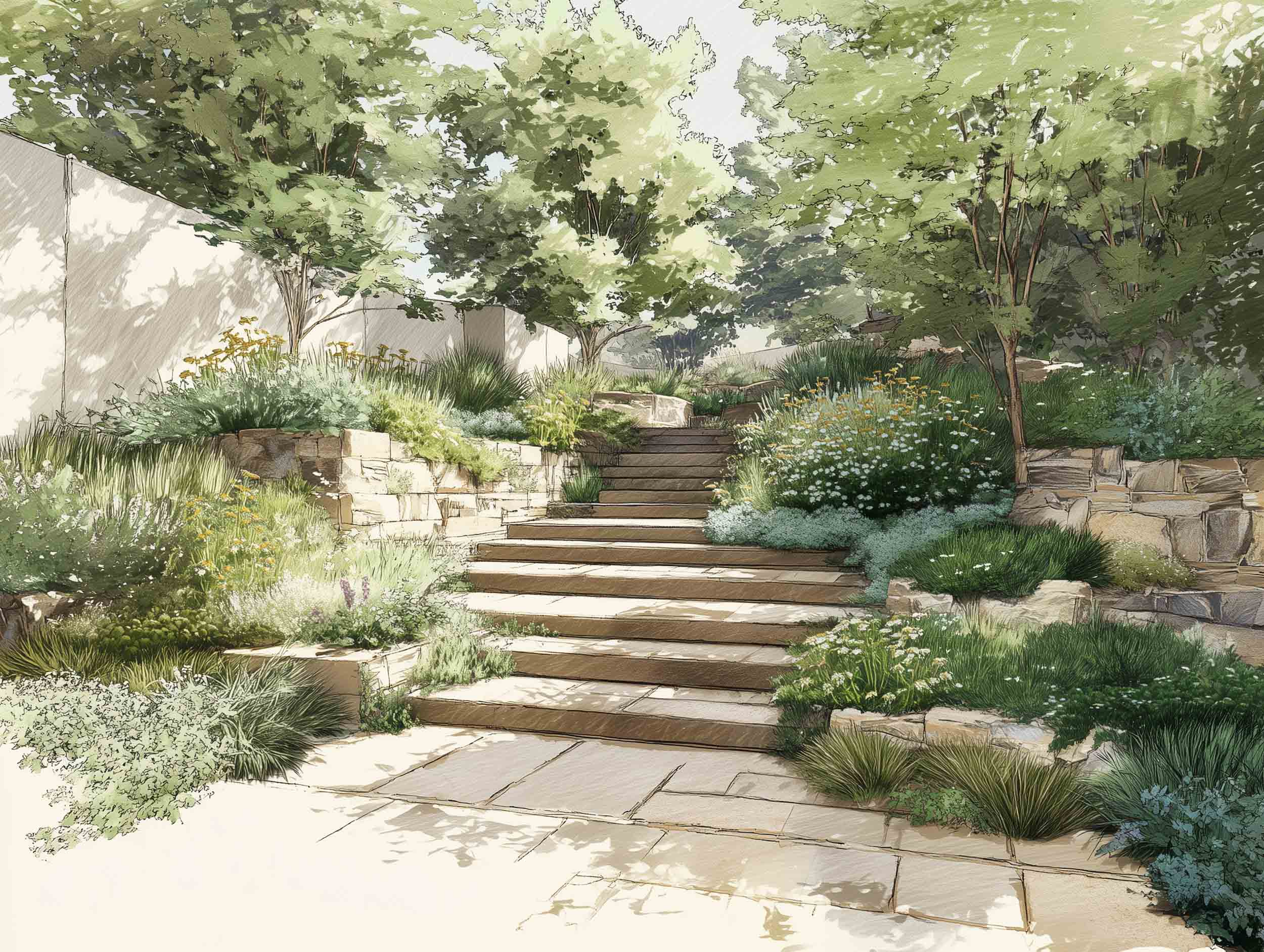
A conceptural view of mature California Live Oaks form a shaded canopy over native plantings in the Oak Ridge garden. (Visualization by RIOS)
Oak Ridge and California Live Oak Woodlands
At the garden’s highest point, visitors enter Oak Ridge. A canopy of mature California Live Oaks (Quercus agrifolia) provides shade and a cool retreat from the sun. The temperature drops noticeably beneath the oaks, and the quality of light shifts to filtered green.
The understory is carefully planted with groundcovers and shrubs that thrive in shade. These support a rich ecosystem of insects, birds, and small mammals. This layered approach to planting mimics natural oak woodland ecology. Different species occupy distinct niches within the vertical structure.
Historically, these oak woodlands held profound cultural significance. Acorns from California Live Oaks were a staple food source for many Indigenous peoples. The oaks provided food and materials for tools, medicine, and shelter, making them central to California’s human history.
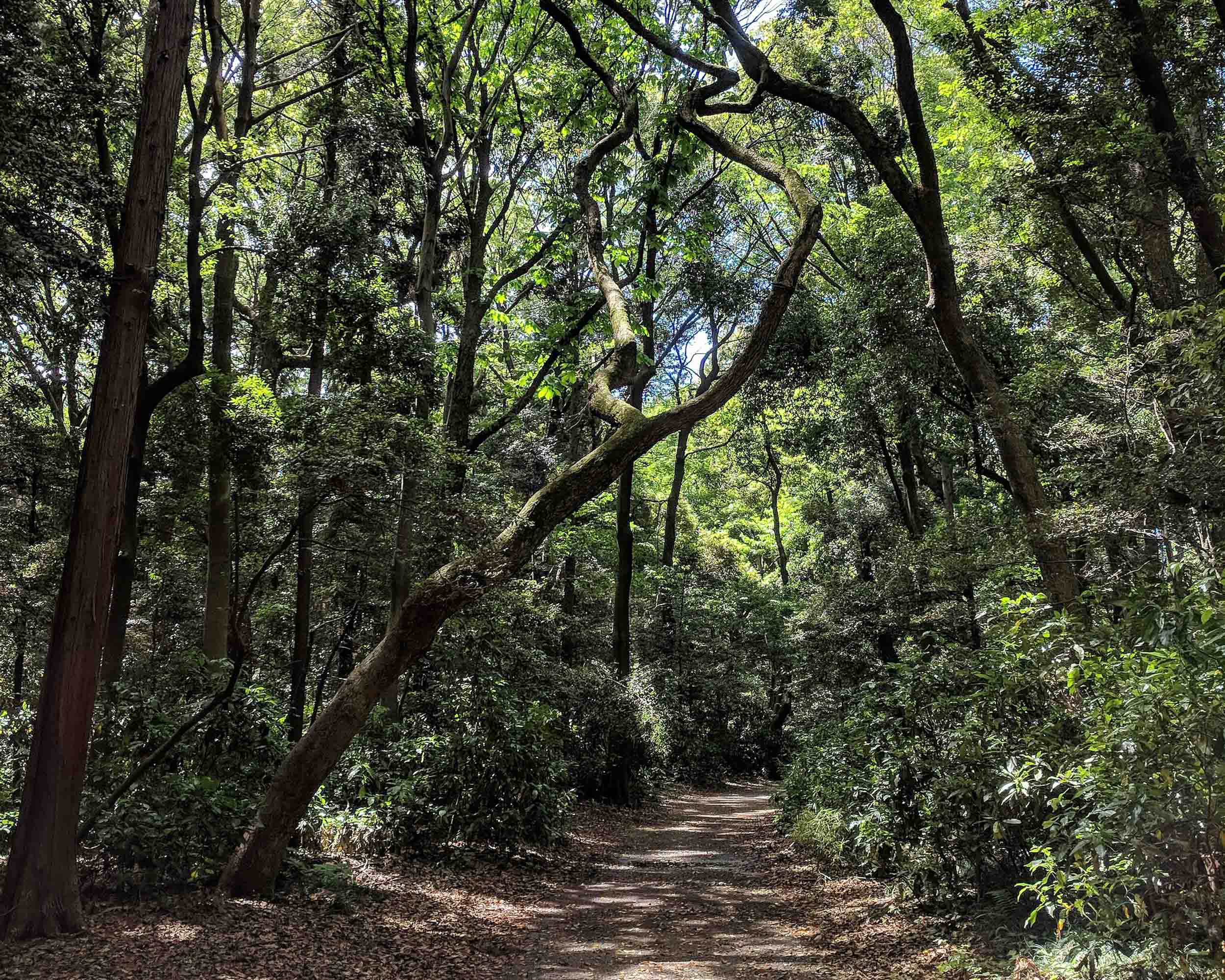
A woodland trail where dappled sunlight filters through the canopy. (Photo by Grendelkhan, CC BY-SA 4.0)
Sky Meadow Native Grassland Garden
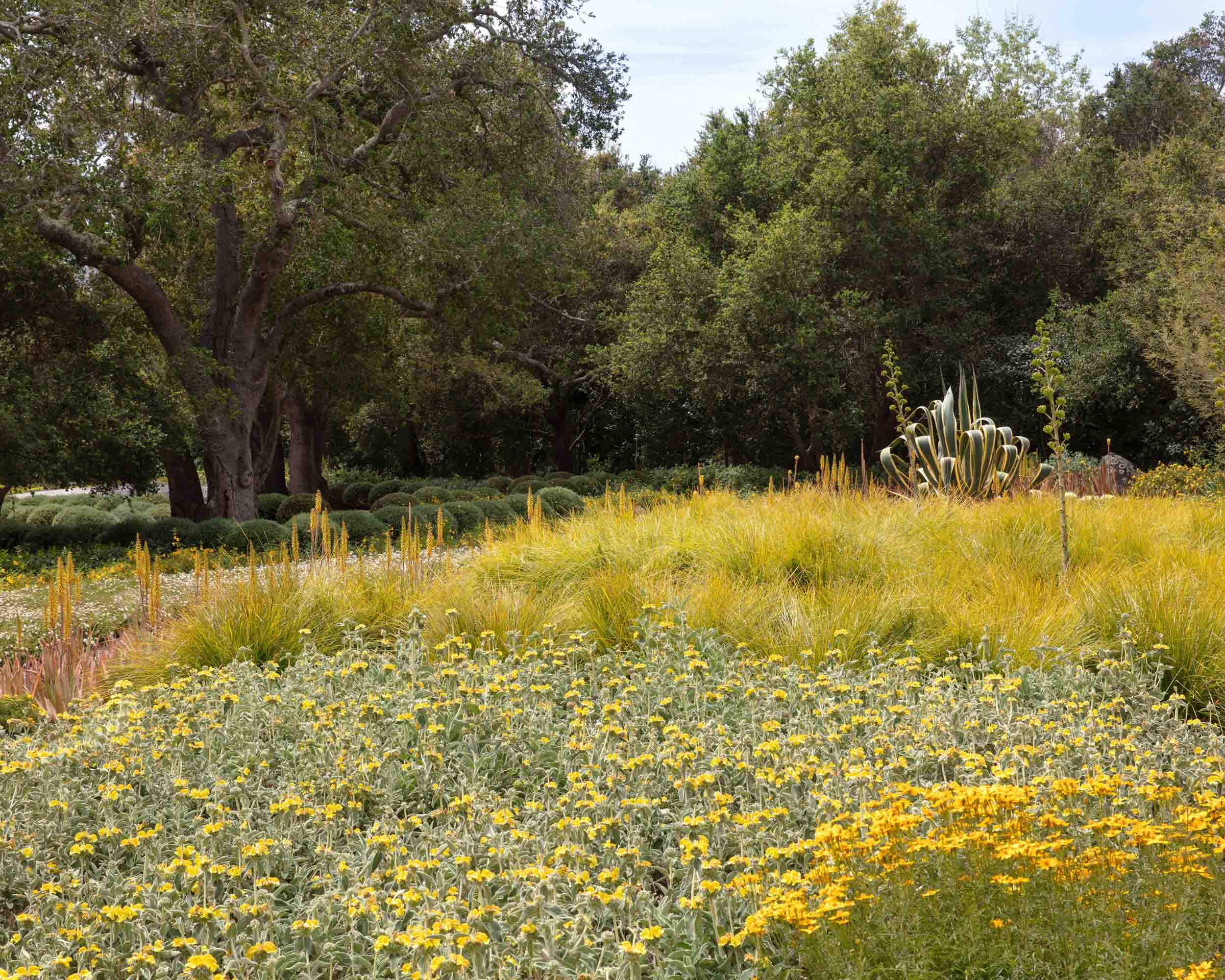
Emerging from the Oak Woodland, visitors arrive at the Sky Meadow. This open, sunlit clearing features flowering perennials, sedums, and grasses that shift with the seasons and evolve over time.
Plants such as Achillea, Aristida, Bouteloua, Castilleja, Muhlenbergia, Penstemon, Salvia, Sedum, and Verbena thrive in a shallow soil mix, enduring California’s challenging climate. This dynamic meadow will continually transform as plants reseed and spread, creating a living, ever-changing landscape. The shallow-rooted nature of meadow plants allows them to establish quickly and require minimal irrigation once established. Their root structures also help prevent erosion, store carbon in the soil, and create habitat for ground-nesting bees and other beneficial insects.
The meadow represents California’s grasslands, ecosystems that once covered vast areas of the state but have been dramatically reduced by development and agricultural conversion. By recreating this habitat in an urban setting, the garden serves both aesthetic and conservation purposes.
Golden native meadow grasses and wildflowers flourish beneath oak canopy. (Photography by Holly Lepere)
California Descent to Coastal Bluff Habitats
The journey concludes with the California Descent. This winding path brings visitors down through a landscape reminiscent of coastal bluffs near the Pacific Ocean. The plant palette features species adapted to salty air and coastal breezes, creating a softer, wind-sculpted appearance.
Featured species include Baccharis pilularis ‘Pigeon Point’, Feijoa sellowiana, Carex pansa, Erigeron glaucus, Dudleya brittonii, and Limonium perezii, all plants that would naturally occur within sight and smell of the ocean.
By traveling through these gardens, visitors embark on a symbolic journey through California’s varied landscapes, gaining a deeper appreciation for the ecological richness and adaptability of plants that define the region.