It has been over a year since the tragic Eaton and Palisades wildfires. Across Southern California, the work of rebuilding is active, urgent, and personal for many communities.
As we rebuild, it is imperative that fire resilience and landscape design are intertwined: it is part of how we think about landscape performance, longevity, and stewardship. As projects move toward construction across fire-prone regions, we are integrating fire-conscious strategies into architecture, planting design, site planning, and long-term maintenance frameworks.
While no landscape can eliminate wildfire risk, informed design decisions can meaningfully improve outcomes. Fire resilient landscapes slow the spread of flames, reduce fuel loads, interrupt ember pathways, and give structures a better chance of withstanding fire-driven events.
The principles below guide our fire-conscious planting design work across Southern California.
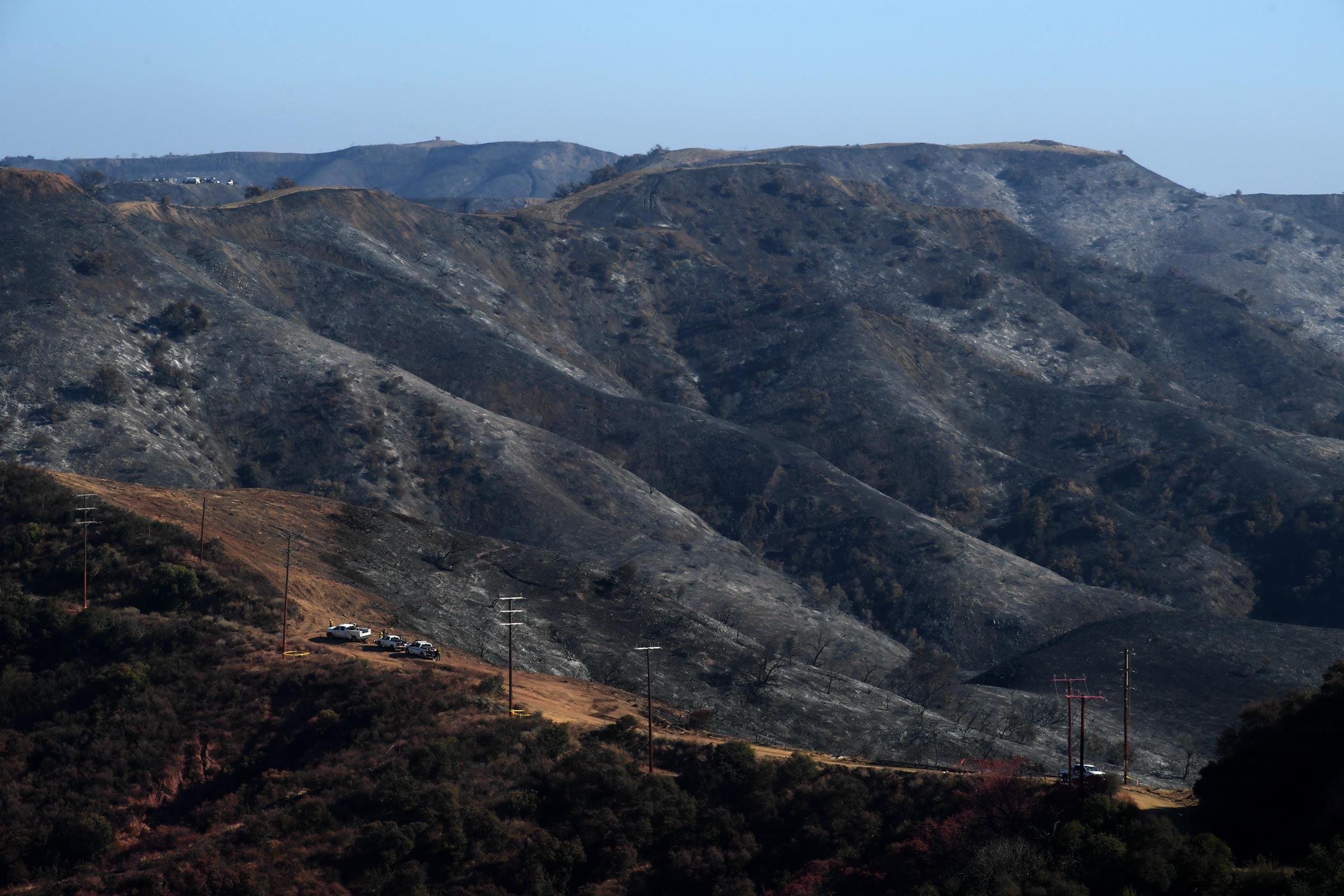
California National Guard trucks sit along the Mulholland Trail ridgeline in the aftermath of the Palisades Fire on January 18, 2025, as part of Southern California wildfire response efforts. (Photo via Flickr, California National Guard, CC BY-SA 2.0)
No Plant Is Fireproof: Understanding Fire Resistant Species
When discussing “fire-resistant” plants, we must understand that any plant can burn under extreme heat, wind, and drought conditions. Fire-resistant or fire-appropriate species are those that tend to:
- Ignite more slowly
- Burn with lower intensity
- Contribute less fuel
- Maintain higher moisture content when healthy, even in drought conditions
Firewise landscapes can still include rich, layered planting, but they must be designed with intention. Plant selection matters, but spacing, plant health, and ongoing maintenance are equally critical.
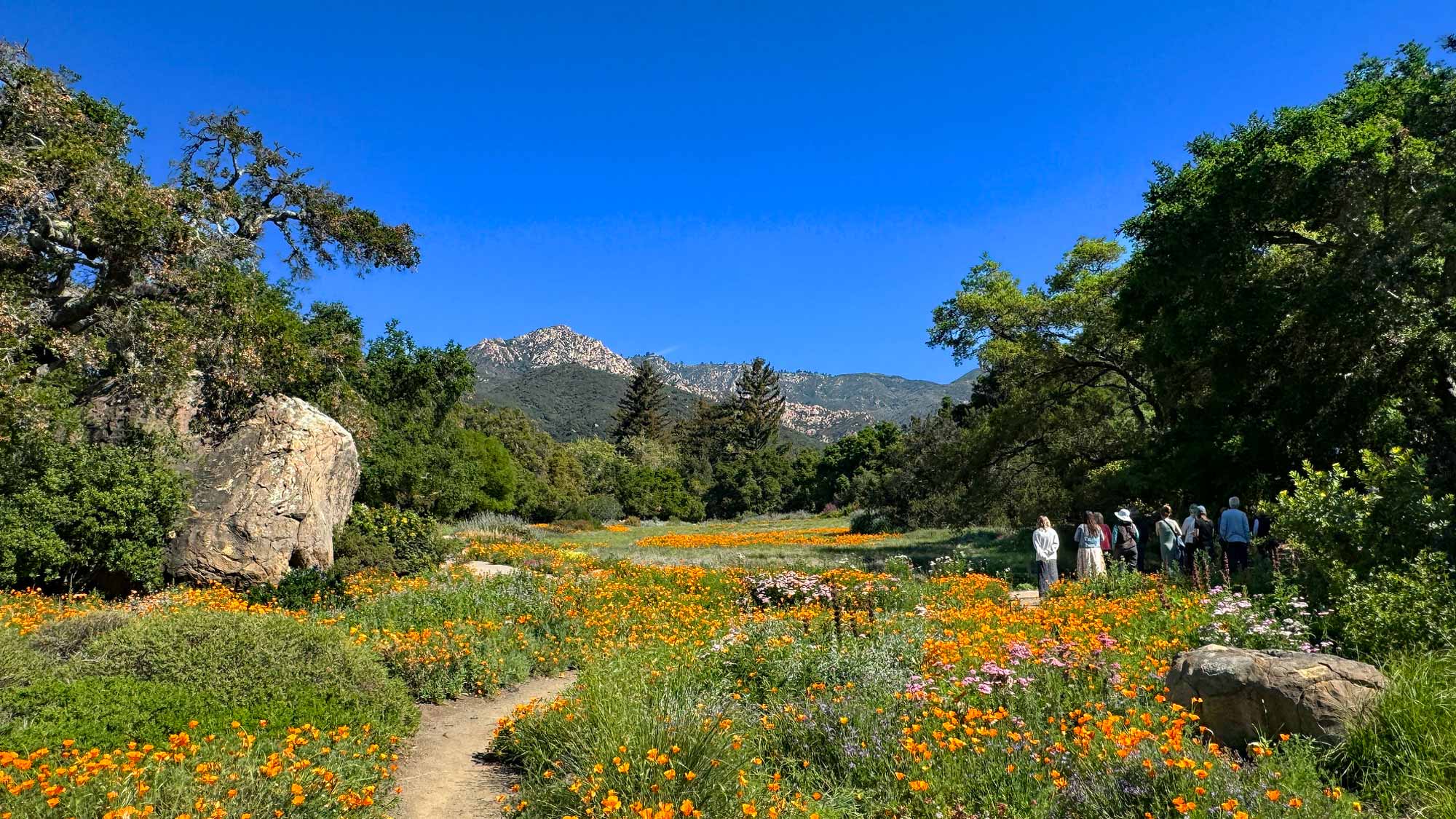
Native California plants beneath Santa Ynez Mountains at Santa Barbara Botanic Garden. (Photo courtesy of Santa Barbara Botanic Garden, CC BY 2.0)
California Native Plants for Fire Resilient Landscapes
Many California natives evolved alongside periodic fire. While not immune, they often possess traits that support resilience: thick bark, lower litter accumulation, or the ability to resprout after disturbance.
For example:
- Coast Live Oak (Quercus agrifolia) has dense evergreen foliage and thick bark that can tolerate low-intensity fire when healthy.
- Valley Oak (Quercus lobata) offers high canopy clearance and substantial bark protection.
- California Sycamore (Platanus racemosa) maintains high moisture demand in riparian settings.
Plants adapted to local climate conditions are less likely to become drought-stressed and accumulate dead material. Reducing dry fuel is a key component of defensible space design.
It is equally important to note: not all natives are low-risk, and not all non-natives are high-risk. Some chaparral species such as Chamise (Adenostoma fasciculatum), Creosote (Larrea tridentata) and certain sages (Salvia spp.) evolved to burn as part of ecological renewal. Use regional research and local fire authority guidance to inform species selection.
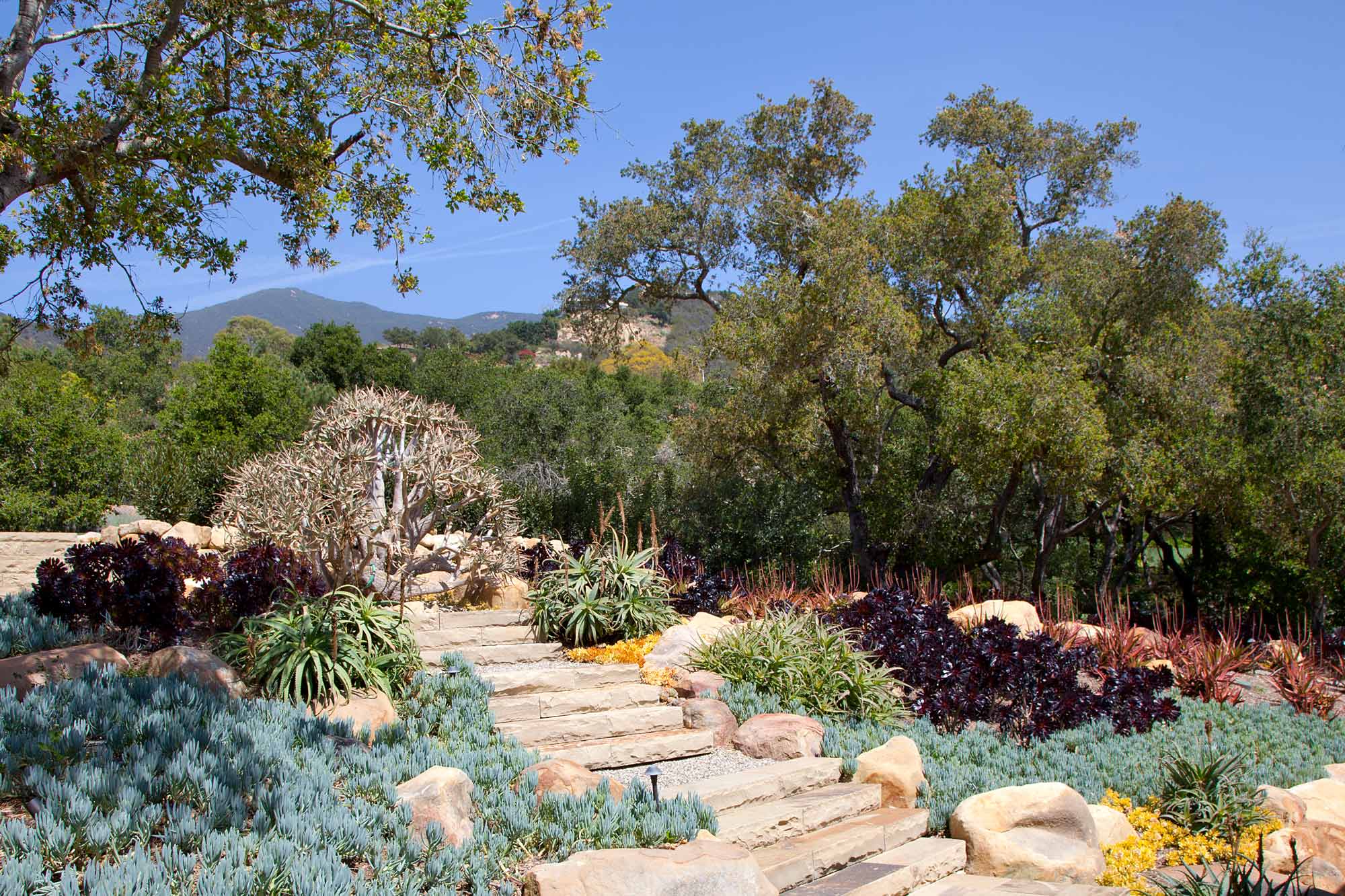
Moisture-retaining succulents anchor a hillside garden of native oaks in this RIOS-designed landscape, drawing views toward the Santa Ynez Mountains.
Fire Resistant Plants: Moisture Retention and Leaf Structure
One of the most widely recognized fire-wise traits is moisture retention. Plants that store water in their leaves and stems require more heat to ignite. Many succulents act as heat sinks, absorbing energy that might otherwise contribute to combustion.
Some of these moisture-retaining plants include:
- Aloe (Aloe spp.)
- California Liveforevers (Dudleya pulverulenta, D. brittonii, D. edulis, D. lanceolata)
- Our Lord’s Candle (Hesperoyucca whipplei)
- Prickly Pear (Opuntia spp.)
Other species resist rapid drying with thick, leathery, or waxy leaves that slow moisture loss. Many California natives retain moisture longer and produce less fine litter than soft, feathery species.
Some California natives with particularly thick leaves include:
- Toyon (Heteromeles arbutifolia)
- Ceanothus (Ceanothus spp.)
- Coyote Brush (Baccharis pilularis ‘Pigeon Point’)
- California Buckwheat (Eriogonum fasciculatum)
Las Pilitas Nursery has conducted some of the most granular real-world burn-time testing available. Their findings show that many California native plants are more resistant to ignition than commonly introduced species.
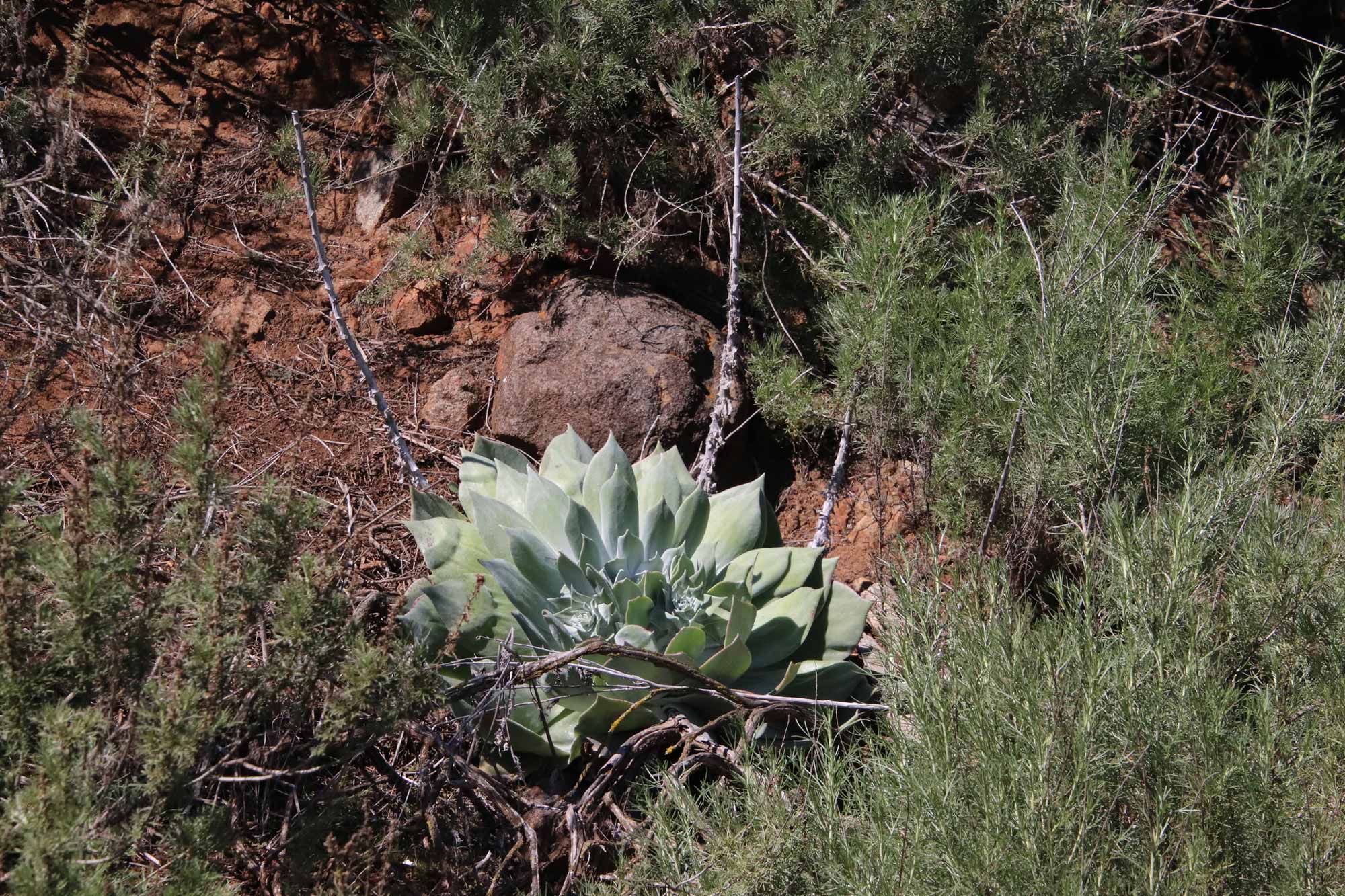
Chalk Dudleya (Dudleya pulverulenta) along the Lake Hodges North Shore in Rancho Bernardo, San Diego, CA. (Photo by Millie Basden via iNaturalist, CC BY)
Plant Spacing, Fuel Breaks, and Defensible Space
Plant selection alone does not determine fire behavior. Spatial design plays a critical role. Continuous vegetation leading directly to a structure creates a pathway for flames. Breaking that continuity slows fire movement and reduces intensity.
Effective strategies include:
- Organizing planting into separated clusters rather than uninterrupted swaths
- Introducing hardscape like decomposed granite, gravel, or concrete between plant groupings
- Maintaining vertical separation between groundcovers, shrubs, and tree canopies to prevent “fuel ladders” that allow fires to climb
- Designing clear defensible space zones around structures
The goal is not to eliminate planting, but to create a layered patchwork that interrupts combustion pathways while preserving ecological richness.
Zone 0 is the most critical component of defensible space design around a home. There are distinct zones with design requirements that function as a system of fuel management around a home. Zone 0 is the most restrictive, calling for the removal of all combustible materials within five feet of a structure: no grass, ornamental plants, wood mulch, combustible fencing, or synthetic turf. This policy is still under consideration, and in January 2026, the Los Angeles City Council voted to adopt more permissive local Zone 0 regulations. Many designers and environmental experts have noted that there is no broad scientific consensus that complete vegetation removal within five feet provides significant real-world benefit. Others raise concerns about the impacts of large-scale vegetation removal across homes in Southern California.
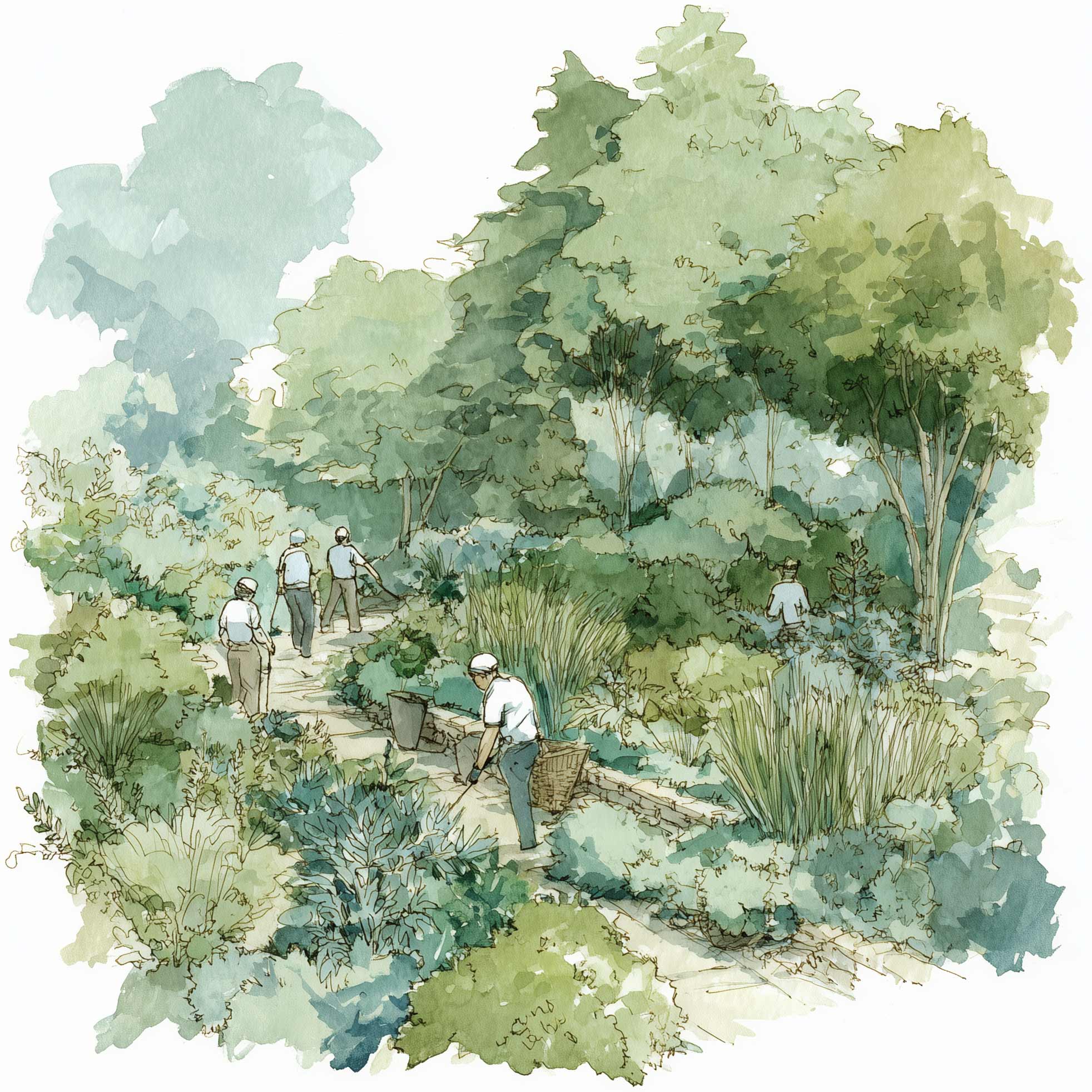
Seasonal landscape maintenance practices reduce the risk of wildfires.
Landscape Maintenance for Fire Season Performance
Maintenance often determines whether a landscape performs safely during fire season. Weed control and garden upkeep are often more important than plant selection or irrigation methods.
A plant labeled “fire-resistant” can still become hazardous if it is drought-stressed, overgrown, or surrounded by dead material. Conversely, a species not on an approved list may perform safely when it is healthy, properly pruned, and well irrigated.
Maintaining a fire-safe landscape in Southern California requires these seasonal practices:
- Removal of dead branches and accumulated litter
- Monitoring weeds and invasive grasses that act as flash fuel
- Selective thinning to improve airflow within plants, minimizing dead material
- Trimming / Pruning plants so they do not touch (preventing fire from jumping from one to the next)
- Irrigation strategies that maintain plant health without excessive water waste
Mulch plays an important role in California landscapes. While flammable, mulch retains moisture that helps keep plants and soil hydrated and less prone to catching fire. Mulch can burn, but the shredded wood or bark that comprises most good mulch can easily be extinguished once ignited, meaning the pros usually outweigh the cons. Mulch should be kept at least a foot from the house, or five feet if you follow the draft Zone 0 regulations.
Finally, keep your garden free of junk. Piles of wood, furniture, recycling, rags and rubbish often burn quickly, and are responsible for more damage in a fire than plants.
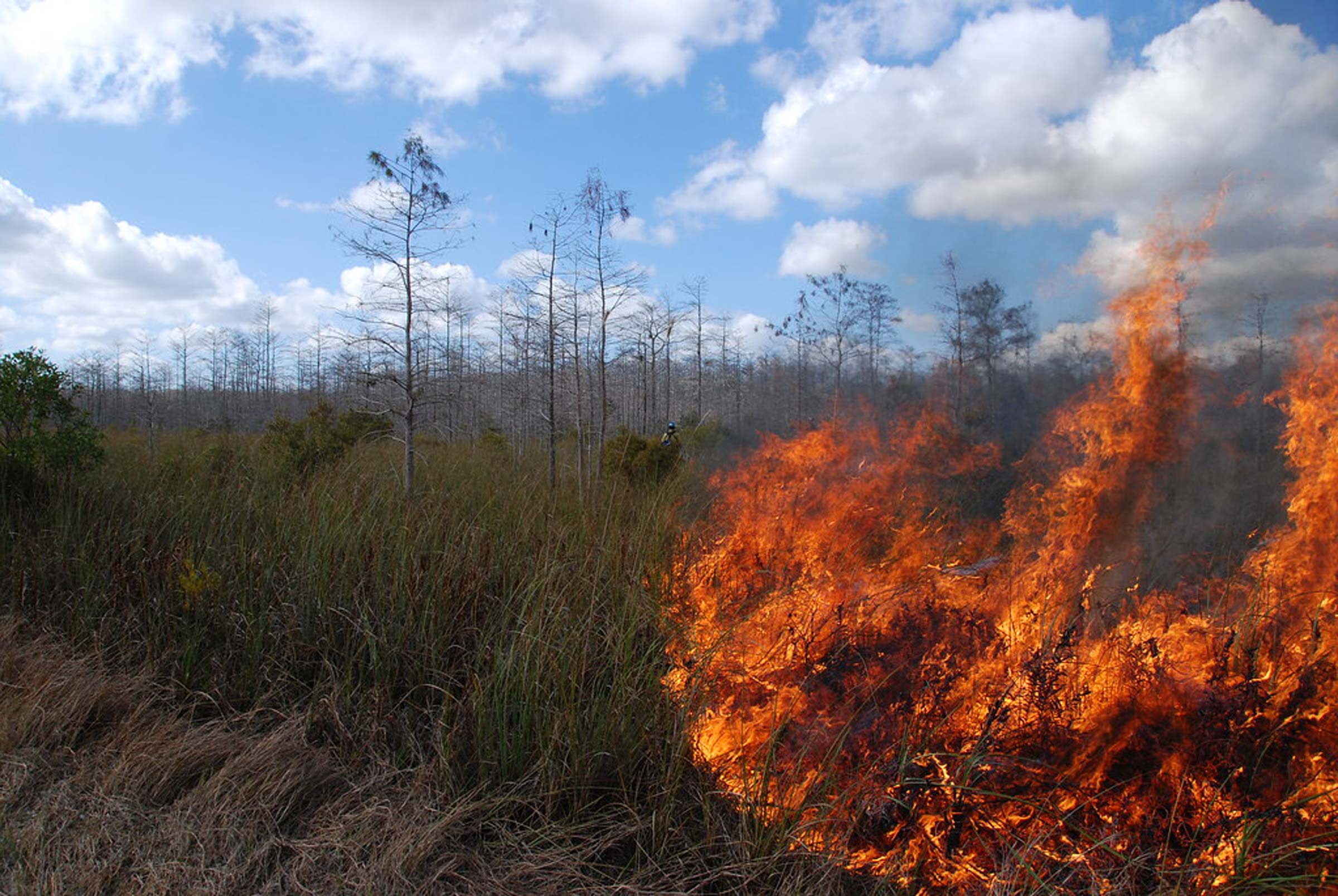
Flanking fire moves through prairie during prescribed burn at Florida Panther National Wildlife Refuge. (Photo by Josh O’Connor, USFWS, via Flickr, CC BY 2.0)
Why Removing Native Vegetation Can Increase Fire Risk
One persistent misconception is that clearing native vegetation and replacing it with turf or fast-growing non-native groundcovers automatically reduces risk, since these plants look nice and green and we often associate that with non-flammability.
In reality, invasive annual grasses such as wild oat (Avena spp.) and Great Brome (Bromus diandrus) or weeds like mustard (Brassica spp.) can function as highly flammable flash fuels, with entire fields almost igniting all at once. Native shrubland, when thoughtfully thinned and maintained at low density, often burns more slowly than unmanaged invasive grasses and weeds. Well-hydrated natives have been shown to even resist embers, refusing to ignite.
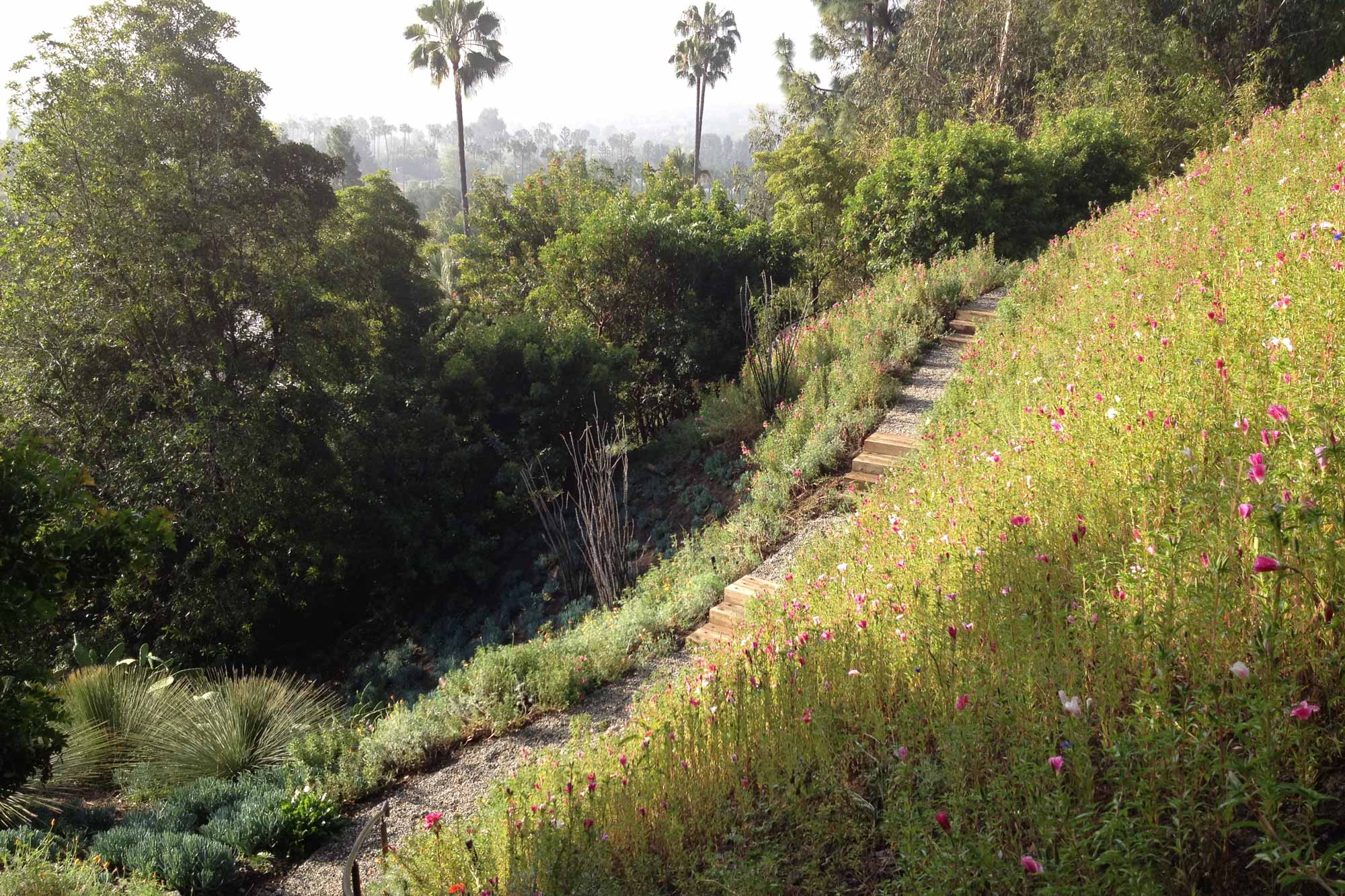
California native plantings shape the sunlit slopes of the Loma Vista landscape, part of a RIOS-designed estate in Beverly Hills.
Fire Resilient Design at RIOS
At RIOS, fire resilience is embedded within our broader landscape ethos: attunement to climate, ecology, and long-term performance.
The RIOS residential team address the aftermath of the Palisades fire though two avenues: conventional rebuild projects for families who lost their homes, and a fire-resilient prototype house developed with a builder partner through the RESET program. This prototype will serve as one example for how we might approach the design challenges of rebuilding in the “Alphabet Streets” neighborhood.
Our teams have been considering architectural strategies including wall assemblies, materiality, and ventilation to enhance fire safety, with the primary goal of eliminating opportunities for ember intrusion wherever possible. This starts even before we think about materiality, with considerations of the overall building site. In LA, resilient designs need to account for Santa Ana winds, which carry embers from the northeast.
A multidisciplinary eye towards planting and landscape elements has also been a big part of our design efforts. Designing responsible architecture in high fire hazard areas means creating homes that can exist in harmony with the natural systems governing each site, not isolating them as impermeable fortresses detached from ecological context.
RIOS’ master plan reimagining Descanso Gardens, extends this approach to infrastructure, where the lake revitalization and stormwater capture projects are designed to support both ecological health and fire resilience. The revitalized lake and new stormwater systems will collect, store, and make water accessible for irrigation and regional fire suppression, creating a landscape that actively contributes to emergency response.
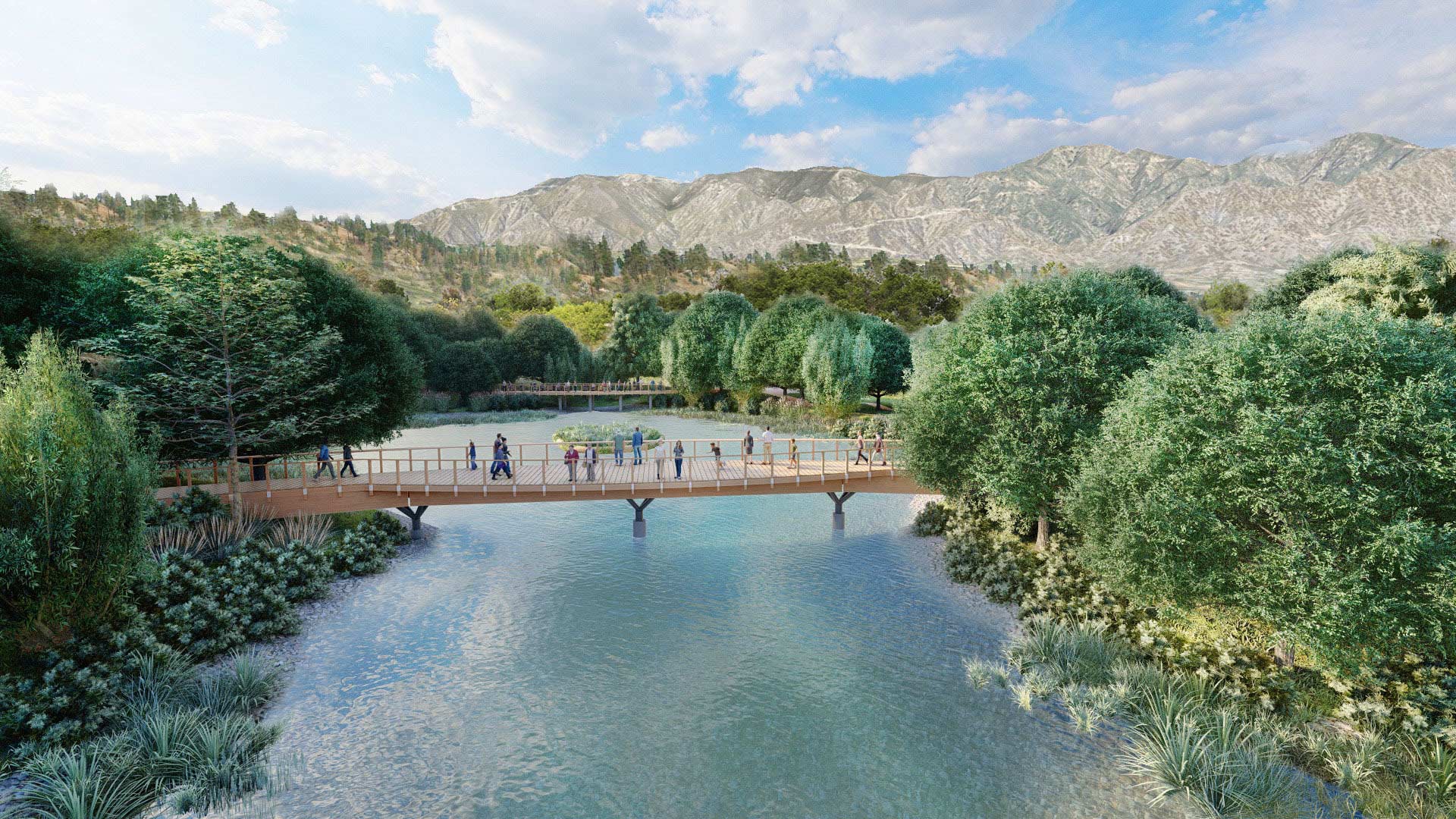
Reimagined lake and boardwalk at Descanso Gardens. (Image by RIOS)
Low-Fuel California Native Plants for Fire-Conscious Gardens
The following California native shrubs and trees are commonly recommended for fire-conscious landscapes when properly sited and maintained:
Shrubs & Perennials:
- California Buckwheat (Eriogonum fasciculatum)
- Coyote Brush (Baccharis pilularis)
- Ceanothus (Ceanothus spp.)
- Coffeeberry (Frangula californica)
- Lemonade Berry (Rhus integrifolia)
- Manzanita (Arctostaphylos spp.)
- Yarrow (Achillea millefolium)
- California Fuchsia (Epilobium canum)
- Island Mallow (Malva assurgentiflora)
- Woolly Blue Curls (Trichostema lanatum)
- Yucca (Yucca spp.)
Trees:
- Coast Live Oak (Quercus agrifolia)
- California Buckeye (Aesculus californica)
- Western Redbud (Cercis occidentalis)
- California Sycamore (Platanus racemosa)
- Valley Oak (Quercus lobata)
- Catalina Ironwood (Lyonothamnus floribundus ssp. Aspleniifolius)
- Catalina Cherry (Prunus lyonii)
Plant lists should always be cross-referenced with local agency guidance and site-specific conditions.
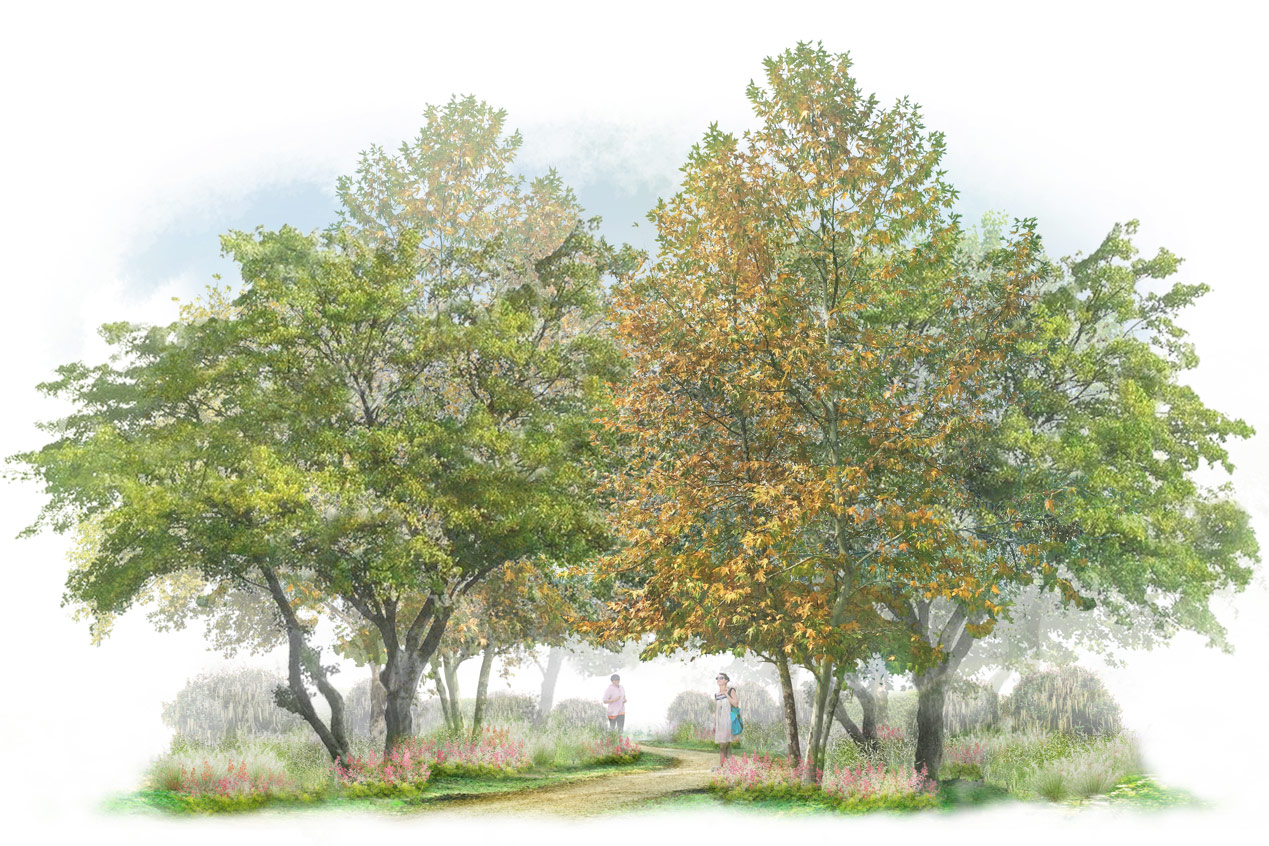
Concept visualization of native California plantings at One Beverly Hills. (Image by RIOS)
Fire Resilient Landscape Design for a Changing Climate
Wildfires will remain part of Southern California’s ecological reality. For designers, resilience is embedded in the everyday responsibilities of landscape practice.
Thoughtful plant selection, careful spacing, and consistent stewardship allow landscapes to remain vibrant, habitat-supporting, and regionally expressive while also contributing to defensible space strategies.
Fire resilience is about designing landscapes that endure: slowing fire where possible, reducing risk where we can, and supporting communities as they rebuild and adapt.